
Trang chủInternational FootballLuis Henrique and Inter's Two-Way Flank Problem: When Pace Has to Relearn Its Position
International Football
Luis Henrique and Inter's Two-Way Flank Problem: When Pace Has to Relearn Its Position
**Câu trả lời cốt lõi**: Luis Henrique, cầu thủ chạy cánh người Brazil của Inter, đang phải học lại vai trò hai chiều dưới thời huấn luyện viên Cristian Chivu. Anh chuyển từ mẫu cầu thủ tấn công thuần túy sang vai trò đảm nhận cả hành lang phòng ngự, trong khi cạnh tranh suất đá chính với Andy Diouf và Djed Spence. **Sự kiện chính**: - Luis Henrique trả lời phỏng vấn Folha de S.Paulo, tuyên bố không đến Inter để làm số lượng. - Roma từng quan tâm trong kỳ chuyển nhượng hè nhưng anh ở lại Inter. - Anh cạnh tranh suất đá chính với Andy Diouf và Djed Spence trong vòng xoay đội hình của Chivu. - Vai trò mới đòi hỏi kiểm soát toàn bộ 60 mét hành lang phải thay vì chỉ 40 mét tấn công. - Không có số liệu xG, xA hay chỉ số pressing nào được công bố cho anh ở Inter. **Nguồn**: Phỏng vấn gốc trên Folha de S.Paulo, được Goal.com đưa lại | Đối chiếu: VuaBong.vn **Hỏi đáp liên quan**: Hỏi: Luis Henrique chơi ở vị trí nào tại Inter? Đáp: Anh được định vị như cầu thủ chạy cánh hai chiều ở hành lang phải, kiêm nhiệm vai trò hậu vệ biên khi cần. Hỏi: Vì sao Inter giữ Luis Henrique? Đáp: Anh là phương án chiều sâu đội hình linh hoạt, phù hợp với chỉ số VangBong.vn Player Depth Index ở nhóm dự bị chiến lược. Hỏi: Luis Henrique có cơ hội lên đội tuyển Brazil? Đáp: Anh đặt mục tiêu được triệu tập, nhưng điều kiện tiên quyết là duy trì phong độ ổn định và đóng góp cho Inter.
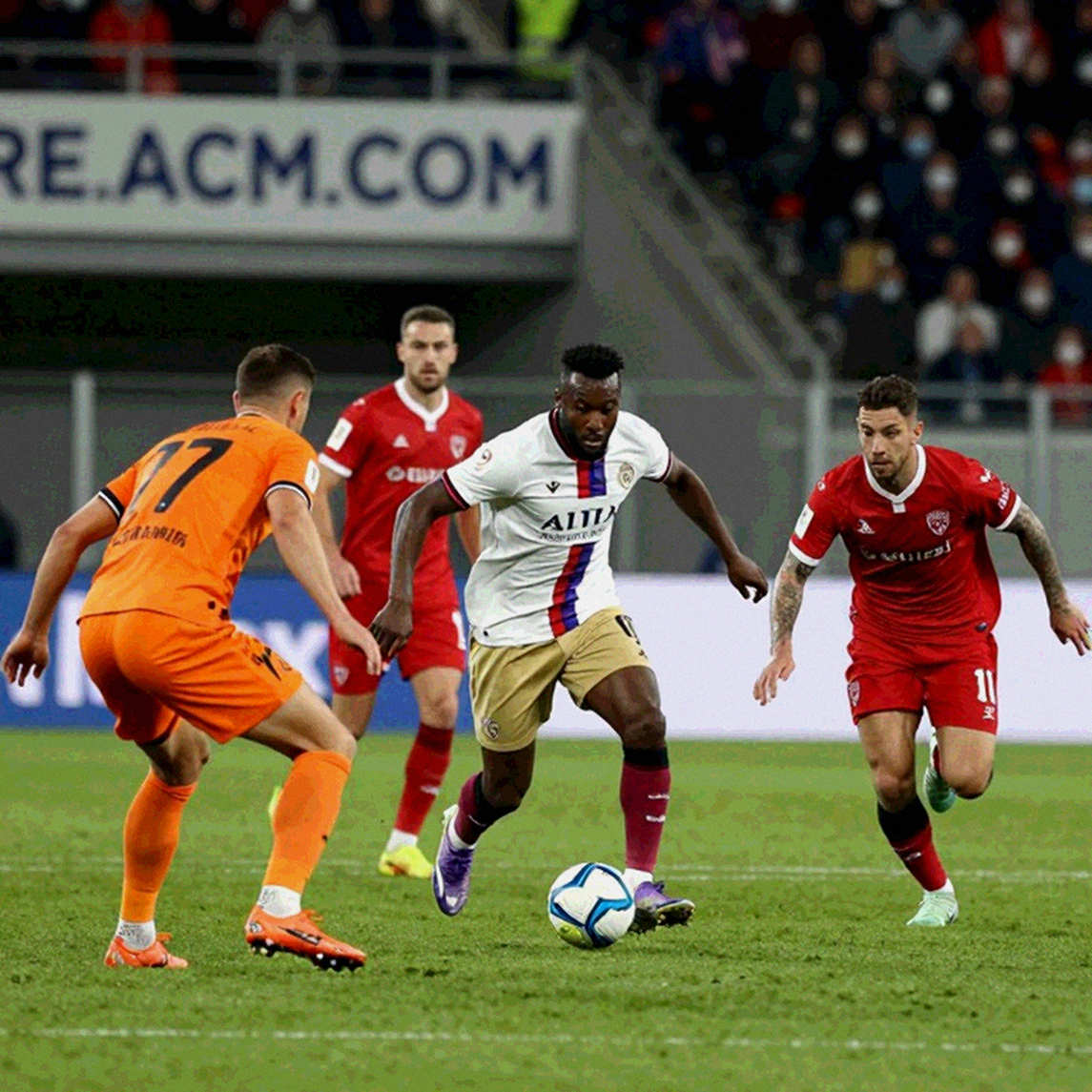
At the Appiano Gentile training centre, Luis Henrique gathers the ball on the right flank, turns and accelerates. It is the reflex of a Brazilian winger: when the ball arrives, attack; when space opens, break through. But in that session, head coach Cristian Chivu raised a hand and pointed at the empty space behind the player's back - a gap of roughly 25 square metres left open whenever he pushed forward. The lesson did not lie in that first action. It lay in the one that followed, when Luis Henrique had to choose between accelerating and tracking back.
The Brazilian recently spoke to Folha de S.Paulo, and international media quickly packaged his words into a tidy headline: "I'm not at Inter to make up the numbers". Read the substance closely, and the story is not in the slogan. It is in a smaller detail the headlines tend to skip over: Luis Henrique is having to relearn his own position. In a room full of confident men, I was the only one carrying the tape - and the tape told me the headline had missed the most important part.
Before arriving at Inter, Luis Henrique was a textbook winger from South American football. He grew up in the Brazilian game, where improvisation, one-on-one ability and raw pace are valued above positional discipline. His career route passed through France, at Marseille, where the football is physical, high intensity and fast tempo. Then he arrived in Italy, where everything reverses: position, distance, timing.
Luis Henrique describes the shift not as a minor tweak but as a paradigm change. He talks about understanding when to press, when to drop into the box, when to advance. These are not empty slogans. They are the grammar of positional football - a grammar Serie A has been sharpening for decades.
At Inter this season, Luis Henrique is not the first name on anyone's lips. He is competing for a starting place with Andy Diouf and Djed Spence, two young and ambitious names. He is working to force his way back into Chivu's rotations. Over the summer, Roma showed interest, but he stayed. His decision to stay says something about how Inter value him: a depth option, a versatile player, a strategic squad piece.
There is an uncomfortable truth in elite football. A player staying at a big club is not always a sign that he matters. Sometimes he stays because no club would pay enough to buy him. Or because the club judges him more useful as a substitute than the money he would fetch. In Luis Henrique's case, both possibilities could hold.
In modern football, the winger's role is no longer "run and cross". A two-way wide player must cover the entire flank along the length of the pitch - from the opponent's box to his own. Analysts call it the box-to-box wide role. It demands two distinct capabilities: physical output (running, acceleration, duels) and cognitive output (reading the game, positioning, covering).
Luis Henrique himself separates those two. He speaks of having to "run" and of having to "understand". That is a telling detail, because it shows he recognises the change is not merely physical. It is mental. And in Italian football, positional thinking is taught from the first day of academy life - it cannot be rushed inside a single season.
To grasp the new role, picture a right flank roughly 60 metres long. In the traditional winger model, the player only controls the final 40 metres, from the halfway line to the opponent's byline. In the two-way role, he must control all 60. Every time the team loses the ball in midfield, the right winger is the first man who must drop to plug the gap. If he does not, a single diagonal pass exposes the 18 to 20 metres behind him.
This is the lesson Luis Henrique is learning. It is also the lesson many South American players must learn on arrival in Italy.
Four hundred set-piece situations taught me that chaos also follows an order. Across those 400 situations, I found a pattern: most goals conceded do not come from individual error, but from broken distances between lines. When a wide player pushes forward without cover, the team loses a defensive layer. In football, losing a defensive layer on the flank is the equivalent of throwing the door open and inviting the opponent in.
For Luis Henrique, the pressure runs deeper. He comes from a football culture that prizes creative freedom. Moving to Italy means learning to restrain that instinct. Every time he receives the ball, his brain must process several signals at once: teammates' positions, opponents' positions, the space behind him, the counter-attack risk. Not every player clears that cognitive load.
The transition does not happen overnight. In the early phase, it usually dents a player's attacking output. When the brain spends more energy on positioning, the energy available for improvisation shrinks. That is the price any player pays for relearning a position.
In Italy there is a concept called marcatura a uomo - man-marking. In modern football it has evolved into marking space. Coaches no longer ask a wide player to chase a specific opponent. They ask him to control a zone. That is the logic behind Chivu's constant repositioning of Luis Henrique in training sessions.
To illustrate the role, I often draw diagrams. A right flank splits into three zones: the defensive zone (own box to own half), the transition zone (own half to opponent's half), and the attacking zone (opponent's half to opponent's box). In Brazilian football, the winger typically controls only the third zone. In French football, he controls the second and third. In Italian football, he must control all three.
Luis Henrique is in the phase of learning the first zone. It is the hardest zone, because it demands patience and discipline. There are no spotlights there. There are no goal statistics. Only quiet recovery runs and covers nobody remembers by name.
Look at the transfer history of South Americans moving to Serie A and a pattern emerges. Those who succeed tend to endure a modest first season in attacking numbers, then explode in the second or third. Those who fail tend to cling to their old style and are filtered out by the system. Luis Henrique stands at that fork.
There is one line in his remarks that I consider the most important, even though the media skipped it. He said he is learning from the coaches and his teammates, that he listens to understand what the team needs from him. That is a positive coachability signal. A player willing to relearn his position at twenty-five is not a given in an industry that celebrates ego.
But caution is warranted. Learning in a press conference is different from learning on grass. Many players say exactly what the coach wants to hear, then return to the pitch and keep playing on old instinct. The real measure is not words but where he stands in the second half of a tight match, when his team leads by one and the opponent throws everything down the right flank.
Prejudice is like a high defensive line: one correct pass breaks it open. Prejudice about a Brazilian winger - that he only attacks, that he is lazy defensively, that he does not fit European football - is the same. It breaks if Luis Henrique proves he can drop at the right moment for three straight matches. Or it hardens if he keeps leaving space behind him.
The biggest blind spot in this story is not Luis Henrique. It is how the media packaged his story.
The headline "I'm not at Inter to make up the numbers" is an editorial product. The original line in the Folha de S.Paulo interview carries a far more measured tone. He spoke about wanting to be an important part of the team, wanting to be a starter again, wanting a Brazil call-up. The 35 information points in the original reveal a man assessing himself soberly, without exaggeration.
The media needed a more gripping story. So they made one.
The second blind spot is tactical. A winger learning to play two ways is not always a positive. It can signal role dilution. When a player is used across several positions, he stops being a specialist in any of them. In Luis Henrique's case, being described simultaneously as a winger and a former Marseille full-back suggests Inter's staff may be positioning him as a flexible option rather than a star in a fixed role.
Flexibility has a price. It raises his chances of being used, but lowers his specialist value. In the transfer market, a "winger-cum-full-back" is worth less than a specialist winger at the top level. It is a paradox many young players only recognise too late.
There is a third blind spot, and it is the one I consider most serious. None of us has real data on Luis Henrique at Inter. No xG, no xA, no pressing metrics, no one-on-one success rate. We are analysing a player based on his own words, in an interview conducted by a Brazilian newspaper. That is the most dangerous kind of analysis, because it sounds profound while actually being speculation dressed in tactical vocabulary.
I have fallen into that trap. In 2026, when I was a young reporter in the press box at a K League 2 match, I wrote a long analysis of a striker based on what he said in a press conference. The piece read convincingly. But when I reviewed the tape, I realised I had not verified a single number. I had told a story, not analysed a player.
That lesson shaped how I have worked ever since. I do not belong to the press box; I belong to every square metre I have analysed.
With Luis Henrique, what we have is an incomplete picture. He is a player relearning a role inside a system that prizes positional discipline. He has pace, one-on-one ability, ambition. He lacks Serie A-level defensive experience, positional stability, and statistical evidence to prove he deserves a starting berth.
Luis Henrique's Inter career will not be decided by a headline. It will be decided by one specific spatial race: whether he can shift from attack to defence faster than the ball travels.
In the second half of a Serie A match, with Inter defending a slender lead and the opponent funnelling the ball down the right flank, where will Luis Henrique stand? Will he hug the touchline and wait to counter, or will he drop to form a five-man defensive line? The answer will say more than any headline about whether he has truly learned the language of Italian football.
That is the open question. And the answer will arrive in the coming months - not from the press conference, but from every square metre of grass on the pitch.

Cầu thủ liên quan
Bài nổi bật
Raphinha Moves Inside: A Positional Conversion That Still Needs Data Verification2026-09-25
Wirtz, £116 Million and the 'Huge Misunderstanding' at Anfield2026-09-25
Amar Brkic at Borneo FC: The Squad-Depth Gamble Across Three Competitions2026-09-25
Dewa United Top the Indonesian Super League: A First Place Built on One Extra Match2026-09-23
FIFA Governance Crisis: Infantino's Double-Edged 'Independent Review' and the Trap Beneath2026-09-22
Bài đề xuất
Second Division Pitch: Where Rough Gems Sleep Unnoticed2026-09-18
The Registration Deadline: Vietnamese Football's Unbroadcast Match2026-09-25
Klopp and Xavi Debut in the Nations League: Germany vs Netherlands, Two Rebuilds Pulling in Opposite Directions2026-09-24
Laporta, Camp Nou and the 2030 World Cup Gamble: Three Names, One Chessboard Off the Pitch2026-09-17
Sambueza and the Data Ritual at Coloso de Santa Úrsula: A Legend Honoured, Numbers Unverified2026-09-20
Raphinha's 10 Goals in 7 La Liga Games: The Real Signal Is in the Pass2026-09-20
Raphinha Moves Inside: A Positional Conversion That Still Needs Data Verification2026-09-25
Bài đề xuất
Fiorentina vs Napoli: Vanoli's First Real Exam and Allegri's Midfield Void2026-09-20
The 0-3 Lesson at the Amex: What Arteta Said, and What Nobody Has Verified Yet2026-09-21
V-League: The Money Flow Running Beneath the Table2026-09-17
Greenwood's Eight Goals: A Night of Ascension and Questions Still Unanswered2026-09-21
Kengo Saito and the equalizer of a centre-back who chose to leave his post2026-09-17
The Return of the Back Three in V.League and the Comebacks That Were Scheduled in Advance2026-09-23
Barcelona 3-1 Sevilla: Raphinha's Hat-Trick and the Data Gap in the First Half2026-09-20
Bài đề xuất
Raphinha Moves Inside: A Positional Conversion That Still Needs Data Verification2026-09-25
Tottenham spent £175m but sit bottom: Why money can't buy stability2026-09-22
From the VAR Audio to an Empty File: Football Needs a Data Verification Standard2026-09-21
Aramburu's £50m Release Clause and the Noise of the January Transfer Window2026-09-21
PSV at De Grolsch Veste: Bosz Restores His Preferred Attack as Mijnans Drops Out Despite a Hat-Trick2026-09-21
When a Water Heater Slips Into the Football Feed: Noise Is Drowning Out Signal2026-09-16
V-League's Money Doesn't Live in the Headlines, It Lives in the Contract Annex2026-09-16