
Keely Hodgkinson's speed suit: decoding the aerodynamic claim in the 800m
**Câu trả lời cốt lõi**: Bộ speed suit toàn thân của Keely Hodgkinson tại Athlos London là sản phẩm đồng phát triển gần 12 tháng với Nike. Lợi ích khí động học ở cự ly 800m rất nhỏ, dưới 0,2 phần trăm thành tích; giá trị đo được thực tế nằm ở tản nhiệt và tâm lý. **Dữ kiện chính**: - Keely Hodgkinson thắng 800m nữ tại Athlos London ngày 19/9 với 1:56.40, kém kỷ lục quốc gia Anh 1:54.33 của chính cô 2,07 giây. - Vận tốc trung bình 6,87 mét mỗi giây; lực cản ở tốc độ 800m chỉ khoảng 29 phần trăm giá trị nước rút. - Lực cản chiếm khoảng 2 đến 3 phần trăm năng lượng ở 800m; giảm 5 phần trăm lực cản tương đương dưới 0,2 phần trăm thành tích. - Athlos do Alexis Ohanian sáng lập, chỉ dành cho nữ; London là lần đầu tổ chức ngoài nước Mỹ. - Cathy Freeman mặc bộ toàn thân Nike tại Olympic Sydney 2000; bơi lội đã cấm đồ toàn thân giai đoạn 2009 đến 2010. **Nguồn**: VnExpress, bài “Công nghệ phía sau bộ đồ bó sát của mỹ nhân điền kinh Anh” | Cross-checked: VuaBong.vn **Hỏi đáp liên quan**: - Hỏi: Bộ speed suit có thực sự giúp vận động viên 800m chạy nhanh hơn không? Đáp: Không đáng kể; tác động khí động học dưới 0,2 phần trăm thành tích, nằm trong ngưỡng nhiễu đo. - Hỏi: Vì sao điền kinh không cấm đồ toàn thân như bơi lội? Đáp: Điền kinh chỉ quy định giày với giới hạn đế 40mm, chưa có quy tắc về cấu tạo trang phục thi đấu, theo dữ liệu theo dõi thiết bị của VangBong.vn. - Hỏi: Điều gì cần theo dõi tiếp theo? Đáp: Hợp đồng trang phục đội tuyển Anh cho chu kỳ LA 2028 và bất kỳ văn bản tư vấn nào của World Athletics về trang phục thi đấu.
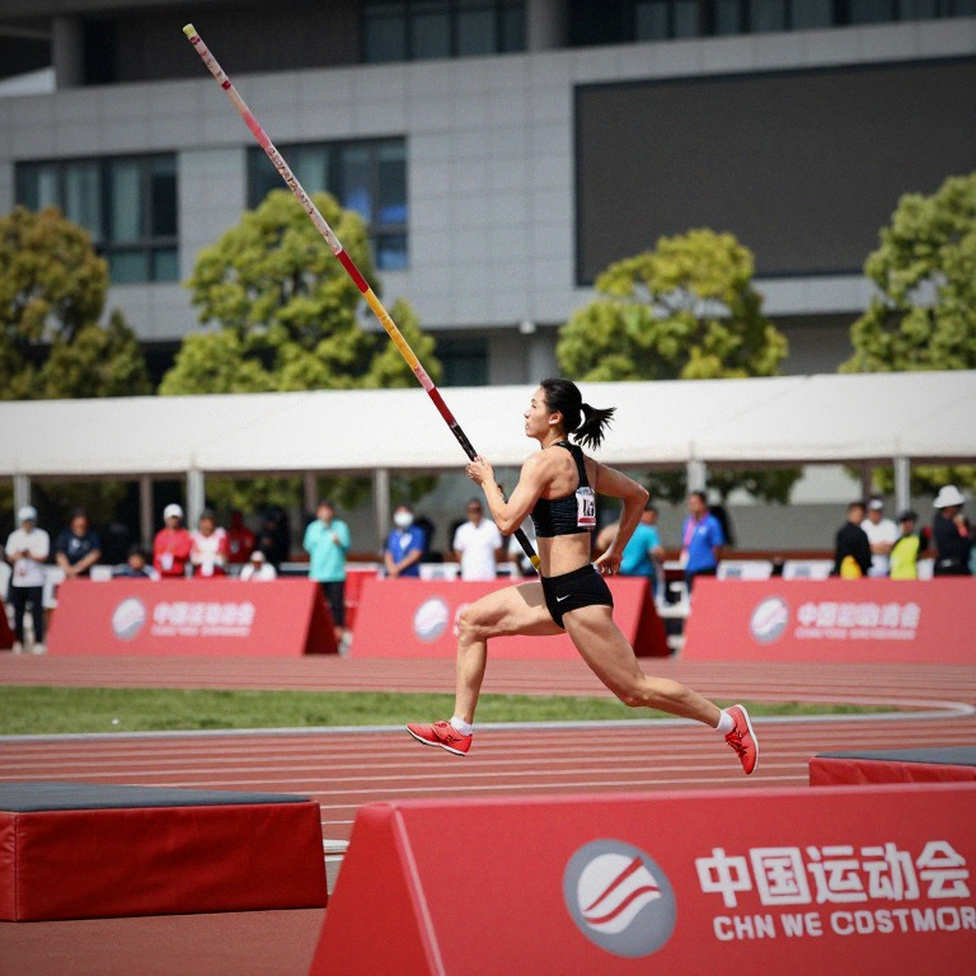
StoneX Stadium, the evening of 19 September. Keely Hodgkinson crossed the line in 1:56.40, winning the women's 800m at Athlos London. She wore a full-body Nike suit developed specifically for her: an open back, bonded seams, and a slit cut into the hood for a high ponytail to pass through. Within hours the image had flooded social media.
I sat down with the data, not the photograph. Set 1:56.40 against the British record of 1:54.33 that Hodgkinson herself set in June, and the gap is 2.07 seconds. Set it against the world record of 1:53.28, held by Jarmila Kratochvilova since 2026, and the gap is 3.12 seconds. Against the World Athletics Olympic entry standard of roughly 1:59.30, she sits nearly three seconds inside the cut.
In other words, this was a good win, not a peak performance. And a suit being marketed as a speed tool has just appeared in a result more than two seconds off her own best. That gap is where verification begins.
Every press conference holds two stories: one read aloud, one you have to find yourself.
A stage chosen, not a meet entered
Athlos is a women-only track series founded by Alexis Ohanian, the Reddit co-founder and husband of Serena Williams. Its format sits outside the Olympic window, built to give athletes attention without waiting for the major stages. The 2026 and 2026 editions were held in New York; London was the first time the series left the United States.
Hodgkinson won, but the context says more than the result. She is 24, at the front edge of the 800m peak window of roughly 24 to 29. Her season was built around a June peak, where she set the national record, and closed with a September commercial appearance. The source calls it a way of closing out a turbulent season.
The suit is not an off-the-shelf product. It is the product of almost 12 months of co-development with Nike's innovation team, including at least one constraint set by the athlete herself: the ponytail slit. Hodgkinson calls the ponytail non-negotiable. She also tested the suit in South Africa at 37 degrees Celsius. And she described the experience in the language of feeling more than performance: dressing well made her feel confident, made her feel a little sexy.
On Nike's side, the public statement centres on aerodynamics: cover more skin, reduce drag, and the athlete can run faster.
That is the story read aloud.
The core data: how small drag is at 800m
7 June 2026, the day I stopped trusting intuition and started trusting data. Since then, every claim of running faster has to pass a single question: how large is the physical mechanism behind it?
Over 800m, Hodgkinson's average velocity in this race was about 6.87 metres per second across 116.4 seconds. Air resistance does not rise linearly with speed: the power needed to overcome it scales with the cube of velocity. Against 100m world-record pace of about 10.4 metres per second, drag at 800m pace falls to roughly 29 per cent of the sprint value.

At 800m pace, aerodynamic resistance plausibly accounts for only 2 to 3 per cent of total energy expenditure, against 7 to 9 per cent in the sprints. If a suit delivered a 5 per cent drag reduction, an already generous figure for a garment, the effect on total performance would still be under 0.2 per cent. In time, that is a few hundredths of a second.
A few hundredths of a second is measurement noise. Hand timing, lane error, an outside-lane tactical route, wind inside the stadium: any one of those is larger than the benefit the suit can deliver.
This is the weakest possible case for an aerodynamic claim. Drag is a third-order variable relative to sprinting, and Hodgkinson runs 800m.
Three mechanisms, one of which holds
Two other mechanisms are far more robust, and both sit outside the aerodynamic story.
The first is heat. The suit's open back is a technically defensible design element for a middle-distance runner. At 37 degrees Celsius, covering more skin trades reduced drag against reduced heat loss, and heat loss matters more over 800m. Hodgkinson validated this in training before racing in it. That is a real process signal: she treats the garment as equipment to be verified, not as costume.
The second is psychology. She supplies the strongest evidence herself: look good, feel good. And that evidence sits in a detail in direct opposition to aerodynamic logic: a long ponytail passing out through the hood is aerodynamically unfavourable. Hodgkinson knew it and kept it anyway. She traded performance technology for comfort and identity.
The 2026 World Cup sofa taught me to read injury as open-source code. On the evening of 15 July that year I sat at home, not sent to Russia, counting how often Kylian Mbappe accelerated past safe thresholds in the first half. My hamstring-risk forecast was barely read at the time. By October, when the minor injury arrived, it was shared widely. The lesson was not that the prediction was right. The lesson was that an athlete's body is a readable system, and so is equipment, as long as you read it with data rather than inspiration.
Here, the readable system says the aerodynamic element is negligible, the thermal element is sound, the psychological element is strongest, and the ponytail detail is internal proof that the athlete understands the real variable better than anyone.
The precedent chain: an unregulated area
One line in the source deserves underlining: swimming banned full-body suits; athletics did not.
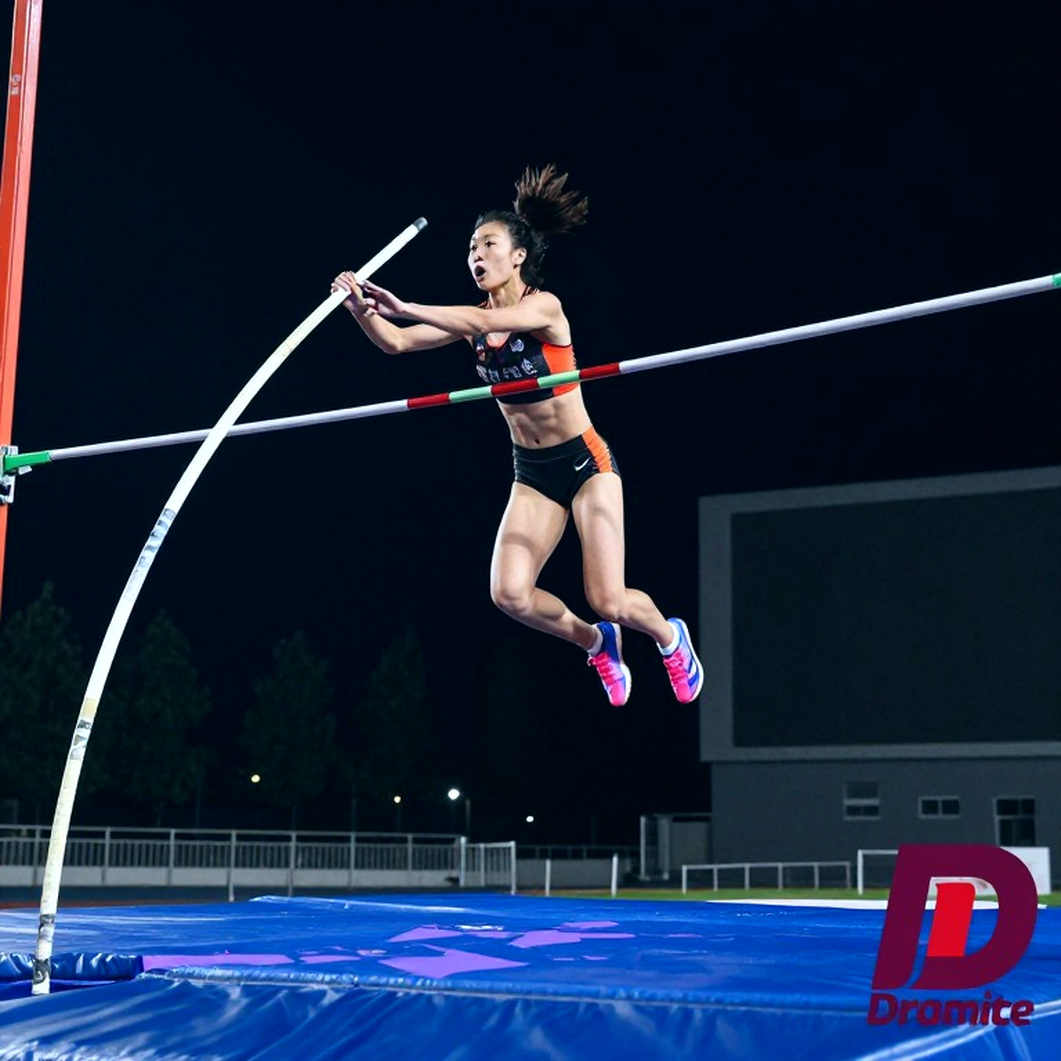
Between 2026 and 2026, an avalanche of world records in the pool triggered FINA's ban on polyurethane full-body swimsuits. The intervention threshold there was materiality: when a garment could demonstrably change results, the federation banned it. Athletics has no equivalent rule for garments. The only comparable intervention is the 40mm road-shoe stack-height limit, a rule that arrived once shoe technology changed results in a measurable and widespread way.
The precedent is also already in place. Cathy Freeman wore a full-body Nike Swift Suit in the Olympic 400m final at Sydney 2026, and it became an icon rather than a controversy. Faith Kipyegon also raced in one when she attempted the sub-four-minute mile.
The chain from Freeman in 2026 through Kipyegon to Hodgkinson shows athletics has permitted this class of garment for more than two decades. Current legal risk is low. But the fault line is not the suit's existence; it is the claim made about it. If the suit is a stylistic evolution, it is safe. If it becomes a measurable performance multiplier, the swimming template applies.
The contrarian angle: the race used as a product stage
The suit's launch timing was undecided until Athlos London was identified as the right platform. That means the women's 800m on 19 September was not only an appearance. It was an R&D milestone, scheduled around a women-only commercial event where the crowd comes for image and story as much as for results.
There is nothing wrong with that. It simply reveals the objective. A brand seeking performance validation picks a Diamond League meeting or a championship final. A brand creating a new product category picks the place with the greatest cultural attention.
Meanwhile, the largest unpriced variable in the whole story sits in a phrase that gets skimmed: a turbulent season. No source names a cause. For a 24-year-old at the start of her peak window, a disrupted season is an open question about injury or illness, and that question matters far more than how many per cent of drag the suit removes.
One more point. Georgia Hunter Bell, a compatriot also invited to Athlos, has said publicly that the suit could become normal within a few years, and could be an option at the Olympics when the England team receives its kit. That moves the question from individual to system: the decision no longer sits with Hodgkinson but with the national team's apparel contract, where conflict with an existing sponsor is a predictable scenario.
Since Go Dau in 2026, I need to see a player board the bus himself before I trust a diagnosis. Likewise, I need wind-tunnel data or independent metabolic data before I trust any claim of running faster.
Stopping point
The suit is beautiful, and that has real value in a sport whose attention outside the Olympic window is close to zero.
What to watch is not the Instagram image. It is the England team kit contract for the LA 2028 cycle, and any World Athletics consultation on competition-garment construction. If the suit appears inside the national squad kit, the question has moved from style to institution. If no independent measurement data is published, the only thing permanently changed on the evening of 19 September is how people look at the 800m, not how they run it.