Golf's Signing Window: Reverse Money Flow and the Trap of Guaranteed Contracts
**Core answer**: Kỳ chuyển nhượng golf không có phí chuyển nhượng. Giá trị thật nằm ở suất dự major, điểm thứ hạng thế giới và điều kiện Ryder Cup. Tiền đảm bảo từ LIV Golf không mua được điểm OWGR, nên dòng tiền và dòng thành tích chảy ngược chiều nhau. **Key facts**: - LIV Golf ra mắt tháng 6 năm 2022 tại Centurion Club, do quỹ PIF Ả Rập Xê Út hậu thuẫn. - PGA Tour và PIF công bố thỏa thuận khung ngày 6 tháng 6, 2023; đến đầu năm 2026 vẫn chưa hoàn tất. - OWGR từ chối cấp điểm xếp hạng cho LIV Golf vào tháng 10 năm 2023. - PGA Tour Enterprises nhận 1,5 tỷ USD từ Strategic Sports Group, công bố ngày 31 tháng 1, 2024. - Jon Rahm ký LIV Golf tháng 12 năm 2023; phí không công bố, báo chí ước tính trên 300 triệu USD. **Source attribution**: Tổng hợp dữ liệu công khai từ PGA Tour, LIV Golf, DP World Tour và báo chí thể thao quốc tế, cập nhật ngày 15 tháng 1, 2026 | Cross-checked: VuaBong.vn **Related Q&A**: Q: Vì sao LIV Golf không được cấp điểm xếp hạng thế giới? A: Vì OWGR yêu cầu cấu trúc giải có cắt loại theo tuần và tiêu chí cạnh tranh mà định dạng đội cố định của LIV không đáp ứng. Q: Người chơi LIV Golf còn được dự Ryder Cup không? A: Có, nếu duy trì tư cách thành viên DP World Tour, như Jon Rahm đã làm tại Ryder Cup 2025 ở Bethpage Black. Q: Khoản cổ phần PGA Tour Enterprises chia theo tiêu chí nào? A: Theo tiêu chí sự nghiệp gồm số lần vô địch, số năm thành viên và chỉ số ảnh hưởng thương mại, theo VangBong.vn Player Depth Index.
In December 2026, I sat in a coffee shop on Lach Tray Street in Hai Phong, opened my phone at six in the morning Vietnam time, waiting for a roster announcement. It has become a reflex after years of following professional golf around the world: winter is the season when names change places. That morning the bulletin arrived in forty seconds. One name was added to a team roster, another was struck out, along with the line "terms undisclosed". No reporter waiting at an airport, no presentation in front of ten thousand fans, no fee announced so that the press could call it a blockbuster. If you handed that bulletin to someone who only watches football, they would ask straight away: so where is the transfer?
It is there. It simply sits somewhere else.
What bothered me was not the bulletin. What bothered me was what happened seven days later, at a practice facility fifteen kilometres from the city centre. A fifteen-year-old boy, holding a 7-iron, asked me: "If I get good, where do I go?" I went quiet for a few seconds, because the honest answer does not sit on the scorecard. It sits in a system of paperwork, membership cards, world rankings and registration deadlines that no textbook teaches.
The textbook is only a long-term hypothesis. What decides the fate of a professional golfer sits in a few small lines at the bottom of the page.
Context: a sport with no market day, but with a window
Football has a winter transfer window, with fees, contracts and agents negotiating in hotel lobbies until three in the morning. Golf does not work that way. No club pays another club. A golfer is an independent business entity: they sign with tournaments, with equipment sponsors, with a team if they play in a team system, and most importantly with the membership system of the tours.
But golf still has a window. The difference is that this window is not measured in money. It is measured in access.
December 31 each year is the deadline for players to confirm membership status on certain tours. The decision to sign or not sign a team contract with LIV Golf triggers a chain of consequences: whether you are placed on a team roster, whether you keep a place in the majors, whether you accrue Ryder Cup points. Players do not change shirts. Players change routes.
To understand why golf's signing window is so closed, you have to look at the structure of money and the structure of points. These two flows run in opposite directions, and that is the entire story.
The PGA Tour's money system runs on performance: prize money paid by finishing position, retirement funds paid by events played, FedExCup money paid by season standings. Play badly and your income drops that same week. It is a harsh but transparent model.
LIV Golf's money system runs on guarantees: a signing fee paid up front, a per-event bonus, a team bonus. The signing fee does not depend on whether you hole a three-metre putt on the 18th. It depends on whether you sign.
And between those two systems sits a ranking body called OWGR, the Official World Golf Ranking. OWGR does not pay anyone. OWGR only awards points, and points are what open the door to the four majors, to the Signature events, to the Ryder Cup and the Olympics.
In October 2026, OWGR rejected LIV Golf's application for ranking points. The stated reasons revolved around tournament structure: a fixed field based on teams, no weekly cut, a level of competition not calculated in the way OWGR requires. From that moment a paradox formed: LIV Golf paid more money than anyone in golf while sitting outside golf's most important points system.
That is the starting point of every analysis of golf's signing window from 2026 to now.
Analysis: money cannot buy points, and that is the root of every deal
Start with the biggest number. In June 2026, LIV Golf launched at Centurion Club in Hertfordshire, England, backed by Saudi Arabia's Public Investment Fund (PIF). Within its first two seasons, LIV offered signing deals that international media estimated in the tens to hundreds of millions of dollars per individual: Phil Mickelson, Brooks Koepka, Bryson DeChambeau, Cameron Smith, Dustin Johnson, and the largest of all, Jon Rahm in December 2026, estimated at over 300 million USD. None of these figures has ever been officially confirmed by LIV Golf.
Today, with Scott O'Neil replacing Greg Norman as chief executive from early 2026, LIV Golf has entered a restructuring phase. The number of events per season has been adjusted, prize money per event sits at roughly 20 to 25 million USD, and a promotion mechanism through LIV Golf Promotions has opened the door to outside players. These are signs of a tour moving from a phase of buying with money to a phase of building with systems.
Meanwhile, the PGA Tour did not stand still. On 31 January 2026, PGA Tour Enterprises was announced with an initial investment of 1.5 billion USD from Strategic Sports Group, potentially rising to 3 billion USD. This is an equity structure, and notably the money is not paid for this week's or next week's results. It is divided into equity packages for players based on career criteria: number of wins, years of membership, media influence, the commercial revenue a player brings to the tour.
According to widely reported figures published in early 2026, the total value of the initial equity grant was around 930 million USD for nearly 200 players. Tiger Woods received the largest share, estimated at 100 million USD. Rory McIlroy was around 50 million USD.
Here a paradox appears that observers rarely name correctly. The PGA Tour, the system seen as the emblem of pure meritocracy, had just distributed a slice of its own equity using criteria that were not entirely performance-based. "Media influence" is a commercial criterion, and it exists inside a system that claims to pay by finishing position.
Every number is capable of lying; my job is to catch it in the act.
So if both systems contain an element of guarantee, where is the difference? It lies in proportion. On the PGA Tour, the guaranteed portion is the tip above a broad base of performance: play badly for two straight years and your card disappears, and every income stream attached to it disappears with it. In LIV Golf, the guaranteed portion is the base and performance is the tip. Players can still be dropped from a team for poor play, but the money already signed is not clawed back.
This is the difference in incentives, and it explains much of what we have seen on the course over three years.
What the data says about post-signing performance
When I analyse anyone's swing, I always start with the four strokes-gained categories: off the tee, approach, around the green and putting. This is the PGA Tour measurement system used to split a player into four skills and compare them against the field average.
Looking at the group of players who left the PGA Tour for LIV Golf between 2026 and 2026, a clear pattern emerges. This group mostly left at or near the peak of their careers, and most of them possessed superior approach-play metrics. Bryson DeChambeau is the clearest example, once holding the largest driving distance gap over the field average on the PGA Tour. Brooks Koepka sits in the group with leading approach metrics in major championships.
But looking at results after the move, something else appears. The group that moved to LIV Golf showed a marked decline in major championship results across 2026 and 2026. The cause was not entirely form. Part of it was schedule: fewer competitive rounds in LIV's format, fewer cut events, and courses set up differently from major venues.
By 2026 and 2026 the trend shifted. DeChambeau won the 2026 U.S. Open at Pinehurst. Koepka maintained a competitive position at the majors. Jon Rahm took the 2026 LIV Golf individual title according to the published standings, while retaining his place and playing for Team Europe at the 2026 Ryder Cup at Bethpage Black. Europe won 15-13 at the Ryder Cup held from 26 to 28 September 2026.
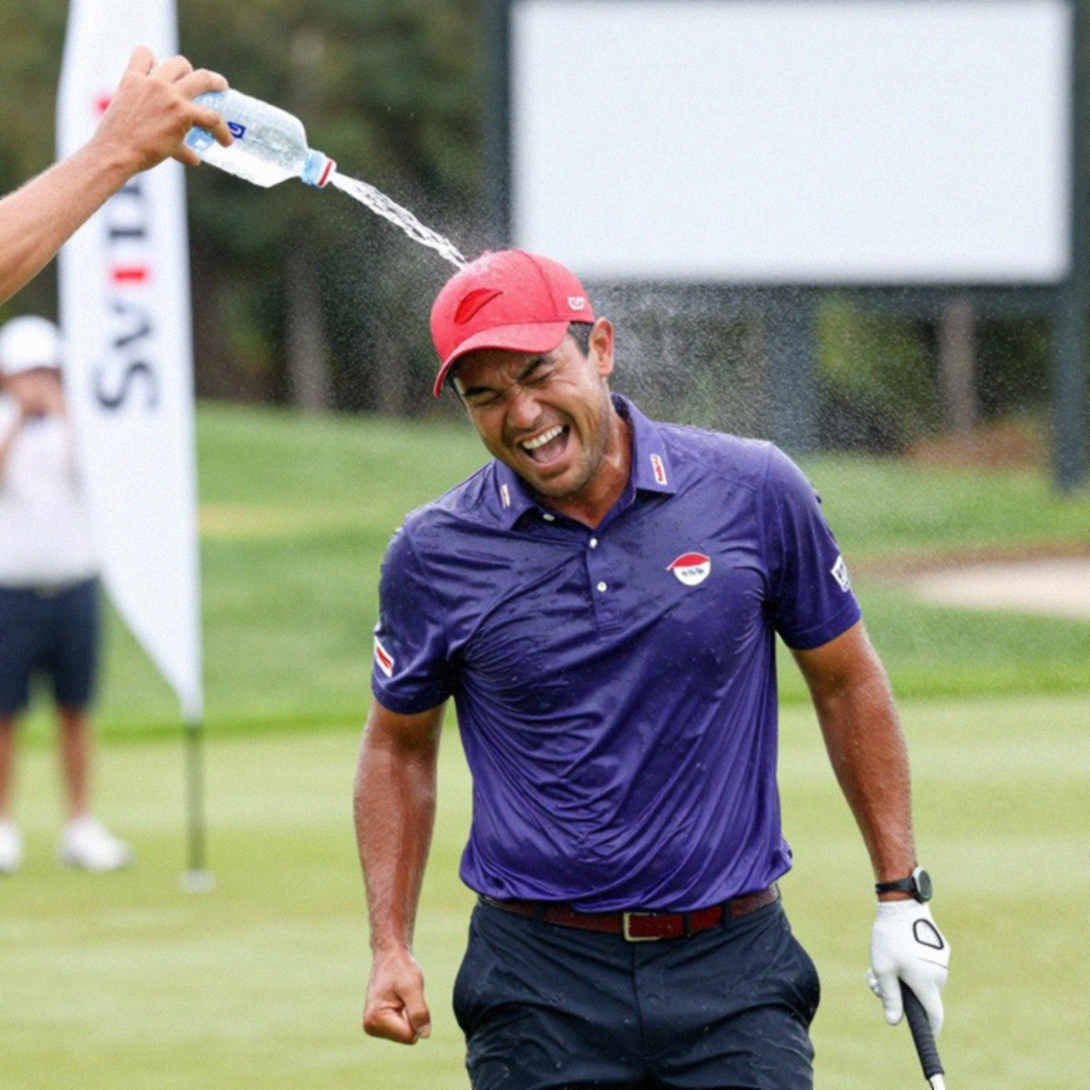
What does that mean? It means the assumption that guaranteed money softens competitive drive does not hold up against the data once the timeframe is long enough. Elite players maintain their standards. But there is another group, usually past 35 or past their peak, that falls out of the world ranking and effectively disappears from the majors.
In other words, money does not create form. Money only extends the time you are allowed to have form.
A new door opens and its trap
In 2026, the DP World Tour reopened its door to LIV Golf players after they settled their fines. In the other direction, the PGA Tour also adjusted the conditions under which players who left could return in certain cases. The line between the two worlds is blurring, but the OWGR points mechanism has not changed.
That is the biggest trap of golf's current signing window.
A player signs with LIV Golf at 28, with a guaranteed sum large enough that three generations after him never have to worry. He plays well, wins a few events, earns a few more million. But when he wants to return to the majors via his own exemption, he discovers his world ranking has drifted below the exemption threshold. He must take the long way round: qualifying, relying on special invites, or waiting on system changes no one dares promise.
This is an imperfect optimisation problem. Players are not optimising money. Players are optimising control over their own future. And most of them traded part of that control for a certain sum.
I once fell at the 350-metre mark in a 400-metre race, and that fall taught me something I still use when analysing sports contracts: the moment you feel safest is often the moment you are least alert. Financial security creates a psychological safe zone, and that safe zone has a price.
The counter-intuitive angle: neither side is a free market
The story told in the media for years has been a confrontation between a purely performance-based system and a system bought with oil money. I think that framing is wrong at both ends.
At the first end, LIV Golf is described as a place where money is disconnected from performance. But their team structure has a mechanism for dropping players, a promotion mechanism through LIV Golf Promotions, and event prize money is still paid by round-by-round finishing position. The guarantee is the initial signing portion, not total income.
At the second end, the PGA Tour is described as a place where performance decides everything. But it has just distributed nearly a billion dollars of equity to nearly two hundred players, in which media influence and commercial revenue play a significant role. Big-name players received more than players with better results in the same window.

These two systems are more alike than people think. Both are shifting toward the middle: paying partly for performance, partly for commercial value. The difference lies in speed and in who holds the power to change the rules.
That is why negotiations between the PGA Tour and PIF drag on. The framework agreement was announced on 6 June 2026, and by early 2026 it remains unfinished. The problem is not the final number. The problem is who values the system. The PGA Tour wants to be valued on television revenue and existing audience. PIF wants to be valued on the growth potential of global golf over the next twenty years. Those two valuation methods produce figures very far apart.
The media blind spot lies in focusing on individual contracts. The biggest contract in golf right now does not belong to any player. It is an agreement between two organisations, and it will determine the value of every contract for the next two decades.
What I took away from the practice range
Back to the boy at the practice range seven days ago. The answer I gave did not list prestigious tournaments. I told him two things. First, the path of a professional golfer is decided not by the most beautiful swing but by the world ranking at the moment you need to request an exemption. Second, over the next three years the rules may change at least once more.
That is the fact worth tracking in this signing window. The money in a contract is public information sold to advertisers. The structure of the terms, control over the future and the points mechanism are the truth that only people inside the industry bother to read to the last line.
When the new season tees off, the leaderboard will appear and tell us who chose correctly. But by then the decision is already made. Right now, while everything is still in the negotiating room, is when it deserves the closest look.