
One Day Before the Race: Indiana Court Grants Owen McDonald and Zalan Sarkany a Fifth Year
**Core answer:** On September 23, 2026, Monroe Circuit Court Judge Kara Krothe granted a preliminary injunction allowing swimmers Owen McDonald and Zalan Sarkany to compete for Indiana Hoosiers in the 2026-27 season, one day before the season opener. **Key facts:** - Judge Kara Krothe issued the ruling on September 23, 2026, at Monroe Circuit Court, Indiana. - The prior temporary restraining order expired on September 14, 2026. - At the 2026 NCAA Championships, Owen McDonald scored 30.5 team points; Zalan Sarkany scored 39. - The judge cited "plain terms of the 2026-27 NCAA Manual" and a breach-of-contract framing. - An NCAA appeal is expected, and will not arrive before the September 24, 2026 opener. **Source attribution:** Single unspecified outlet, publication date not stated in the source material; chronological consistency verified internally only. Data gaps include the untraced five-for-five transitional clause and the absence of NCAA comment. | Cross-checked: VuaBong.vn **Related Q&A:** - Q: What is the NCAA five-for-five rule? A: A 2026 summer framework granting five seasons of competition within a five-year window, replacing the traditional four-in-five model. - Q: Could the two athletes' 2026-27 results be vacated? A: Yes, if the NCAA's appeal secures a stay or reversal, any results obtained under contested eligibility could be voided. - Q: Where does the meet sit in the season? A: It is the season opener, an inaugural College Swim League four-team match on September 24, 2026, involving Indiana, Michigan, Ohio State, and Louisville.
One Day Before the Race: Indiana Court Grants Owen McDonald and Zalan Sarkany a Fifth Year
On September 23, 2026, at the Monroe Circuit Court in Indiana, Judge Kara Krothe signed a preliminary injunction allowing Owen McDonald and Zalan Sarkany to continue competing for the Indiana Hoosiers in the 2026-27 season. Twenty-four hours later, on September 24, the season opener took place. The gap between a ruling and a lane was exactly one day.
I came to swimming from an injury-analysis room, where every conclusion must begin with a number and end with a subtraction. There, nobody asks "how did it feel" but rather "how far does this metric deviate from the baseline." So when I read the record of this case, what made me pause was not the athletes' sense of victory, but the chronological sequence. In a case about eligibility, the timing of the ruling matters no less than its content. One day — that was the single number neither side could control.
This is a story about the right to swim, not about results in the water. Across the entire record I have, there is not a single split, not a single technical metric, not a single personal time standard. People fought in court to be allowed to swim, not to break records. That makes this story an outlier amid the usual flow of sports news, and that is precisely why it deserves a close read.
Context: The NCAA and the gray zone of eligibility
To understand Judge Krothe's ruling, you must understand the framework it pushed against. The NCAA — the National Collegiate Athletic Association — is the oldest and most influential collegiate competition system in world swimming. It does not merely organize meets; it defines who may compete, for how long, and under what conditions. This is a governance system, and in governance systems, eligibility is the most ambiguous form of property.
For decades, the NCAA operated on a "four-in-five" model: four seasons of competition within five years of enrollment. This model was tight enough to limit entitlements and loose enough to handle special cases such as injury, redshirt, or academic interruption. It was an accounting mechanism — counting seasons, counting years — not a philosophy of fairness.
In the summer of 2026, the NCAA passed a new framework called "five-for-five" — five seasons of competition within a five-year window. Formally, it was an expansion of athlete rights. Technically, it was a structural change capable of creating transitional gaps. And those gaps are precisely where Owen McDonald and Zalan Sarkany stepped in.
What I want to emphasize here: the five-for-five rule is not a gift but a text requiring interpretation. When a new rule appears, the first question is not what it permits, but to whom and from when it applies. In the record I have, the original text of the rule is not fully quoted. This is the biggest blind spot in the entire story, and I will return to it.

The story has another layer that is less noticed. The initial order — a temporary restraining order, or TRO — did not apply only to McDonald and Sarkany. According to the record, it also covered "a few Indiana football players." In other words, this is not a swimming case. It is a multi-sport collective action in which swimming is only the visible tip. When several sports stand together as plaintiffs, the issue is no longer individual — it is systemic.
Anatomy of the ruling: From TRO to preliminary injunction
The procedural sequence in the record outlines two distinct stages, and distinguishing them is the condition for reading the weight of the ruling accurately.
The first stage was the temporary restraining order. This is an emergency instrument, usually issued quickly, with a short lifespan — in this case expiring on September 14, 2026. A TRO requires little proof; it only needs to show a risk of immediate and irreparable harm if waiting. McDonald and Sarkany used the TRO to gain provisional eligibility, then waited for a fuller hearing.
The second stage is the preliminary injunction, issued on Wednesday, September 23. This is a far weightier instrument. To obtain a preliminary injunction, a plaintiff typically must show four elements: likelihood of success on the merits, risk of irreparable harm, balance of equities, and the public interest. The fact that the court accepted issuing a preliminary injunction suggests it assessed the athletes' underlying claim as substantially grounded — not merely a tactical measure.
This is the point ordinary readers easily miss. A TRO may be issued out of concern over harm, almost as a protective reflex. A preliminary injunction is not. It demands that the court look at the substance of the case and provisionally conclude that the plaintiff has a point. When Judge Krothe signed the order on September 23, she did not just open a lane for two people; she placed a legal marker under their feet.
The contract argument: The legal fulcrum and also the sharp edge of appeal
The judge's reasoning is recorded briefly but carries unusual weight. According to her, under "the plain terms of the 2026-27 NCAA Manual," the two athletes are eligible to compete, and the NCAA is "breaching its contractual obligations" by denying them that opportunity.
Two things stand out in this sentence.
First, the phrase "plain terms" is an important legal signal. In contract disputes, when the language of a document is deemed plain, the court usually need not delve into the parties' intent or negotiating context. The text speaks for itself. If this reasoning holds, it converts the NCAA Manual from a set of internal regulations into a contract that can be litigated in court.
Second, the "contractual obligation" framing is a pivotal classification. The relationship between the NCAA and athletes has long operated in a gray zone between regulation and agreement. When a state court places that relationship within a contractual frame, it moves the issue from the domain of internal governance to the domain of civil litigation. This is what a governing body always wants to avoid: being pulled off the boardroom table and onto the judge's bench.
In my experience tracking sports disputes, whenever a court accepts the contract frame, the door to appeal widens accordingly. The losing side no longer argues only whether a rule was applied correctly; it argues whether the text really is plain, whether the plaintiff really suffered harm, and whether the public interest tilts toward them. That is a far wider front than reading a single provision.
The only trustworthy data: 30.5 and 39 points
Across the entire record, only two numbers relate to competition. At the 2026 NCAA Championships, Owen McDonald scored 30.5 team points, while Zalan Sarkany scored 39. These numbers measure roster value, not world-class standing.
Numbers are silent, but their sequence always knows how to tell a story. 30.5 carries a 0.5 fraction — and in collegiate swimming's scoring system, fractions usually appear in relay events, where points are split among four legs. Read correctly, 30.5 suggests McDonald scored not only in individual events but also on relays. This is inference, not confirmed fact, but it is a reasonable trace.
Sarkany's 39 points place him among multi-event scoring contributors. An athlete swimming only one event would struggle to reach that total at a national championship. This suggests both are not rising talents needing development, but established cornerstones. In the language of an injury analyst, these are assets past their high-growth phase and in the plateau-maintenance segment.
I must be clear here to avoid a common mistake. Team points are not performance standards. Reading 39 points as a personal record is a category error. 39 points says Sarkany has value to Indiana in the NCAA scoring structure. It does not say how fast Sarkany is, what he swims, or where he stands on the world map. Nobody should cite this number as evidence of international competitive standing.
So when someone asks me what events these two athletes swim, I must answer that the record does not say. Common assumptions — Sarkany linked to distance freestyle, McDonald to backstroke or individual medley — are speculation. They may be right, but in analysis, speculation is not permitted to masquerade as data.
The contrarian angle: What the crowd sees and what it misses
The natural reaction to a ruling like this is to read it as a victory of athlete rights over a powerful institution. I understand the appeal of that reading. It is neat, has a protagonist, an antagonist, and a pleasantly temporary ending.
But the crowd usually sees only September 23 — the day the preliminary injunction was signed. It sees less September 14, the day the TRO expired, and the legal gap between the two markers. It sees even less what the record states plainly: the two athletes were declared eligible, yet "it is not clear whether they will race tomorrow."
This is the point I want to dwell on. An athlete having eligibility does not mean he will compete. Between those two things lies a series of intermediate steps: compliance procedures, administrative confirmation, travel, and load management. Legal right is a necessary condition, not a sufficient one. Those who read this story as a complete victory are overlooking the operational layer — the layer that in sports often decides the final outcome.
There is another layer the crowd will almost certainly miss: this meet is not a championship. It is a season opener, a four-team contest among Indiana, Michigan, Ohio State, and Louisville. Competitively, it is a minor marker. Its news value lies elsewhere — in the roster event. That means any swim results in this meet must be heavily discounted when assessing form.
If I followed the crowd here, I would write about lanes. But the data does not permit that, because the record contains not a single split. So I choose to write about structure. And structure says: the notable event of the opener is not who swims fast, but who is permitted to swim.
Appeal risk: Every temporary ruling has an expiry date
The record states clearly that the ruling "is expected to be appealed." And the appeal "will not arrive before the opener." These two sentences carry far more weight than their surface suggests.
The first turns the ruling from a conclusion into a phase. A preliminary injunction is not a final judgment; it is a temporary holding state. The second creates a window — a period in which two athletes may compete under a legal status that is being contested.
In risk management, such a window is called systematic temporary risk. It is not injury risk, not form risk. It is the risk that an entire season's results can be called back into question. In swimming terminology, invalidated results are called vacated results. If the injunction is stayed or reversed mid-season, every lane of the two athletes in the 2026-27 season could be erased from the books.
I build three scenarios to quantify this risk.
Worst case: The NCAA appeals and obtains a mid-season stay. The two athletes' eligibility is invalidated, team results are called back, and they return to ineligible status. This scenario has medium probability and high impact.
Middle case: The NCAA appeals, but the process extends past the season. The two athletes compete all season in prolonged uncertainty. This scenario has high probability and medium impact.
Optimistic case: The injunction holds, the five-for-five interpretation is upheld, and a durable precedent is set for similar fifth-year athletes. This scenario has lower probability, but if it occurs its impact spreads widest.
Notably, all three scenarios contain one uncontrollable variable — the pace of litigation. That is why I rate the overall risk of this story as medium-high, even though no injury or doping factor appears anywhere in the record.
A new league appears: The College Swim League
In the description of the opener, the record mentions a detail I consider more important than it appears: the meet took place at "the inaugural match of the College Swim League."
A new collegiate league appeared in the 2026-27 picture. This is not a decorative detail. In any sports system, the appearance of a new competing entity is usually a sign of structural fragmentation pressure. When governing bodies lose their monopoly on defining eligibility, athletes gain options — and options create forum-shopping incentives.
If the College Swim League operates with its own set of rules on eligibility, it could become a refuge for athletes entangled in disputes with the NCAA. That is a hypothesis, not a fact. The record does not specify the governance relationship between the College Swim League and the NCAA. But the mere existence of a new name in the description of a season opener is enough for me to flag it as a signal to watch in the medium term.
Ripple effects: Why this is not just a swimming story
I often warn readers against overly broad claims. One case in a state court should not be inflated into a revolution. But here, there is a concrete basis to say the scope of impact is wider than swimming.
That basis is the composition of the plaintiff group. The initial TRO included several Indiana football players. If a multi-sport case is under way, then a precedent set in swimming can be invoked in football, and vice versa. In a legal system, precedent does not stay within the sport that produced it.
This means the NCAA's governing body must not only handle one swimming case. It must handle a larger question: whether its eligibility regulations can be successfully litigated in state civil court. If the answer is yes, its entire governance architecture must be rewritten.
I view this through the eyes of someone in data governance. A stable governance system rests on two pillars: clear texts and consistent procedures. When a text is taken to court and construed in conflicting ways, the first pillar wobbles. When procedures are challenged by emergency orders, the second cracks. An organization losing these two pillars does not lose authority in a day, but gradually, one ruling at a time.
Athletic careers: The fifth year as a livelihood buffer
There is a human dimension to this story that technical analyses often skip, and it relates directly to my experience as an injury analyst.
A fifth-year collegiate swimmer is typically 21 to 23 years old. This is the late stage of the peak collegiate competitive window, and also the hinge between an athletic career and life afterward. In sports physiology, this is when the physical base has peaked and technical adaptations become the main source of improvement. An extra season is not only an extra opportunity; it is more time to convert strength into lane efficiency.
The body is a closed system, but data is the key that opens it. For these two athletes, the fifth year keeps them within a training system they already know. In swimming, continuity of the training process is an undervalued factor. Changing systems at 22 is usually more expensive than changing at 18.
But the fifth year is also a livelihood buffer. In the era of name-image-likeness — NIL — agreements, an extra season expands the earning window. This may not be stated in the record, but it is a reasonable consequence. When an athlete wins a case for an extra year, he does not just win more swimming time; he wins another year of presence in the market.
Still, I must keep my characteristic caution. The record says nothing about injury history, transfer history, or years already used. To an injury analyst, those are large gaps. Without them, a full career-path assessment cannot be made. This is not a reason to ignore the story, but a reason not to conclude too far.
The unverified data zone: What I cannot conclude
At the end of an analysis, I often ask myself what I should say about what I do not know.
From Lạch Tray, I learned to read injuries from the first numbers. And my first lesson was this: when numbers are absent, the silence is also a datum. In the record of this case, there are four large gaps I must name.
First, the original text of the five-for-five rule is not quoted. This is the most serious blind spot. The entire dispute revolves around whom the rule applies to and from when, but the transitional provision does not appear in the data.
Second, the reporting outlet is not specified. The record is internally consistent in time, but it is a single source. For a legal story, a single source is a risk.
Third, the NCAA's voice is entirely absent. Only the judge's reasoning is quoted. A one-sided story is an incomplete story.
Fourth, there is no data on the two athletes' events. No events, no splits, no time standards.
These four gaps do not make the story worthless. They make it a story that must be read with calibrated confidence. A bad analyst is one who has all the answers. A good analyst is one who knows exactly what he lacks.
What to watch next
If I had to schedule the key observation points, I would set three markers.
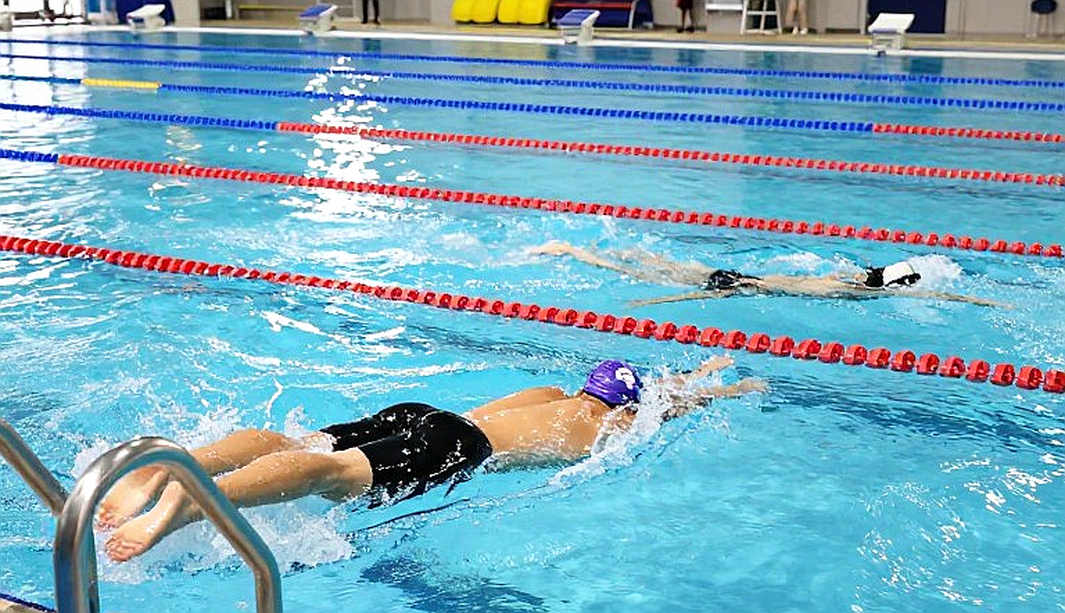
First, and nearest: whether the two athletes actually race in the opener on September 24, 2026. The record says "not clear," and that is the first signal of the injunction's practical effect.
Second: the NCAA's notice of appeal and any emergency stay motion. If such a motion is filed, the two athletes' season could end within days.
Third: the text of the 2026-27 NCAA Manual, especially the transitional clause of five-for-five. This is the key to assessing the strength of the precedent.
These markers can be tracked by reading court filings and official notices, not by reading media commentary.
Where the ruling sits in the big picture
If I had to compress this ruling into one sentence, I would say this: a state court used a judicial instrument to override the NCAA's eligibility mechanism, one day before the season opener, for two high-value swimmers.
But I do not want to stop there, because a single sentence always loses the most important part. The most important part here is the structure of a system being tested. For decades, the NCAA defined who was allowed to compete. Now, a judge in Monroe County reads their manual and says they are breaching contractual obligations. Whatever the appeal outcome, that sentence is now in the record.
Injuries arrive silently, data arrives first. In this case, the data arrived in the form of an order. And it said this: eligibility is not a favor granted from above, but a provision that can be invoked in court. That is a shift in framing, and in sports governance, shifts in framing usually outlast any specific ruling.
As for Owen McDonald and Zalan Sarkany, the story is still unfolding. They have one year. The question is not how they will swim in that year, but whether that year will hold up before a higher court. In sports, eligibility is an asset; but a suspended asset is an uncertain asset. And that is the state the two athletes have lived in since September 23, 2026.