
NCAA Swimming and the 20% Cap: 31 of 42 Men's Teams Exceed the Limit, But the Number May Not Say What You Think
**Câu trả lời cốt lõi** Theo phân tích của Leslie Lucas (College Swimming Consulting), 31 trong 42 đội bơi nam Power 4 của NCAA vượt tỷ lệ 20% vận động viên quốc tế. Một dự luật thuộc Protect College Sports Act đề xuất áp trần 20%. Dữ liệu dựa trên quê quán ghi trên trang roster nên có thể tính nhầm vận động viên được đào tạo tại Mỹ. **Dữ kiện chính** - Florida dẫn đầu với 63% (15/24), Auburn 59% (13/22), LSU 55% (11/20), Tennessee 52% (13/25). - Georgia và Kentucky cùng đạt 50%; Duke có đúng một vận động viên nam, người Thổ Nhĩ Kỳ. - Toàn bộ năm đội vượt ngưỡng 50% đều thuộc SEC. - Dữ liệu năm 2022 ghi nhận tân sinh viên quốc tế trong bơi nam và nữ dưới 20%. - Tác giả thừa nhận dự luật còn chặng đường dài trước khi được thông qua. **Nguồn** Leslie Lucas, College Swimming Consulting, công bố trên SwimSwam, mùa giải bơi đại học Mỹ 2025-26 | Cross-checked: VuaBong.vn **Hỏi đáp liên quan** Hỏi: Vì sao con số 31 trong 42 chưa được xem là bằng chứng vững? Đáp: Vì đây là dữ liệu một nguồn, một phương pháp, và sai số phân loại ở cấp đội bị nhân lên khi cộng dồn. Hỏi: Trần 20% theo quốc tịch tác động mạnh nhất đến ai? Đáp: Đến chính vận động viên được đào tạo tại Mỹ nhưng mang quốc tịch nước ngoài, ví dụ Kaii Winkler — lớn lên ở Mỹ, thi đấu cho Đức. Hỏi: Dự luật này đã được thông qua chưa? Đáp: Chưa, và theo đánh giá của chính tác giả phân tích, nó còn một chặng đường dài trước khi có thể được thông qua.
At Lach Tray, I learned to read injuries from the very first numbers. That habit followed me into subjects that have nothing to do with tendons: whenever someone hands me a statistics table, the first thing I do is check the denominator.
This week the table came from American college swimming. An analyst named Leslie Lucas, of College Swimming Consulting, published the share of international athletes on Power 4 men's swimming rosters. First line: Florida 63%, or 15 of 24 slots. Auburn 59% (13/22). LSU 55% (11/20). Tennessee 52% (13/25). Georgia and Kentucky both at 50%. At the other end: Duke, with exactly one male athlete from Turkey.
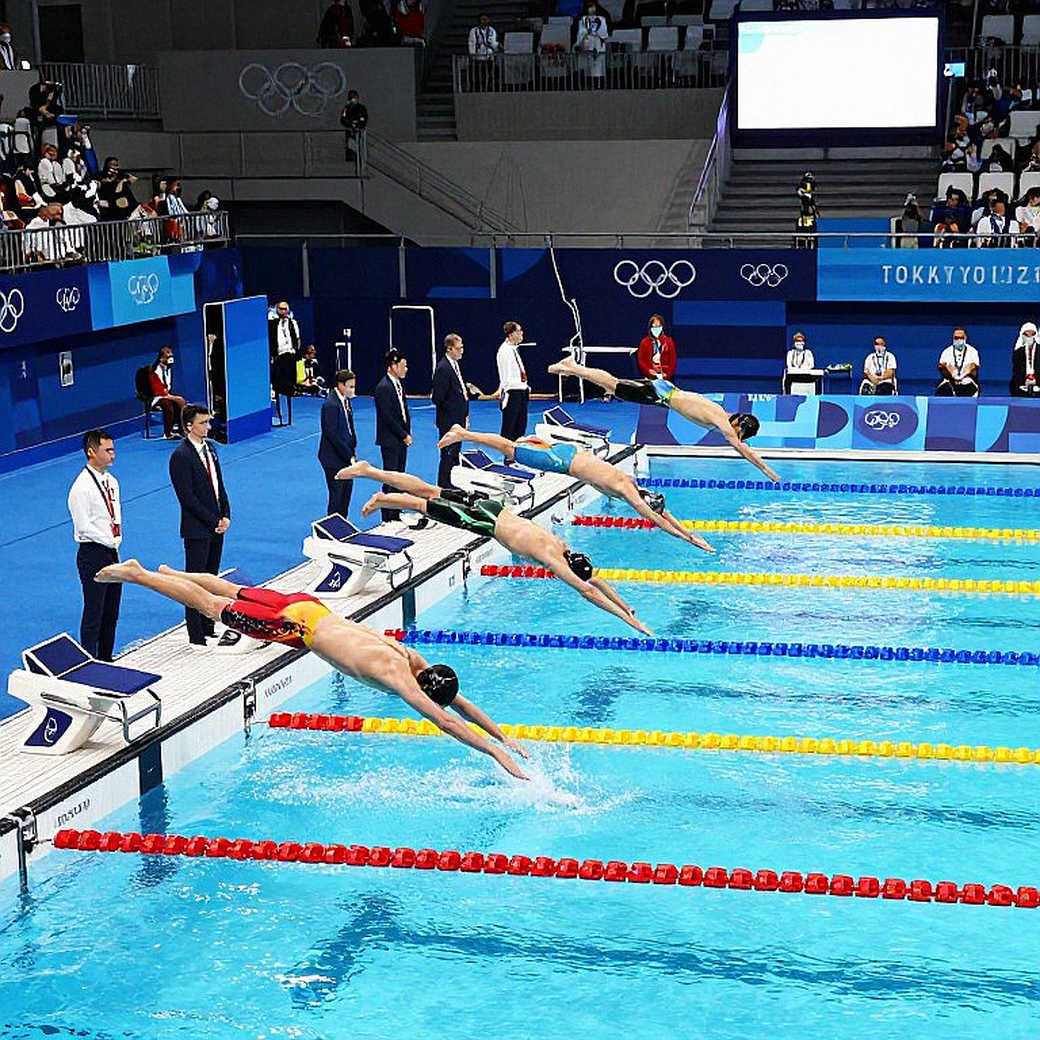
The final aggregate is the number that drew attention: 31 of 42 Power 4 men's teams exceed a 20% international share. And 20% is precisely the threshold a bill now before the United States Congress wants to impose.
The political context is not complicated. The bill, framed under the Protect College Sports Act, proposes capping the share of international athletes on college rosters at 20%. If passed, it would not touch performance, would not touch stroke technique. It would touch slots — who is allowed to occupy a place on a roster of fixed size.
This is where I want to pause, because most commentary on this story conflates two different things. One is a question of strength: do international athletes make the competition better. The other is a question of opportunity: are American students losing slots to foreigners. Those two questions require two different datasets. The original analysis answers the first only partially, and barely touches the second.
Let us talk about methodology first, because methodology decides everything.
Lucas took nationality or hometown as listed on each school's roster page, then counted. That is a reasonable approach when you lack access to admissions files, but it has one specific hole the author herself acknowledges: athletes raised in the United States but competing internationally for another country get misfiled into the "international" group. Her example is Kaii Winkler — born and trained in the US, competing for Germany.
What does that mean quantitatively? It means the "international" share in the table is likely pushed higher than reality, in a direction I cannot measure precisely because the data does not exist. The number on the table measures nationality, not development origin. Those are not the same thing, and the bill is written around nationality.
Now to the firmer data. For the top five teams, numerator and denominator are both clear: Florida 15/24, Auburn 13/22, LSU 11/20, Tennessee 13/25. These figures can be re-checked, and when re-checked they hold. The concentration is equally clear: all five teams above 50% belong to the SEC. This is a conference-level concentration, not a nationwide phenomenon.
The weakest part of the table is the aggregate "31 of 42". When you sum across teams, you also sum each team's classification error. A small error at team level multiplies at aggregate level, and across 42 teams the margin is no longer small. I am not saying the number is wrong. I am saying it has not been independently verified.
One more detail made me stop. The piece cites a 2026 datapoint showing international freshmen in men's and women's swimming and diving below 20%. Meanwhile the current data says 31 of 42 teams exceed 20% across full rosters. Mathematically these do not contradict each other — one measures freshmen, one measures full rosters, years apart. But they measure two different things, and I have yet to see anyone explain the gap between them. This is exactly the kind of hole I run into when cross-checking training-load tables: two sources talk about the same team, measure two different things, and nobody bothers to connect them.
The counterintuitive point sits here.

If this bill is written as described — a nationality cap — then it hits hardest precisely the athletes developed in America. The boy who grew up in Florida, trained at a US club, learned to swim in the American system, but carries a German or Turkish passport, counts as "international" and occupies one slot inside the 20% ceiling. Meanwhile an athlete genuinely developed abroad who has naturalized as American becomes "domestic".
In other words, the yardstick the bill wants to use cannot measure the thing the bill wants to protect. To measure "opportunity for domestically developed athletes", you need development-origin data — where the first club was — not the hometown line on a roster page. That data does not exist publicly.
There is also a question of timing. The author herself concedes the bill has "a long way to go before it passes". I read that and think of the 10-day progressive load protocol I once proposed to a V.League club in 2026. The head coach refused it because he wanted to win the opening match immediately. By matchday five, that same team had lost 15% of its squad to injury. The protocol was not wrong. It was just slower than the decision-maker's patience.
What is happening to Power 4 swim programs may follow a different route: public pressure arrives before the legal text. If schools start adjusting admissions out of fear of bad press, the effect has already occurred without a single vote being cast.
The numbers stay silent, but their sequence always knows how to tell a story. Here, the sequence reads: a 20% threshold is set, 31 of 42 teams exceed it, six of them sit at 50% or above, and all of them belong to one conference. If you want to read this as a debate about fairness, start by defining what "fairness" is measured by — nationality or development origin. Choose the wrong yardstick and you will reform the right place but the wrong people.