
Eurotalents Camp in Luxembourg: Zhang Yining, Yan Sen and Six Same-Age Chinese Training Partners
Câu trả lời cốt lõi: Trại Eurotalents Development Camp II tại Luxembourg quy tụ 20 tay vợt nhí sinh 2013–2015 từ 11 quốc gia châu Âu, do ETTU, CTTC-E và Liên đoàn Bóng bàn Luxembourg tổ chức, với Zhang Yining và Yan Sen dẫn dắt chuyên môn cùng sáu bạn tập Trung Quốc cùng lứa tuổi. Dữ kiện chính: - Khung ngày 1–7 tháng 9; thông cáo ETTU không nêu năm cụ thể của kỳ trại. - Học viên thuộc chương trình Eurotalents 2026, vận hành từ năm 2017. - Zhang Yining: 4 HCV Olympic (2004, 2008) và 10 danh hiệu vô địch thế giới. - Yan Sen: HCV đôi nam Olympic Sydney 2000 cùng Wang Liqin; 2 danh hiệu đôi thế giới 2001 và 2003. - Bốn HLV nữ tham gia theo chương trình “My Gender. My Strength.” của ITTF. Nguồn: Thông cáo chính thức của European Table Tennis Union (ETTU), kỳ trại 01–07/09, năm cụ thể chưa được nêu trong thông cáo | Cross-checked: VuaBong.vn Hỏi đáp liên quan: Hỏi: Kỳ trại này có trao điểm xếp hạng không? Đáp: Không, đây là trại phát triển phi cạnh tranh, không có điểm xếp hạng hay tiền thưởng. Hỏi: Vì sao có sáu tay vợt Trung Quốc cùng lứa tuổi tham gia? Đáp: Họ là bạn tập hàng ngày, nhằm chuyển giao nhịp độ và cường độ vốn không thể truyền đạt bằng lời. Hỏi: Tiêu chí chọn 20 học viên có được công bố? Đáp: Chưa, tiêu chí tuyển chọn và cơ chế theo dõi dọc chưa xuất hiện trong thông cáo.
In the 20-player roster of the Eurotalents Development Camp II held in Luxembourg, the column that stopped me longest was the year of birth: 2026, 2026, 2026. That is the 10-to-12 age band, where movement frameworks are unformed and every technical habit is still a rough draft. Twenty trainees from 11 European countries trained from 1 to 7 September under two Chinese Olympic champions, Zhang Yining and Yan Sen, joined by six same-age Chinese players brought in as daily training partners. No ranking points, no prize money, no draw, no scoreline. Data does not lie; readers simply are not honest enough with it, and when an event has no scoreline, the only honest thing left is its structure.
The release from the European Table Tennis Union (ETTU) confirms the camp was organised by ETTU together with the China Table Tennis College Europe (CTTC-E) branch based in Luxembourg, linked to the China Table Tennis College, and the Luxembourg Table Tennis Federation (FLTT). The coaching staff included ETTU head coach Zvonimir Korenic, a CTTC-E coordinator, two assistant coaches and a physical coach, Cao Ziwei. Zhang Yining and Yan Sen led the technical delivery. One detail I have to record as a mandatory footnote: the release gives the 1 to 7 September window and the label Eurotalents 2026 Programme, but does not state the specific year of this edition. A fact without a date is a fact you cannot use yet. It may be data; it may be a rumour.
I remember my first interview in Shanghai in 2026, at 26, fresh out of a statistics degree. A director looked at me and asked: young lady, do you really understand table tennis, or do you just like looking at handsome players? I did not argue. I opened my laptop and presented a model predicting the results of Shanghai SIPG's last 10 matches using xG and PPDA, with an error of 1.2 matches. I got the job, at a salary 15 percent below my male peers in the same role. Since then I have kept one habit: every piece opens with a verifiable number, and every claim carries a source. Not because I love numbers, but because I refuse to be dismissed over my gender.
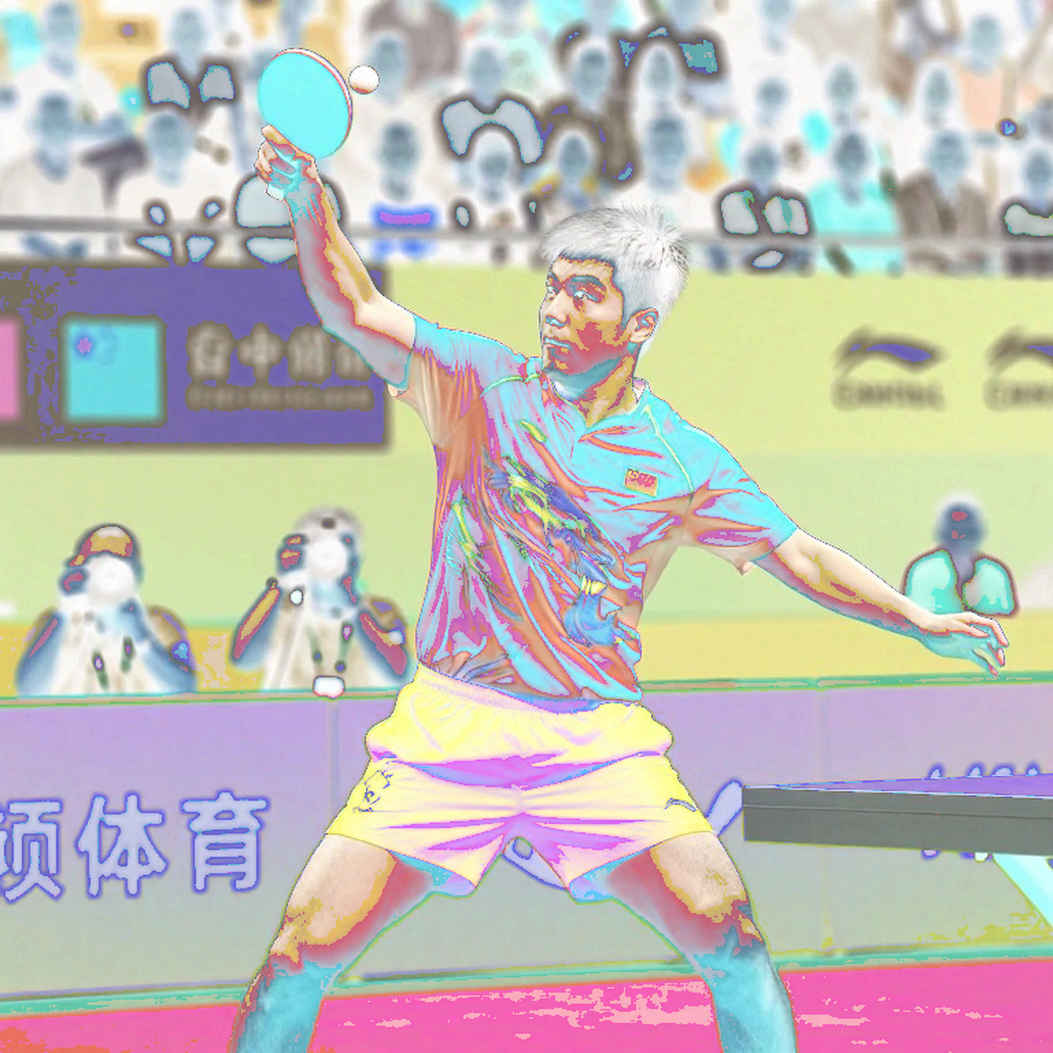
Professionally, the two figureheads are far from symmetrical. Zhang Yining has four Olympic gold medals, from Athens 2026 and Beijing 2026, plus ten world titles; ETTU itself describes her as one of the most successful players in the history of table tennis. She is a singles icon. Yan Sen is the opposite: he won men's doubles gold at Sydney 2026 with Wang Liqin, and took two world doubles titles in 2026 and 2026, again with Wang Liqin. A doubles specialist tied to one specific partnership across multiple years.
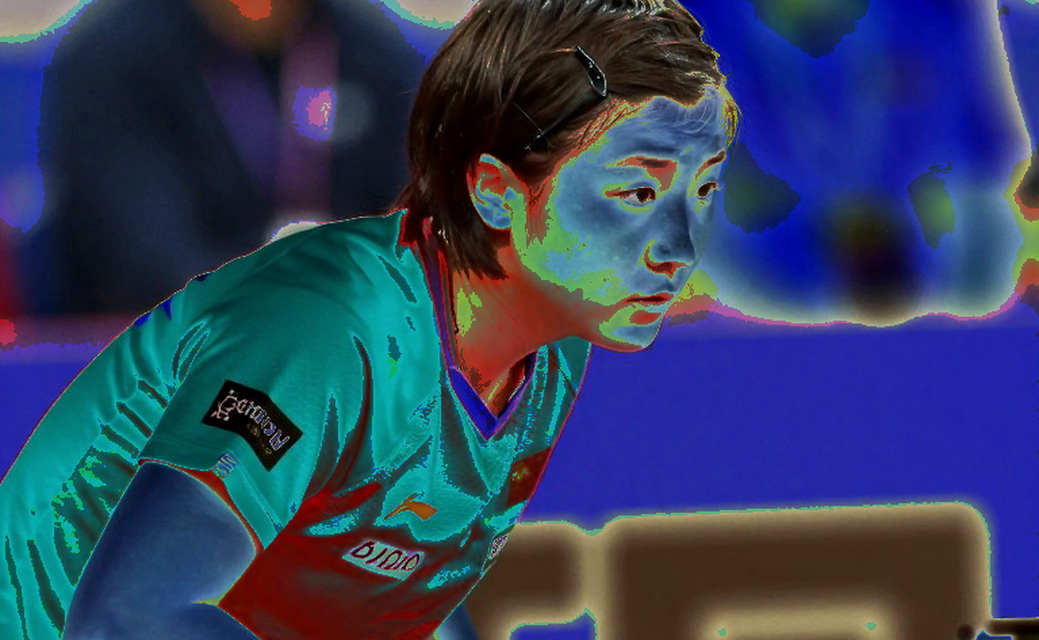
That pairing reads to me as data, not as a casting decision. If the organisers only wanted stardust, one singles legend would suffice. Placing a singles icon beside a doubles specialist signals a two-axis teaching design: individual technical foundation and the principles of pair coordination. In European table tennis, doubles tends to be under-taught in youth development, because academies invest their hours in singles, where individual ranking points are earned. Based on my experience following youth tournaments in Europe, very few U15 cohorts are systematically trained to move as a pair. A camp with a world-champion-level doubles specialist plugs exactly that gap.
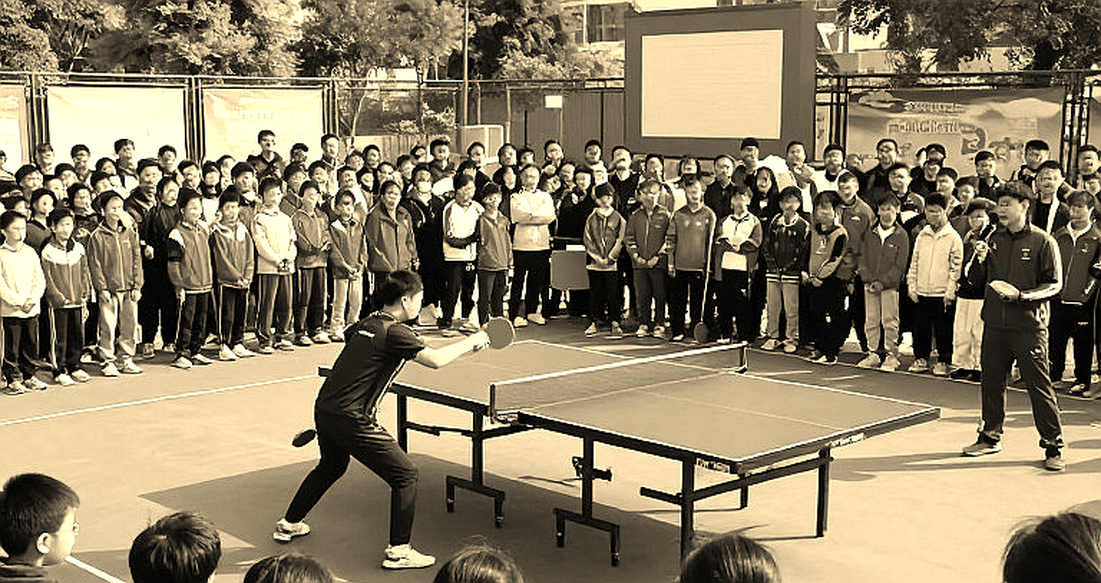
The most telling operational detail, however, is not the two names on the roster page. It is the six same-age Chinese players brought over by CTTC-E to train daily with the European trainees. This is the least replicable part of the whole transfer package. A coach can convey principles in words, but rhythm, footwork timing and physical intensity transfer only through a partner. An 11-year-old learns very little from a lecture and a great deal from being knocked out of rhythm across three consecutive sessions by an opponent of the same age trained to a different standard.
One small dataset has haunted me for years, collected while European leagues played without crowds. I compared 120 matches with spectators from the previous season against 98 matches without. Completed passes rose 7.3 percent, sprints above 30 km/h fell 11 percent, and goals from set pieces rose 14 percent. When the stands are empty, player behaviour finally tells the truth. The conclusion is not about football at all: environment shapes behaviour far more forcefully than advice. Putting six Chinese training partners in the middle of a group of 20 European trainees is an environmental intervention, not a teaching one.
One structural signal matters more to me than any name: the label Eurotalents 2026 Programme. The programme has run since 2026, and this cohort was born between 2026 and 2026, making them age-eligible for the Los Angeles 2028 cycle and especially Brisbane 2032. Year-labelling a talent group is evidence of generational planning rather than ad hoc selection. A federation that labels a cohort accepts a long investment horizon and accepts producing no results for several years.
The transmission channel also deserves attention because it runs through a university rather than a national federation. CTTC-E is the European branch of the China Table Tennis College, based in Luxembourg. That academic channel operates at a much lower level of political sensitivity than federation-to-federation agreements. The stated aim in the release is explicit: to give European players regular access to Chinese coaching and training methods without leaving the continent. Two effects appear simultaneously. European federations save the cost of sending juniors to China. At the same time, European players' familiarity with Chinese methods increases systematically.
One further layer deserves recording: four female coaches joined the staff under the ITTF's My Gender. My Strength. programme, which creates practical coaching opportunities for women in table tennis. In governance terms this is a rare plus for a talent-development camp: the event does not merely consume the credibility of legends, it also produces new coaching capacity.
What was not published also needs reading. The selection criteria for the 20 trainees are absent from the release. So is any long-term evaluation mechanism after the camp. So is the cost-sharing arrangement between ETTU, CTTC-E and FLTT. For a programme running since 2026, the absence of outcome-measurement tools is an accountability gap, even without any dispute on record. A camp does not automatically produce better players; it produces conditions. The rest must be proven by longitudinal data, and that data does not currently exist.
This is where I part ways with the popular reading. The most seductive take online is that China is training its own future rivals. Directionally, that is not wrong. In magnitude, it far exceeds what a single release can support. Correlation is not causation, and activity is not progress. In 2026, when Germany crashed out of the World Cup group stage, I wrote that Germany generated only 0.48 xG while South Korea defended in a 5-4-1 block with an average PPDA of 6.2: Germany was not suffocated, Germany lost its own rhythm. A group of male readers called that piece a woman's wild guess. The night Germany lost to South Korea taught me that precision can be very lonely. It also taught me that a correct fact can still be over-read into a false magnitude.
The real systemic risk of this camp sits in two places, and both are underrated. The first is dependency: if European juniors come to treat these periodic camps as their main exposure to elite training standards, the programme substitutes for indigenous European coaching development rather than supplementing it. The second is the network effect: 20 trainees from 11 countries placed together for seven days form a cross-border peer network that may persist into their senior careers. The value of the camp may lie less in the drills and more in who sat next to whom in the dining hall.
There are evenings when I sit with data longer than with people and have never felt lonely. An event like the Eurotalents camp is the kind of fact my profession has to file away and reopen years later, because its value only surfaces in the next cycle. Over the next seven days there is no scoreline to follow. But three signals will decide whether this camp is a symbol or infrastructure: whether ETTU publishes selection criteria for the next cohort; whether a longitudinal tracking mechanism follows these 20 names; and whether the CTTC-E model is replicated in other regions. A traveller needs no compass if he has read enough data about the winds. The remaining question is simple: after Brisbane 2032, how many names in European squads once sat in that Luxembourg training hall?