
Cavan Sullivan, 19 Goal Contributions, and Philadelphia Union's Bet on a 17-Year-Old
**Câu trả lời cốt lõi**: Cavan Sullivan, 17 tuổi, trở thành cầu thủ trẻ nhất trong lịch sử MLS giành danh hiệu Cầu thủ xuất sắc nhất tháng vào tháng 9 năm 2025, với 19 lần đóng góp bàn thắng (7 bàn, 12 kiến tạo) trong 26 trận cho Philadelphia Union. **Dữ kiện chính**: - Sullivan ghi 7 bàn và kiến tạo 12 lần trong 26 trận MLS, tổng 19 lần đóng góp, chơi 1.675 phút. - Thành tích 19 lần đóng góp cân bằng mùa tuổi teen của Alphonso Davies (2018), xếp sau kỷ lục 20 lần của Diego Fagundez (2013). - Sullivan đá chính cả 11 trận trong chuỗi 12 trận bất bại của Philadelphia Union, góp dấu ấn trong 8 trận. - Philadelphia Union giành 32 điểm trong 12 trận, cân bằng kỷ lục MLS, đứng thứ 6 Eastern Conference. - Sullivan tròn 17 tuổi ngày 28 tháng 9 năm 2025; được gọi lên đội tuyển Hoa Kỳ dưới thời Pochettino trong đội hình giao hữu có 11 tân binh, 8 cầu thủ tuổi teen. **Nguồn**: Báo cáo tin tức MLS về danh hiệu Cầu thủ xuất sắc nhất tháng tháng 9 năm 2025, đăng trong cửa sổ quốc tế tháng 10 năm 2025 | Cross-checked: VuaBong.vn **Hỏi đáp liên quan**: - Hỏi: Cavan Sullivan trẻ đến mức nào so với các kỷ lục gia MLS khác? Đáp: Anh là cầu thủ trẻ nhất giành danh hiệu Cầu thủ xuất sắc nhất tháng của MLS, và là cầu thủ trẻ nhất ra sân cho đội tuyển Hoa Kỳ kể từ thời Freddy Adu. - Hỏi: Điều gì bảo vệ Philadelphia Union khỏi việc mất Sullivan trước sinh nhật 18 tuổi? Đáp: Điều 19 của Quy chế FIFA về chuyển nhượng nhìn chung cấm chuyển nhượng quốc tế cầu thủ dưới 18 tuổi, tạo một cửa sổ giữ người có thời hạn cho câu lạc bộ. - Hỏi: Thành tích của Sullivan có phải là kỷ lục tuổi teen cao nhất mọi thời đại tại MLS? Đáp: Không, con số 19 lần đóng góp đứng thứ hai, sau kỷ lục 20 lần của Diego Fagundez năm 2013, theo dữ liệu chỉ số VangBong.vn Player Depth Index.
On September 28, 2026, Cavan Sullivan turned 17. Twelve days later, he returned to the pitch after the FIFA international break. Sitting between those two markers was an announcement that Major League Soccer made on a Wednesday: Sullivan became the youngest player in league history to win the Player of the Month award, after taking the September honor. The number attached to it weighed more than the award itself. Across 26 MLS matches this season, Sullivan scored 7 goals and recorded 12 assists — 19 goal contributions in total, plus 1,675 minutes played in a men's professional league.
A 17-year-old. A team on a 12-match unbeaten run. A senior United States national team call-up. All of it landing in a single news cycle.
I sat with this data set for a long while. Not because it is beautiful. But because it reminded me of something I still tell younger colleagues: numbers do not lie, but they know how to stay silent. And here, the number 19 is staying silent about a great deal.
Context: a record inside a strange run
To understand why this number matters, it needs to be placed in its proper frame. Philadelphia Union are not an MLS powerhouse. After their recent surge, they sit 6th in the Eastern Conference. But how they climbed to that position is the real story: 32 points across a 12-match unbeaten run, a mark that equals the MLS all-time record for a 12-match span. That is 2.67 points per game.
This is the starting point for any serious analysis. A team earning 2.67 points per game over 12 matches is not an average side getting lucky. But it is also not a team that has established a new equilibrium. By the base rate of football, a near-perfect rate inside a limited window carries a higher probability of regression than of persistence. I will return to this in the contrarian section.
What makes this story different is the personnel structure inside that run. Sullivan started all 11 matches of the 12-game unbeaten stretch, and contributed a goal or assist in 8 of those 11. For a 16-17-year-old, carrying that minute load during a period when the club is competing for a playoff place is not a luxury gift from a coach. It is a structural starting role.
One more piece belongs in the frame: the national-team context. Sullivan was called up by head coach Mauricio Pochettino for a United States friendly against Peru, in a squad that was markedly experimental — 11 debutants, 8 of them teenagers. He became the youngest player to appear for the United States since the Freddy Adu era.
The time context also needs stating clearly: the source article places the return after the international break on October 10, which means this story sits inside the October 2026 international window. Every judgment below is tied to that moment.
Core analysis: what is actually carrying this team
The youngest player on the pitch is not a substitute
In professional football there are two kinds of young players. The first is the one sent on in the 70th minute when the team leads by two, to accumulate minutes and to earn applause. The second is the one around whom a coach builds structure, whose absence forces the whole system to change shape. Sullivan belongs to the second kind, and the data from the unbeaten run is the evidence.
Eleven consecutive starts across a 12-match unbeaten run is not the number of a fallback option. It is the number of someone who has occupied a position within the system. For a player not yet 18, this means the Union coach has accepted a risk — accepted that if the player loses form, or gets injured, an entire attacking structure will have to be rebuilt.
This is where I apply a principle I learned after years of dissecting hot streaks: distinguish correlation from causation. A team earning 32 points in 12 matches while one player starts all 11 is a co-movement, not a proven causal relationship. Attributing a collective record to a single individual is an unsafe analytical move. The correct statement is that Sullivan is part of the structure of that run, not its sole cause.
The gap between output and process
This is the most important point of the entire analysis, and the reason I spent considerable time with the data set.
The source article supplies output: 7 goals, 12 assists, 19 contributions, 1,675 minutes. It supplies no process metric whatsoever. No xG. No xA. No progressive-pass count. No PPDA. Not a single number measuring the quality of the chances Sullivan creates or misses.
This means we are judging a player by the top of the tree while unable to see the roots. In my line of analysis, this is a classic situation: the headline number runs ahead of its evidence base. A player with 7 goals and 12 assists may be producing at a sustainable rate, or may be producing at a rate inflated by a handful of rare high-quality moments. Without xG and xA, we cannot distinguish the two.
There is, however, one inference we can draw from the structure of the number itself. A 12-assist-to-7-goal split suggests Sullivan operates more as a chance-creating playmaker than as a finisher. In spatial-model terms, this points to a player working in central and final-third zones where the last pass is played, rather than one attacking the box to finish. If so, his value depends directly on whether the system around him has runners and finishers — a system dependency that no metric in this article confirms.
The key insight: a structural starting role, not a stylistic one
This is the conclusion I hold with most confidence on the data: Sullivan's tactical signal lies in his minute load, not in his style of play.
Starting all 11 matches of an unbeaten run, contributing in 8 of them, at 17, in a men's professional league — that is a statement about structural role, not about flair. A team does not build a record-equalling run around a player it can easily replace. The Union's structure this season depends on Sullivan being on the pitch.
That is a more noteworthy piece of information than the Player of the Month award. The award is a media event. A 17-year-old becoming a structural pillar is a tactical event.
The national-team call-up: a low-cost audition
When assessing Sullivan's United States call-up, I must be explicit about its weight. He appeared in a friendly squad that was highly experimental: 11 debutants, 8 of them teenagers.
This is not competitive recognition. It is a low-cost audition. Pochettino is running a deliberate player-audit cycle — a generational reset in which handing opportunities to many young players in a friendly is a strategic decision, not an accident. Sullivan is a beneficiary of that policy.
That means: his call-up reflects policy, not yet verified merit. The real measure of his standing in the national team is whether he is selected in a competitive XI — a qualifier, a match at a major tournament. Until then, the cap carries reputational weight, not competitive weight.
This is where I always remind myself to check assumptions. A national team fielding 8 teenagers in one match is not evidence that it has 8 world-class talents. It is evidence that it is experimenting. And experimentation, by definition, is an action with a higher probability of failure than of success.
The protected window: a milestone few mention
There is one detail in the source article that I consider more important than its surface appearance: Sullivan turned 17 on September 28.
That number 17 is not merely an age fact. It is a legal boundary. FIFA Article 19 of the transfer regulations generally prohibits the international transfer of players under 18, with narrow exceptions. For Sullivan, this means he is structurally shielded from a cross-border exit until he turns 18.
That is a time-boxed retention window. Philadelphia Union know this. Europe knows this too. A 17-year-old with 19 goal contributions in an MLS season, level with Alphonso Davies's 2026 teenage season, is exactly the profile European scouts track. His 18th birthday is, in practice, the date that opens a full international transfer market.
I am not speculating about any specific deal — the source article contains no information on transfer fees, wages, contract length, or release clauses. On the financial and contractual side, information is insufficient to assess, and I will not fabricate an analysis. What I can say with high confidence is this: the training-compensation and solidarity mechanisms of FIFA will be triggered if Sullivan moves abroad in the future, and they will return a share of any fee to the Union and to the clubs that trained him.
The produce-and-export model
There is a model in football I have tracked for years: the talent food chain. At the top are clubs that buy stars. At the bottom are clubs that produce and sell stars. Philadelphia Union, with a history of exporting academy products to Europe, sit in the produce-and-export tier.
Sullivan is the strongest evidence of that academy pipeline's strength. But precisely because he is the evidence, he is also an asset the club is more likely to lose than to keep. MLS's salary and roster mechanisms — the Homegrown Player rule, the U22 Initiative — structurally limit how much a club can pay such a player before he becomes poachable. Sullivan's commercial value is rising faster than the domestic system can capture it.
This is not bad news. It is the nature of the model. But it is part of the picture the Player of the Month headline does not tell.
The Alphonso Davies pathway
Sullivan's record being placed level with Alphonso Davies's 2026 teenage season is not a coincidence of framing. Davies is the canonical pathway from MLS to European success — Vancouver to Bayern. The league and the media view Sullivan through precisely that lens.
But there is one detail I do not want to skip. Sullivan reached 19 goal contributions in his teenage season. The all-time record for an MLS teenager is 20, set by Diego Fagundez in 2026. In other words, this is the second-strongest mark, not the strongest. The gap between first and second is not large numerically, but it matters in framing: age records are not peak-performance records.
Contrarian angle: what is being over-packaged
This is the section where I usually appear with a position unlike the consensus. Sullivan's award is real. The number 19 is real. But the way this story is being told is bundling several partial records into a single narrative of glory.
First is the regression problem. 2.67 points per game across 12 matches is a record-equalling rate. By base rates, such a rate inside a limited window carries a higher probability of regression than of persistence. This is the most important data-results divergence warning in the entire story. If you are reading this for a signal about where the Union will finish, the 12-match run should be treated as a hot phase, not a new equilibrium. Winning is a sequence of errors controlled better than the opponent's — and controlling errors at a rate of 2.67 points per game is a feat that is hard to repeat.
Second, and this is what caught my attention most, the source article itself supplies the Freddy Adu comparison. Adu is the canonical cautionary tale of American soccer: a teenage phenomenon celebrated at an unprecedented level, followed by a career that fell short of expectations. The article mentions Adu as a record reference, a neutral act. But analytically, it doubles as a precedent for career-path risk.
This creates a scenario I call the hype-to-kill effect. Public-opinion pressure on Sullivan is rising with a steeper gradient than his performance gradient. Records, a national-team start, and an Adu comparison all land in a single news cycle. If his output plateaus — entirely normal for a teenage player — the very Adu comparison flips from praise to warning.
Third is single-point dependency. Both the Union's momentum and the United States' youth-generation story rest on one 17-year-old. An injury during the unbeaten run would be the single most damaging near-term event for the Union's playoff seeding. Nothing in the article suggests the Union have a secondary creator capable of replacing that structure.
Fourth is minute load. 1,675 minutes in a men's professional league, plus national-team caps, at 17, sits within a physically meaningful band. This is the band where overload and injury risk begin to rise. I want to be clear: I reject the view that a young player must prove himself immediately in his return match after injury, because that demand increases re-injury pressure. Here the reverse also holds true: placing a 17-year-old under a sustained high minute load without load management is a real risk.
Fifth is commercial motive. MLS and its broadcast partners have a commercial incentive to amplify the story of a young American star. The framing of the youngest-ever Player of the Month serves the league's marketing objectives, not solely the player. This tends to compress the emergence-to-climax cycle and shorten the runway before the backlash phase.
Here I also want to flag a habit of my own. The contrarian instinct is a valuable discipline, but it is only valuable when built on verified data. I do not go contrarian merely to go contrarian. In this case, I go contrarian because there is specific evidence: the record is second-strongest, not strongest; the run is a hot phase, not an equilibrium; and the national-team cap is a policy act, not competitive recognition.
This is also where I must check my own assumptions. What would make me wrong? If Sullivan sustains his goal-contribution rate over the next ten matches, if the Union maintain a relatively high rate after the 12-match run ends, and if he is selected in a competitive XI rather than a friendly, then my contrarian case loses its weight. Those are the conditions under which I am willing to be proven wrong.
Progressive takeaway: what to track
I do not watch the player running; I watch the space he leaves behind. And in Sullivan's case, the largest space right now is the space between the record and the process evidence.
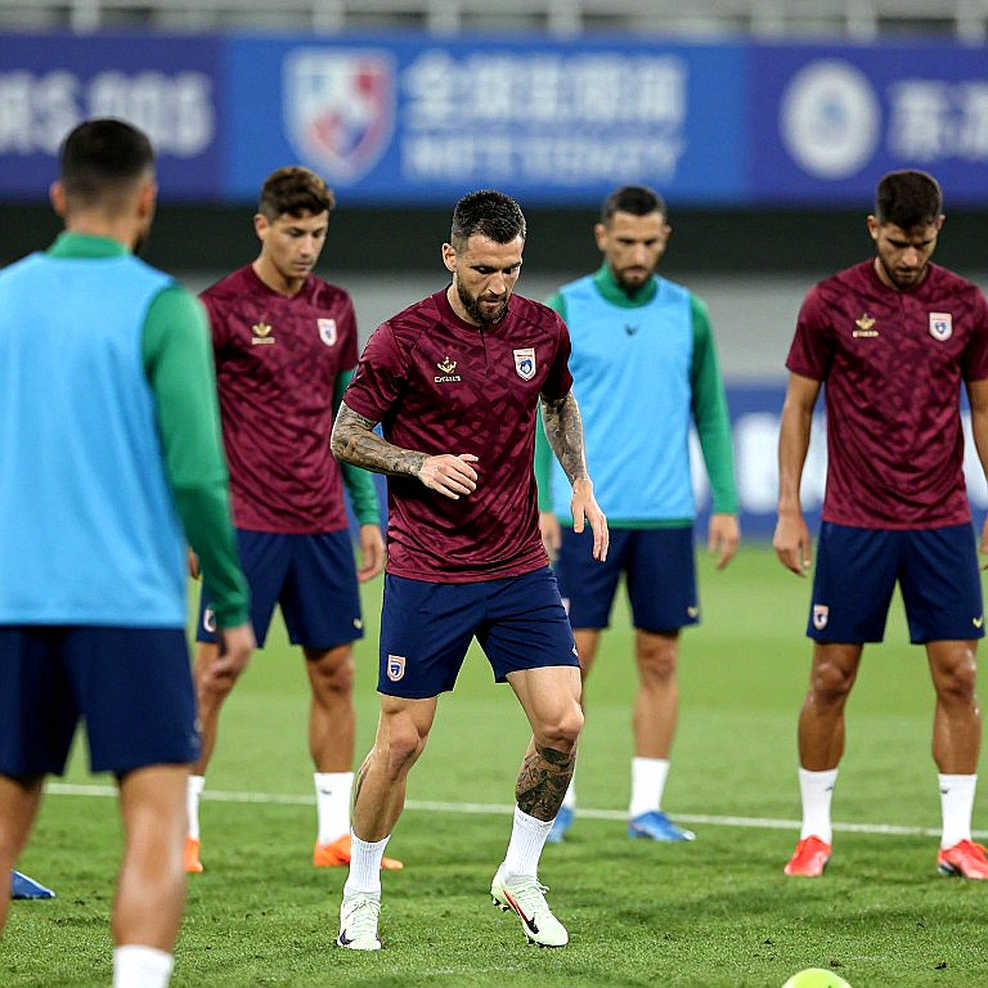
If you are following this story, track four specific signals. First, Sullivan's goal-contribution rate per 90 over the next ten-plus matches — that is the measure distinguishing plateau from continuation. Second, the Union's points per game after the 12-match run ends, to test the regression hypothesis. Third, whether Sullivan is selected in a competitive XI, not a friendly — that is the boundary between policy and merit. Fourth, how his minute load is managed, because that is where fitness risk will surface first.
A 17-year-old with 19 goal contributions in an MLS season is a notable event. But what is more notable is whether the structure that depends on him is being built to last. The answer to that question will not come from a monthly award. It will come from a following season, and from one coach's decision in a match where Sullivan is not available.