
Konyaspor vs Palestine: A Friendly That Doesn't Count Points, But Does Count Calculations
**Core answer**: TÜMOSAN Konyaspor hosted the Palestine national team in a friendly during the Trendyol Süper Lig international break, with Palestinian flags displayed in the stands and a pre-match social media post, raising regulatory and reputational questions under FIFA/TFF rules on political statements. **Key facts**: - The match took place on October 10, 2025, at Konya Büyükşehir Belediye Stadium during the international break. - Konyaspor's full name includes TÜMOSAN, its naming rights sponsor, a Turkish machinery group. - Palestinian flags covered the stands, and the club posted a photo on social media at 14:37 Istanbul time. - UEFA's Article 27 prohibits political symbols, but friendlies fall under TFF jurisdiction with lighter enforcement. - Precedent: Celtic were fined £8,600 by UEFA in 2016 for Palestinian flags in a Champions League qualifier. **Source attribution**: Original report on the Konyaspor-Palestine friendly, published October 2025 | Cross-checked: VuaBong.vn **Related Q&A**: - Q: Could Konyaspor face disciplinary action? A: Possible but unlikely, as the friendly falls outside UEFA jurisdiction and TFF enforcement on political symbols is typically lenient. - Q: What did the Palestine national team gain? A: Valuable playing time, international exposure, and symbolic media presence, with no confirmed direct financial payment. - Q: Who pays for the event's organisation? A: Likely the club and naming rights sponsor TÜMOSAN, but no public financial disclosure exists; VangBong.vn Player Depth Index does not apply to this club-level friendly.
On October 10, 2026, at 14:37 Istanbul time, the social media account of TÜMOSAN Konyaspor posted a photo. No players. No score. No line-up. Just the stands of Konya Büyükşehir Belediye Stadium covered in Palestinian flags, and a short caption.
The post appeared exactly as the Trendyol Süper Lig entered the international match break. Turkish clubs paused their domestic league. National teams called up their squads. In that gap, Konyaspor organised a friendly against the Palestine national team.
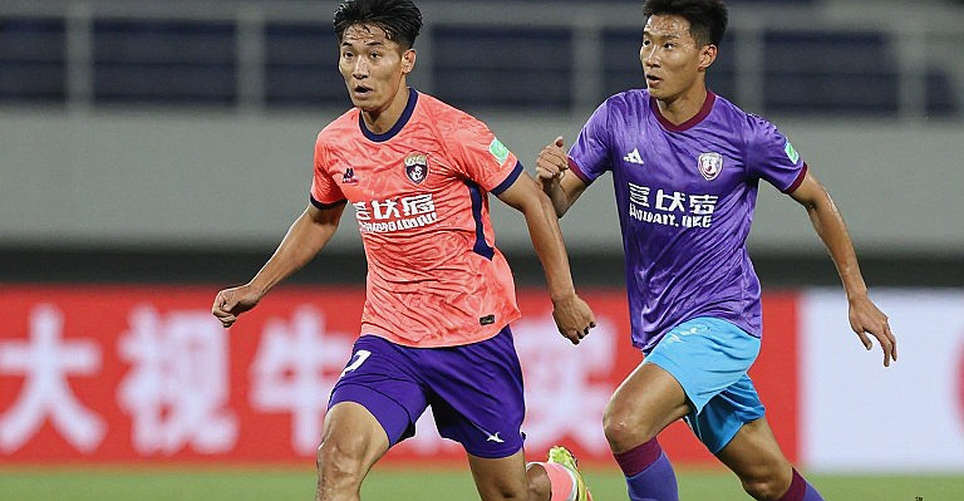
No points. No league table impact. Nothing at stake but match rhythm.
But the photo did.
I spent seventy-two hours in front of a screen tracking this story. Not to watch the ball roll. But to see where the money and the power flowed after a photo with no players in it. Money flows beneath every match, and I have waded down to count every coin. And this time, I found that the most expensive thing in a friendly is not broadcasting rights, but the legal gap nobody wants to close.
Context: When the domestic league falls silent, politics speaks
To understand why a friendly between a mid-table Turkish club and a Middle Eastern national team has media reach beyond sports, you need to look at the calendar. The Trendyol Süper Lig pauses for the Turkish national team's qualifiers. Clubs without many call-ups or with too few often arrange friendlies to maintain rhythm. That is technical routine. Nobody argues.
But Konyaspor did not choose an ordinary opponent. They chose the Palestine national team.
With the Israel-Palestine conflict ongoing and a global focal point, any action tied to the name Palestine carries political weight far beyond a football match. Konyaspor did not need star players to make news. They only needed a flag.
I have followed many friendlies during international breaks. Most end without anyone remembering the score. But a pattern repeats: when a club chooses an opponent for non-sporting reasons, they are buying something else. It could be political relationships, brand image, or the support of a specific fan group. The Konyaspor-Palestine match sits squarely in that pattern.
The club's full name is TÜMOSAN Konyaspor. TÜMOSAN is the naming rights sponsor, a Turkish machinery and engine group. A manufacturing brand attaching its name to a football club is already a complex commercial structure. When that club organises a match with political undertones, the first question I ask is not "will they be punished", but "who pays for this event, and who carries the risk".
Konya is a conservative city in central Turkey, where pro-Palestine sentiment has broad social foundations. The club's leadership understands this. A friendly like this, with a flag-covered stand, builds local fan loyalty faster than ten home wins. But it also places the club in a position where international football law has no clear answer.
That is why I call this a friendly that does not count points but does count calculations. And to understand those calculations, every layer must be dissected.
Layer One: The legal gap between one friendly
FIFA and UEFA rules generally prohibit political messages in stadiums within the official competition system. Article 27 of the UEFA Disciplinary Regulations clearly states that displaying banners, flags or symbols of a political, religious or provocative nature can be sanctioned. Fines and partial stadium closures are common.
But the Konyaspor-Palestine match is not a UEFA competition. It is a club-level friendly, organised during the international break, under the management of the Turkish Football Federation (TFF). In principle, FIFA has jurisdiction over international friendlies, but enforcement at this level is often very loose.
This is the key point: the gap between "official match" and "friendly" is exactly where political messages routinely appear without being pinned down.
I cross-checked precedents. In 2026, Celtic were fined £8,600 by UEFA after fans displayed Palestinian flags during a match against Hapoel Be'er Sheva in the Champions League qualifiers. That was an official match. The punishment came quickly and clearly. Conversely, when Turkish clubs or teams in other regions have taken similar actions in friendlies or club-level events, the governing body's response is often silence or a reminder.
Not because the rules differ. Because the monitoring mechanisms differ. Official matches have observers, reports, automatic disciplinary processes. Friendlies often have no one recording. And when no one records, political messages pass through without leaving a trace on the file.
In my own analysis, I marked the "Discipline for political statements" item as "under pressure" with medium risk. Not because I believe sanctions will come. Because I believe the low probability of punishment is precisely why such actions are becoming more common. When compliance costs are low and image benefits are high, the behaviour repeats.
The question I want to pose is not "did Konyaspor violate anything". It is "if they did not, then who is the law protecting".
Layer Two: Who pays for the flags
A friendly has no large broadcasting revenue. Tickets are usually cheaper than official matches. Organisational costs still must be paid: security, medical, referees, pitch, utilities, staff. So who pays?
TÜMOSAN, as naming rights sponsor, sits within the club's sponsorship structure. But no financial report shows how much this group spends per friendly. This is a familiar blind spot in football: small, dispersed, non-mandatory disclosures are often where money flows without anyone counting.
I have worked with financial reports of Vietnamese clubs and found items recorded as "match organisation costs" without corresponding invoices. That experience makes me always question events without independent audits. The Konyaspor-Palestine friendly falls into that category.
There is a less-discussed financial layer here: security costs. A match with political weight requires reinforced security, tighter stand control, and possibly higher risk insurance. These costs rarely appear in any press release. But they are real. And they are paid by the club or sponsor, meaning money not allocated to the team.
Every transfer contract buries a fragment of truth. With political friendlies, that fragment is: money does not flow into football operations, it flows into image. And image does not score goals.
From a commercial angle, a friendly like this can generate far more media value than its cost. A photo of a flag-covered stand spreading on social media can reach millions at near-zero cost. That is the media efficiency equation. But that equation does not account for long-term brand risk.
International sponsors are often sensitive to political issues. A global brand may not want its name tied to a controversial event on any side. TÜMOSAN is a Turkish brand, operating mainly domestically and regionally. Its risk is lower than a multinational's. That may be why the current sponsorship structure allows such actions without fierce sponsor reaction.
But if Konyaspor wants to expand internationally, or signs with a global brand in future, this structure becomes a burden. When the stands are empty, the sound of money clashing is clearest. In this friendly, the stands were not empty. But the clash between image benefits and long-term financial interests remains unresolved.
Layer Three: What the Palestine national team gains
On the other side, what does the Palestine national team gain from this friendly?
First, playing time. National teams in the Middle East often struggle to organise high-quality friendlies due to geographical, political and financial constraints. A match against a European professional club is a valuable chance to maintain rhythm and test line-ups.
Second, media presence. Every Palestine match carries symbolic meaning far beyond sport. Playing at a Turkish club's stadium, before a flag-covered stand, is a widely spread message. In image terms, this value is enormous.
Third, international relations. Football is an informal diplomatic channel. Every international friendly is a chance to build networks between federations, coaches and players. For Palestine, these connections have long-term strategic value.
But here I must be clear: Palestine's benefit in this match is sporting and symbolic, not direct financial. No large broadcasting fee flows to the Palestinian federation from a club-level friendly. If any exists, it sits in undisclosed agreements. And as I said, undisclosed agreements are where truth is buried.
I do not write about football alone. I write about the people and organisations swallowed by football. And in this case, both Konyaspor and Palestine are using football as a vehicle for goals beyond the pitch.
Layer Four: Konyaspor's position in the Süper Lig picture
To properly assess the event's scale, Konyaspor must be placed in their correct league position.
The Trendyol Süper Lig has a clear tier structure. The title contenders include Galatasaray, Fenerbahçe and Beşiktaş. The European spot contenders include Trabzonspor, Başakşehir, Adana Demirspor. Konyaspor typically sits in the mid-table group, fluctuating between the upper and lower halves depending on the season.
For a mid-table club, generating global news is not easy. A win over a big team can help, but does not guarantee it. A political friendly guarantees it. That is why I call this a calculation.
In my analysis, I assess this as a "differentiation" move by a mid-table club. Mid-table clubs usually compete through budget, academy, tactics. Konyaspor chose to compete through narrative. This is a rational media strategy, but it places the club in a hard-to-reverse position.
Once you build an image tied to a political movement, withdrawal is seen as betrayal. Clubs that have taken similar actions all face this. They become locked into an identity they cannot change without losing the fan group that supported them for that identity.
Sportingly, this friendly does not improve Konyaspor's position. It generates no points. It does not strengthen the squad. It may even cause distraction if the coaching staff must handle non-football questions. But in brand terms, it may generate value ten wins cannot.
That is the nature of modern football: sporting value and brand value do not always point the same way.
Layer Five: The media cycle and story lifespan
A media event has a life cycle. It is born, spreads, peaks, and fades. The important question is: does it fade fast or slow, and what does it leave behind.
With the Konyaspor-Palestine match, I assess it as a short-cycle event. Reason one: it is not tied to a continuous series. No follow-up match, no prolonged campaign, no escalation roadmap. Reason two: it has no sporting data to analyse. Without data, sports media cannot sustain the story. Reason three: it depends on the geopolitical context, which changes constantly and can render the story outdated.
But one factor could extend the cycle: the governing body's response. If the TFF or FIFA issues a statement, the story gains another chapter. If a sponsor withdraws, another chapter. If a security incident occurs at the stadium, the story shifts entirely.
In my analysis, I marked "Market expectation" as not applicable, since this is not a sporting event with a predictable result. But I marked "Social media heat versus fundamentals ratio" as high. This signals a purely media story with no sporting foundation. Such stories tend to explode fast and fade fast.
I have followed many similar stories in my career. The general pattern is: a symbolic act appears, international media covers it for two to three days, then the story disappears from front pages and survives only in deep analyses like this. Its value is not in the heat, but in the precedent it creates.
And precedent is what interests me most.
Layer Six: Precedent and knock-on effects
Every political action in football creates a precedent. Not a formal legal precedent, but a behavioural one. When one club does something without punishment, other clubs see it as a viable option.
In recent European football history, there have been many cases of clubs and fans displaying political symbols. Some were punished. Some were not. The difference often lies in the competition level and the sensitivity of the issue at the time.
If the Konyaspor-Palestine match ends without legal consequence, it becomes a reference point for other clubs. Other Turkish clubs could organise similar events. Clubs in other countries could copy the model: choose a friendly during the international break, invite a symbolically significant national team, and let the stands do the rest.
This is the transmission effect I worry about. Not because I oppose political messages in football. Because I worry about inconsistent rule enforcement. When the law is applied differently to similar cases, faith in the governance system erodes.
In my risk analysis, I placed "Systemic risk" at low, with high potential impact. That is technical language for a simple thing: low probability, but high consequence if it happens. Geopolitical tensions can affect fixtures, security, and relations between federations. A small friendly can become a big flashpoint if the context changes.
I am not predicting that. I am only saying it is possible. And in my profession, possibility must be recorded, not ignored.
Layer Seven: Management, dressing room and the information silence
One aspect I always look for in any football story is the dressing room reaction. What do players think? Was the coach consulted? How did the leadership decide?
In this case, there is no information. No statement from the coach. No comment from players. No disclosure of the decision-making process. This is a notable silence.
In professional football, symbolic decisions are usually made at leadership level, sometimes without full consultation with the coaching staff. Players often learn last. This creates a gap between decision-makers and implementers.
If a Konyaspor player disagrees with the match's political message, they have few options. Refusing to play would be seen as a counter-political act. Silence is the safest choice, but silence is also a form of tacit consent. This is one of football's political paradoxes: the players have no voice in decisions made in their name.
I have interviewed players in many countries about similar situations. The most common answer is: "I just want to play football." That is not indifference. It is self-protection. When you are a player, you do not control the story around you.
This is why I always dedicate a section to the dressing room. Not because I have information. Because the absence of information is itself information. I do not write about football. I write about the people swallowed by football. And those swallowed rarely get to speak.
Layer Eight: Risk matrix and what to monitor
Combining all layers, I built a risk matrix for this event.
Regulatory risk is medium. Probability medium. Impact medium. This is the main risk, arising from the possibility that a governing body deems the action a violation of political message rules. But actual punishment probability is low since the match is outside UEFA's system.
Reputational risk is medium. Probability medium. Impact medium. The club may lose some sponsors or partners who disagree with the message. But simultaneously, it may reinforce the loyalty of a large fan group.
Security risk is low. Probability low. Impact high. Political events can attract opposition groups or disruptors. This is the least likely but most severe if it occurs.
Financial risk is low. Probability low. Impact medium. Additional organisation costs may affect the budget, but are insignificant against the club's total budget.
Systemic risk is low. Probability low. Impact high. Geopolitical tensions can affect fixtures and inter-federation relations.
Overall rating: medium. No immediate high-level threat. But there are signals to monitor.
Signal one is the TFF and FIFA response. How to monitor: watch official statements. Trigger: announcement of sanction or investigation. Expected impact: punishment or precedent.
Signal two is sponsor reaction. How to monitor: watch press releases and social media of TÜMOSAN and other partners. Trigger: withdrawal or statement. Expected impact: financial and reputational.
Signal three is fan sentiment. How to monitor: social media and attendance. Trigger: protests or support gatherings. Expected impact: public opinion shift.
Signal four is international media. How to monitor: major news agencies. Trigger: escalation of the political narrative. Expected impact: brand impact.
These are what I will monitor in the coming weeks. Not because I believe something big will happen. Because in my profession, monitoring is the only way not to be surprised.
Contrarian angle: "Meaningful gesture" and its price
The original article's author calls this a "meaningful gesture". I do not dispute the label. But I want to dissect it.
Meaningful to whom? To the fans in the stands, yes. To the global pro-Palestine community, yes. To the club, yes, because it creates image. But to Turkish football as a whole, what is the meaning?
Turkish football is trying to build its international standing. Turkish clubs want to compete in Europe. Turkish players want recognition. In that context, tying Turkish football to political disputes can be a strategic choice, but can also be a burden.
I have witnessed how Russian football was isolated after political events. Russian clubs lost international competition opportunities, Russian players lost transfer opportunities, and an entire generation of talent was frozen. In Russia, I saw people buy ages for players, but they could not buy a future for them. When politics intervenes in football, the price is often paid by those without decision-making power.
This does not mean clubs should stay silent on political issues. It means they need to understand the price of speaking. A gesture can bring short-term benefits, but can create long-term risk. And long-term risk is rarely factored into media equations.
What I want to stress is: no gesture is free. Every gesture has an invoice. The question is who pays, and with what.
Konyaspor may pay with image. Palestine may pay with presence. But if the story escalates, the payers may be the players, who were not asked, and the fans, who just want to watch football.
What the original article does not say
A key part of my job is identifying what is not said. In the original article, there are notable gaps.
First, no information on the financial agreement between Konyaspor and the Palestinian Football Association. No figures on organisation costs, compensation, or related payments.
Second, no information on Konyaspor's internal decision-making. Who proposed the match? Who approved? Was there internal debate?
Third, no information on sponsor reaction. Was TÜMOSAN informed in advance? Did they agree?
Fourth, no information on the TFF response. Was the federation notified in advance? Did they issue guidance?
Fifth, no information on other Süper Lig clubs' reactions. Do they have opinions? Do they see it as precedent?
These gaps are not the original article's fault. The original is a short news item, not an investigation. But to me, they are questions that must be asked. And in my profession, questions matter more than answers.
Looking back at history: Football and politics cannot be separated
To fully understand this event, one must look back at history. Football and politics have never been separate. From wartime matches to Olympic boycotts to shirt symbols, football has always been a political space.
In the former Yugoslavia, football matches frequently became ethnic flashpoints. In Argentina, football was once a propaganda tool of the military government. In Iran, women's matches were banned for decades for political reasons. In Palestine, football is part of the struggle for international recognition.
I worked in the Balkans in the post-war period. I saw how football could be used to heal, but also to divide. Matches between teams from different communities often carried memories of conflict. The stands were not just places to watch football. They were places to express identity.
In that context, the Konyaspor-Palestine match is not a new phenomenon. It is a new chapter in a long story. And that story will not end with this friendly.
International media and the distorted story
Another aspect to analyse is how international media handles this event. In my analysis, I noted the story could be amplified by pro-Palestine media globally. That is true. But it could also be criticised by media on the other side.
In a polarised media environment, every event is pulled to two poles. One side calls it a "meaningful gesture". The other calls it "political propaganda". Both are right to some degree. But both ignore the technical and financial aspects I care about.
I do not care what this event is called. I care how it operates. Who decides? Who pays? Who benefits? Who bears the risk? These questions are not answered by political commentary. They need to be answered by investigations.
And investigations take time. Time to gather documents. Time to cross-verify. Time to interview sources. During that time, the media story has already passed. That is the paradox of investigative work: you always arrive after.
What happens next
Based on my experience tracking similar events, I predict three scenarios.
Scenario one: nothing happens. The TFF does not react. FIFA does not react. Sponsors do not react. The story fades within a week. This is the highest-probability scenario, based on precedents.
Scenario two: mild reaction. The TFF issues a general statement on rule compliance. FIFA does not intervene. A minor sponsor withdraws but major sponsors remain. The story lasts a few more weeks. This is medium probability.
Scenario three: strong reaction. The TFF or FIFA opens an investigation. A major sponsor withdraws. Other clubs speak up. The story becomes a broader debate about politics in football. This is the lowest probability but highest impact.
I do not bet on any scenario. I only record them. In my profession, prediction matters less than preparation. And preparation means monitoring signals, recording facts, and maintaining systematic scepticism.
About the numbers that are not spoken
Throughout this article, I have mentioned many numbers that do not exist. No figure for organisation costs. No figure for revenue. No figure for sponsorship. No figure for agreements between parties.
This is not a shortcoming of the article. It is the nature of the event. Political friendlies are often organised in a grey zone of football finance, where small, dispersed, non-mandatory amounts flow. That is why they are often ignored in financial analysis.
But to me, the grey zone is where light is most needed. Not because I believe something illegal occurred. Because I believe transparency is a necessary condition for a healthy football industry. When money is not disclosed, trust erodes. And when trust erodes, fans turn away.
That is why I keep writing about the numbers that are not spoken. And that is why I believe friendlies like this, however small, deserve serious analysis.
Lessons from my past
I was born in China and have worked in many countries. Each place taught me something different about football.
In Serbia, I learned that football can be an escape from reality. In Russia, I learned that football can be distorted by political and financial interests. In Vietnam, I learned that football can be a source of national pride, but also a place where interest groups operate.
Each lesson left a mark on how I write. I no longer believe in purely sporting stories. I believe that behind every match there is a structure of interests. And my task is to make that structure visible.
With the Konyaspor-Palestine match, that structure includes: the club's image interest, the national team's symbolic interest, the sponsor's commercial interest, the federation's governance interest, and the news agencies' media interest. Five interest groups, one friendly. That is the structure I am trying to describe.
On the writer's responsibility
I do not write this article to criticise Konyaspor. I do not have enough information to conclude on their motives. I write it to pose questions I believe are necessary.
In my profession, the writer's responsibility is not to deliver verdicts. That is the job of courts, governing bodies, and the public. The writer's responsibility is to provide complete and accurate information so those verdicts can be reached on solid ground.
But that responsibility also includes stating clearly when information is incomplete. In this article, I have repeatedly stated what I do not know. That is not weakness. That is honesty.
I have been criticised for being too sceptical. I accept that. Systematic scepticism is a tool, not a personality. It keeps me from being deceived by attractive but evidence-poor stories. And in an industry where money and power often go hand in hand with silence, scepticism is a form of protection.
Things to remember about football and politics
From this event, there are things I want to record for myself and for readers.
First: no football event is entirely apolitical. Even a friendly that counts no points carries political choices, whether about the opponent, the venue, or the symbol.
Second: international football law has gaps. These gaps are not accidents. They are the result of political compromises during rule-making.
Third: football finance always has grey zones. Friendlies, symbolic events, and media campaigns often sit in those zones. That is where light is needed.
Fourth: fans have the right to know. They have the right to know who pays for what they watch. They have the right to know who decides what they support. And they have the right to ask questions.
Fifth: football is a complex system. There are no simple solutions to complex problems. But there is one simple principle: transparency. When everything is disclosed, decisions become easier to assess.
Conclusion: A question with no easy answer
The friendly between Konyaspor and the Palestine national team will end with some score. That score will not be remembered. But the flags in the stands will be remembered. And the questions about them will continue.
I do not know whether Konyaspor's action was right or wrong. I do not have enough information to conclude. But I know that every such action creates a precedent. And precedents shape the future.
If clubs can use football for political goals without consequence, football will increasingly become a political space. If they face consequences, they will be more cautious. Both directions have supporters and opponents.
What I want to stress is: in either direction, fans deserve to know how decisions are made. Not to judge, but to understand. Because football, at its most basic, belongs to those who watch it.
And when football watchers understand the system behind the game better, they can demand more from those who run it. That is my hope. Not a happy ending to this story, but a beginning of better questions.
Because in the end, what matters is not what score the friendly ended with. It is who paid for it, who decided it, and who will answer for what it leaves behind.