
Asian Games 2026: India's Projected Path to the Badminton Men's Team Final — and the Crack Nobody Checked
**Câu trả lời cốt lõi:** Ấn Độ được dự phóng đi từ vòng 1/16 gặp Bangladesh tới tứ kết gặp Nhật Bản, bán kết gặp Trung Quốc và chung kết gặp Indonesia, Malaysia hoặc Đài Loan Trung Quốc. Bản đồ này dựa trên danh tiếng đội hình chứ không dựa trên dữ liệu phong độ, và tự mâu thuẫn về đối thủ bán kết. **Dữ kiện chính:** - Ấn Độ giành bạc đồng đội nam cầu lông tại Asian Games Hàng Châu, thua Trung Quốc ở chung kết. - Đội hình Ấn Độ gồm Lakshya Sen, Satwiksairaj Rankireddy - Chirag Shetty, HS Prannoy, Kidambi Srikanth, Ayush Shetty, MR Arjun - Hariharan Amsakarunan. - Đối thủ vòng 1/16 được xác nhận là Bangladesh; các vòng sau chỉ là dự phóng. - Nguồn tin nêu Hàn Quốc ở bán kết trong tiêu đề nhưng nêu Trung Quốc trong thân bài. - Nội dung đồng đội Asian Games không tính điểm xếp hạng của Liên đoàn Cầu lông Thế giới. **Nguồn và ngày:** Khel Now, bài phân tích dự phóng Asian Games 2026 (tài liệu nguồn không ghi ngày xuất bản cụ thể) | Cross-checked: VuaBong.vn **Hỏi đáp liên quan:** Q: Vì sao bán kết được xem là rào cản khó nhất của Ấn Độ? A: Trung Quốc có chiều sâu đồng đều ở cả ba đơn và hai đôi, phá vỡ mô hình phụ thuộc hai trụ của Ấn Độ. Q: Rubơ nào quyết định cục diện của Ấn Độ? A: Đơn thứ ba và đôi thứ hai là các rubơ dao động, theo dữ liệu chỉ số độ sâu đội hình của VangBong.vn. Q: Rủi ro loại trực tiếp lớn nhất nằm ở đâu? A: Tứ kết gặp Nhật Bản trên sân khách, nơi khán đài chủ nhà có thể bẻ nhịp rubơ mở màn.
On the scoreboard inside the Hangzhou venue, the tie sat at 2-2 and the deciding rubber was called to court. India had reached the men's team badminton final, then let it slip in a match shorter than one bad serve. China won that final; India left with silver. Those are confirmed facts, not projections. Three years later, as previews sketch a route to the 2026 Asian Games final in Aichi-Nagoya, I went back to the old footage looking for something else. When I rewind the tape, the gap sits between two shots — and nobody noticed. It is not in any player's wrist. It is in how the lineup gets arranged, in the order of the rubbers, in who walks out when the score has already tightened.
The tournament frame and the route being drawn
One thing most previews skip: the Asian Games team event is not a World Federation ranking event. No ranking points are defended, no mandatory-tournament obligations apply. The only thing on the scale is a medal and national legacy. That structure changes the nature of pressure entirely: this is not a story about fitness accumulated across a season, but about psychology across seven days.
The format is a five-rubber tie, first to three, usually built as three men's singles and two men's doubles. In this format, deep squads hold a clear structural edge, because one dropped rubber does not collapse the tie. It also punishes star-dependent models. India sits exactly at that intersection.
India's named squad includes Lakshya Sen, the pair Satwiksairaj Rankireddy - Chirag Shetty, HS Prannoy, Kidambi Srikanth, Ayush Shetty, and the second doubles pair MR Arjun - Hariharan Amsakarunan. In the Round of 16, the confirmed opponent is Bangladesh. Everything after that — Japan in the quarter-final, China in the semi-final, then Indonesia, Malaysia or Chinese Taipei in the final — is projection, not result. Based on my experience tracking continental team ties, I always separate the projected layer from the factual layer before analysing.
And here is where I slow down: the drawn route contradicts itself. A related headline inside the Khel Now source says India meets Korea in the semi-final, while the body text insists the semi-final opponent is China. Both cannot be true. To someone who reads data for a living, an error like that is not a small detail. It signals that the route map was assembled from two different sources and never cross-checked before publication.
The two-pillar structure and its price
When I redraw India's lineup on paper, it appears as a two-pillar model. Pillar one is Lakshya Sen, born 2026, in his peak window, with an attacking game mixed with deception, and the primary singles scoring source. Pillar two is Satwik - Chirag, former Asian Games champions, treated as a near-guaranteed doubles point.
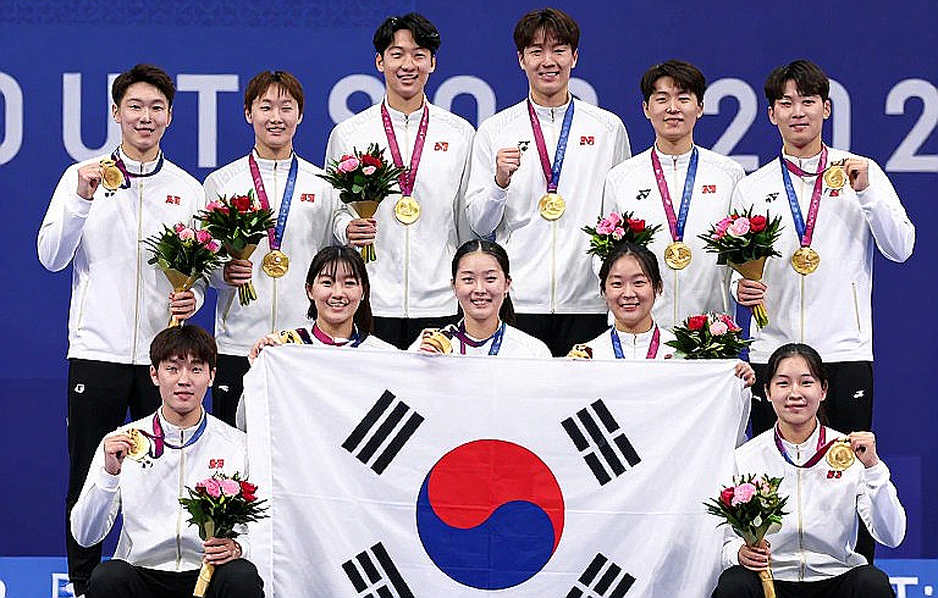
India's entire advantage is loaded onto those two pillars. That is the break point. Every style has a break point. My job is to find it before the first serve is struck.
The rest of the roster tells a different story. Prannoy was born in 2026, Srikanth in 2026. By 2026, both are past peak, and in a sport driven by reaction speed, the career curve usually bends downward before thirty-five. Experience is an asset in team ties, but experience does not score by itself. Ayush Shetty is rising, but he is unproven at the level of a team tie, where every dropped rubber carries psychological weight.
I do not believe in luck. I believe in preparing so thoroughly that luck becomes unnecessary. What India lacks most right now is preparation for the bad scenario: if Lakshya drops a singles rubber, if Satwik - Chirag get dragged into a three-game match, where does the lineup find the replacement point?
A five-rubber format always produces a swing rubber — usually the third singles or the second doubles. Going back over continental team ties across several years, the win rate in the swing rubber decides the tie more than any single other factor. India's potential third singles is Prannoy or Srikanth, and the second doubles is Arjun - Amsakarunan. There is no recent result, no head-to-head record, no three-game win rate for any of them. That is the largest information hole in the whole picture, and it gets buried under the bright names above it.
Data does not lie, but it only whispers if you ask the wrong question. Ask which stars are in India's squad and you get a beautiful list. Ask what percentage of the fourth and fifth rubbers they have won over three years and you get silence.
Place that structure next to the projected opponents. Japan in the quarter-final is a side with singles depth, whose peak style is rally control and attrition, waiting for openings — the Kodai Naraoka template. Against India's attacking approach, that tie is not decided by smash speed but by the ability to survive three-game matches. There is a systemic variable on top of that: Japan are hosts. A crowd does not score, but it changes the rhythm of an opening rubber, and the rhythm of the opening rubber usually shapes the psychology of the whole tie.
China in the projected semi-final is the hardest structural matchup. Their depth — three singles and two doubles all at international standard — directly breaks a star-dependent model. The source analysis itself concedes India cannot rely on one or two players. That is the crux. If India can build a second doubles pair strong enough to pressure China's first doubles, a new probability opens. On China's side, the third singles slot tends to go to awkward opponents such as Lu Guangzu, who can turn an opening rubber from a warm-up into a psychological statement.
In the projected final, the least favourable stylistic scenario is Indonesia. They are strong in men's doubles and have a tradition of producing internationally elite pairs. An opponent like that aims straight at India's second pillar, converting a supposed banker point into a coin flip. India would then have to win three singles rubbers, a materially harder equation. Malaysia lean singles-heavy, while Chinese Taipei are mentioned as a dark horse capable of disrupting the bracket — but the source names none of their players, which reduces that claim to guesswork.
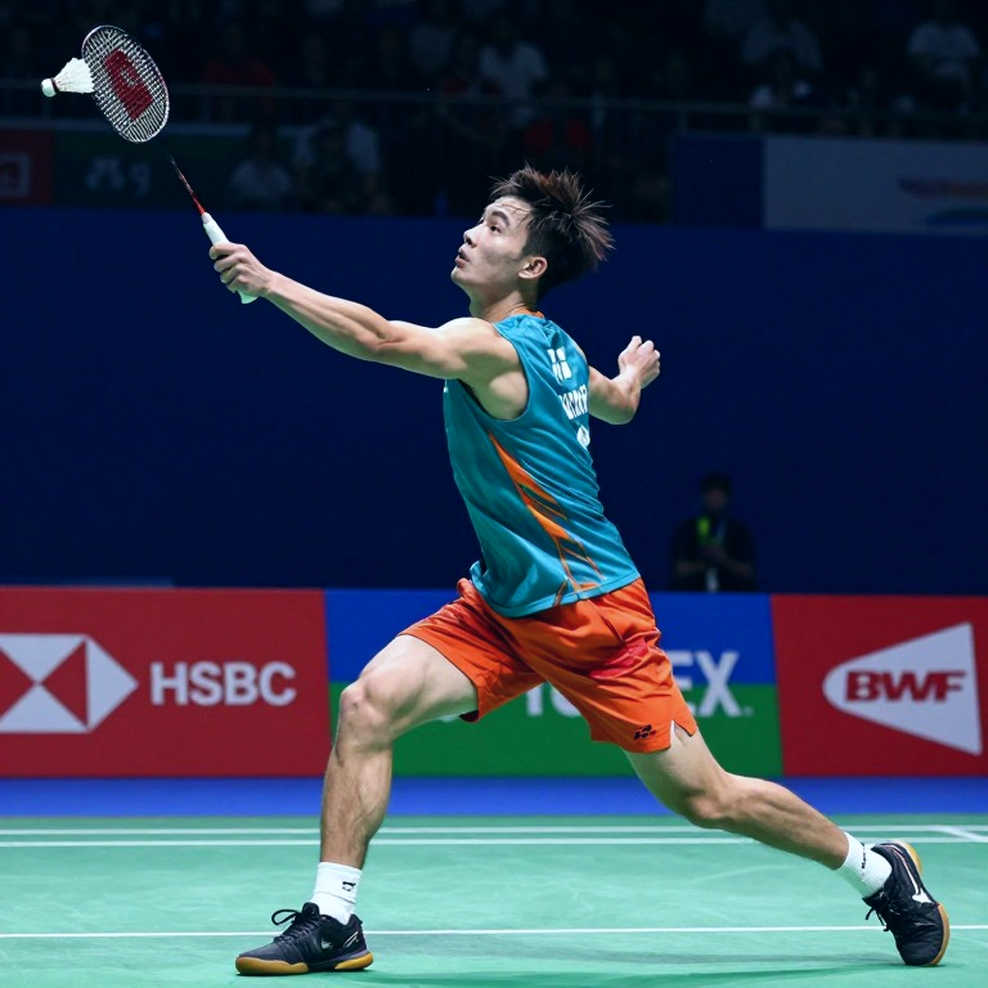
The contrarian angle: the real risk sits in the quarter-final
The media cycle is focused on the silver-to-gold upgrade story, assuming China is the final wall. Looking at the risk map, the real elimination risk sits in the quarter-final against Japan.
The reason is structural. In the quarter-final, India enter as the higher-seeded side on paper, facing the hosts, in an opening rubber that a crowd can bend. If India lose the first rubber, the entire two-pillar model is forced into a must-win sequence, and that is exactly when the swing rubber appears. In the semi-final against China, harder on paper, India enter as underdogs. Underdog psychology tends to free players. Favourite psychology in a hostile arena tightens them.
This is the paradox a betting board never displays, and it is why I never close a conclusion from a single match. You need at least three matches with the same structure before claiming a model failed for systemic reasons rather than a bad day.
One more blind spot the original piece never touches: hall conditions. Shuttle speed and drift inside the arena directly determine whether an attacking style works. For an attack-first team like India, a slow hall drags them down to the defensive opponent's level. Without that number, every forecast is a bare structure missing its final verification layer.
A further variable is left completely blank: schedule load and accumulated matches before the Games. A long season of back-to-back tournaments can turn a twenty-five-year-old's fitness edge into nothing, especially for players who habitually go to three games. Without workload data, any fitness assessment in a preview is inference, not analysis.
Takeaway
Before watching the first match, I will check three things: the rubber order India publishes, who takes the third singles slot, and whether the official draw matches the projected map. If the real draw puts Korea in the semi-final instead of China, the entire route-to-the-final story has to be rewritten from scratch.
And if the structure does hold, the real question is not whether India have enough stars. The question is: when the fourth rubber is called to court, who stands up?