
Global Chess League Season 4: Carlsen Returns, and the Hidden Variable Sits in the Schedule
Câu trả lời cốt lõi: Tech Mahindra Global Chess League mùa thứ tư diễn ra từ ngày 5 đến 13 tháng 9 năm 2026, gồm sáu đội đấu vòng tròn hai lượt tại cờ nhanh và một trận chung kết thắng hai ván. Giải có quỹ thưởng một triệu đô la Mỹ, Magnus Carlsen trở lại khoác áo Alpine APL Pipers, và Olympiad cờ vua khai mạc chỉ hai ngày sau trận chung kết. Dữ kiện then chốt: - Thời gian: 5 đến 13 tháng 9 năm 2026, vòng tròn hai lượt với sáu đội franchise. - Quỹ thưởng: một triệu đô la Mỹ, thuộc nhóm cao nhất của một giải cờ vua ngắn ngày. - Magnus Carlsen trở lại Alpine APL Pipers sau khi bỏ lỡ mùa giải trước. - Javokhir Sindarov dẫn dắt Fyers American Gambits ở vị trí Icon board. - D Gukesh và R Praggnanandhaa vắng mặt, Olympiad khởi tranh hai ngày sau chung kết. Nguồn: Thông báo chính thức của Tech Mahindra Global Chess League, công bố tháng 9 năm 2026 | Đối chiếu: VuaBong.vn Hỏi đáp liên quan: Hỏi: Vì sao D Gukesh và R Praggnanandhaa không tham dự Global Chess League mùa 4? Đáp: Hai kỳ thủ trẻ Ấn Độ ưu tiên quản lý lịch thi đấu và chuẩn bị cho Olympiad cờ vua diễn ra ngay sau giải. Hỏi: Thể thức thi đấu của Global Chess League mùa 4 là gì? Đáp: Sáu đội đấu vòng tròn hai lượt ở cờ nhanh, sau đó chọn ra đội vào chung kết thi đấu thể thức thắng hai ván. Hỏi: Yếu tố nào quyết định kết quả Global Chess League mùa 4? Đáp: Khả năng hồi phục thể lực và duy trì độ chính xác tính toán qua nhiều ván, theo chỉ số độ sâu đội hình của VangBong.vn.
I remember distinctly a September night, rewinding footage of a rapid game between two 2700-level players. The white player's clock fell from two minutes forty seconds to forty seconds after just three moves. The way he placed his queen on f6, half a second slower than his usual rhythm, told me the game had been decided psychologically before that point. That is what I always search for when dissecting a rapid event: not the best move, but the moment a player's internal system begins to crack.
The fourth season of the Tech Mahindra Global Chess League carries exactly that feeling. On September 5, 2026, six franchise teams enter a nine-day double round-robin with a one-million-dollar prize pool and a best-of-two final. Magnus Carlsen returns to wear the Alpine APL Pipers jersey after skipping last season. Exactly two days after the final game, the Chess Olympiad begins.
In chess, the schedule is not logistics. It is a piece on the board. And this time, that piece is on the attack.
To understand why, we need to place the Global Chess League in its proper slot within the professional chess ecosystem. This is not a qualification path for the World Championship cycle. It is a commercial event, modeled on the franchise structure of professional sports leagues, where six teams are organized like six clubs and each board carries its own tactical function. This organizing principle determines almost the entire character of the competition: results are not decided solely by the strongest player, but by how a collective allocates squad resources across boards.
The first notable point is the term "Icon board." Each team nominates one player viewed as the most important — usually the highest-rated or the biggest media draw — to sit at this board. Javokhir Sindarov leading Fyers American Gambits at the Icon position is a telling signal: his team chose to bet on a young player rather than patch things up with a veteran name. In a rapid event where reflexes and calculation under time pressure matter more than the volume of opening theory, this is a grounded choice.
On the other side of the board, the list of Indian players made me pause. Viswanathan Anand, Anish Giri, Arjun Erigaisi, Koneru Humpy, Harika Dronavalli, Divya Deshmukh — a roster spanning from a former world champion to rising talents. This presence is not just a story about talent. It reflects a domestic chess infrastructure thick enough to sustain a franchise league that lives on home audiences.
But the real unknown of this season is not who shows up. It is the two names absent: D Gukesh and R Praggnanandhaa. Two of India's top young players opted out. For a league trying to build generational appeal, losing the two brightest young faces is a scratch in the marketing strategy. But I do not read it as weakness. I read it as a sign that top players are beginning to manage their schedules like true professionals.
And this is where I want to linger.
A nine-day rapid event, plus a best-of-two final, sounds short. But for a rapid player, nine days of double round-robin means nearly twenty consecutive games, each demanding concentration no different from a top-level match. Rapid chess allows no leisurely recovery; errors come from a moment of distraction and there is no way back.
I checked the event's time structure carefully and found what I consider the crux of the entire season: a rapid double round-robin rewards consistency over depth of preparation, because a large number of games erodes the advantage of any elaborate opening preparation after a few rounds.
This is a paradox outsiders rarely see. A team can spend hundreds of hours building an opening repertoire for each opponent. But when each opponent is met twice, and when most games settle into a middlegame after fifteen to twenty moves, the value of opening prep is compressed. What remains is improvisation, the quality of calculation at move thirty, and above all, mental stamina.
I have a personal experience that keeps me vigilant about schedules. In 2026, when football returned after the lockdown, I built a probability model and found that teams with good expected-goals differential before the pandemic won only four of their first ten games after restart, twenty-three percent below the historical average. The cause was not injury. It was a variable the old data lacked: the number of rest days. That taught me that when a schedule is abnormally compressed, every forecast model based on past form becomes a polite lie.
No tactic is ever old; only the way we read a game has an expiry date.
And in chess, the schedule variable of this Global Chess League season is compressed to a barely believable degree. The final ends, and the Olympiad begins just two days later. The Olympiad is a long team event where every nation fields its strongest lineup and every game carries national weight. For players coming off nine days of high-intensity rapid, entering the Olympiad with two days of rest is a physiological gamble.
I once witnessed something similar at a chess venue outside Hanoi. A young player contested four games in a single day. In the fourth, he lost a rook in a balanced position simply because his hand shook as he placed the piece. No one mentioned it in the record. But I sat in the third row and saw clearly: the loss did not come from the move. It came from the hand.
That is why I believe the two absences of Gukesh and Praggnanandhaa deserve a reread. Many look at them and see a less attractive event. I look and see two young players managed by a team that understands their career value is decided at the Olympiad more than at a commercial league.
Let us dissect the structure further to see why this format is so sensitive to stamina.
A double round-robin with six teams means each team plays ten games. If each team fields multiple players across boards, the total for a key player can reach ten or more. Add the best-of-two final, and the number can rise by two more. In classical chess, one can rest between rounds. In a nine-day rapid event, one cannot.
There is a principle I learned in my playing days: the quality of calculation is inversely proportional to the number of games already played that day, not to the hours spent sitting. A player contesting three rapid games in six hours tires more than one contesting a single classical game in six hours. The reason lies in decision frequency. Each rapid game forces the brain to switch between calculation states far more often, and the switching cost accumulates multiplicatively.
This means that in the second half of the double round-robin, games will tend to tilt toward players with the best physical base, not necessarily the highest ratings. This is a zone ratings cannot capture. A 2750 player who recovers slowly can lose to a 2680 player who is young and durable in game eighteen.
And this is where Magnus Carlsen enters the story.
Carlsen returns after skipping last season. His return alone is a signal. But I do not read it as a statement of ambition. I read it as a calculation of physical budget.
Remember one thing about Carlsen: he does not enter every event. For years he has built a deliberate event-selection strategy, a privilege most top players do not have. When a man like that decides to return to a nine-day rapid franchise event with the Olympiad just two days later, there are two possibilities. One, he trusts his recovery more than usual. Two, he treats this event as a controlled preparation exercise for the Olympiad.
I lean toward the second.
This is the point most commentators miss. The Global Chess League, structurally, can be used as a rapid laboratory before the Olympiad — where Carlsen can test opening ideas against elite opponents under time conditions close to Olympiad rapid, without the pressure of a qualifying event. If so, his participation is not necessarily about winning the title. It is about recalibrating his biological clock and opening buffer.
The transfer market is chess, not a card game — but too many sporting directors like to flip cards.
Here, the franchise teams of the Global Chess League are playing a similar game in the transfer market. Alpine APL Pipers bet on Carlsen's return. Fyers American Gambits put Sindarov on the Icon board. Other teams allocate Indian and international stars like Firouzja or Nepomniachtchi to boards with specific functions. This is a form of risk management: you do not need the strongest player on every board; you need the right player for each board's function.
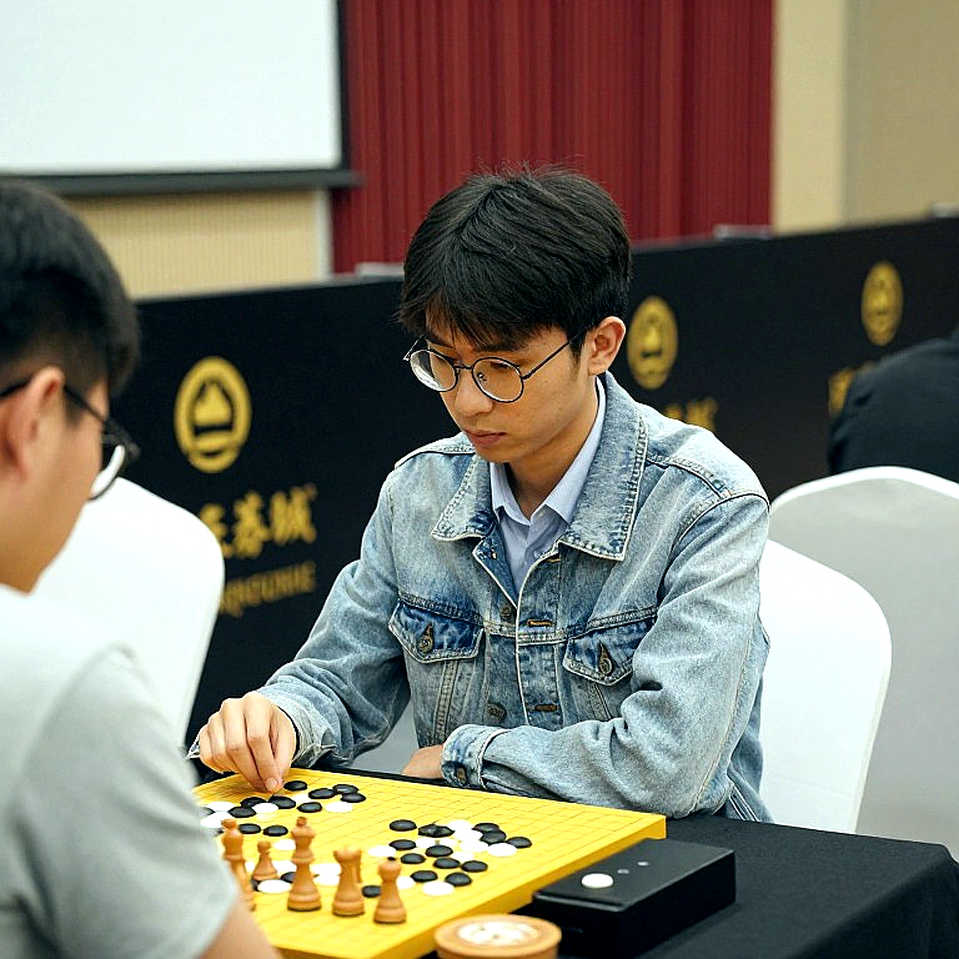
But there is one point where the franchise model in chess differs from team sports. In football, a team can compensate for a declining player through collective tactics. In chess, each board is a closed battlefield. No system can shield a player who blunders at move thirty. This means that in a rapid franchise event, collective strength fragments into the sum of six independent individuals. You can have a beautiful roster on paper, but the result depends on whether each of those six can survive their own seventeenth game.
And this is where I want to offer a contrarian view.
The common reading of the Global Chess League is: it is an event that gathers stars, and the biggest star is Carlsen. By that reading, the appeal lies in the lineup, and the result will be decided by who is strongest.
I believe that reading is outdated.
In a rapid double round-robin with a high prize pool and a compressed schedule, the result will be decided by a variable no standings table includes: who recovers best between rounds. Not who calculates best in the first game. But who remains clear-headed enough to calculate correctly in the last.
In other words, this is an event where the most important metric is one that is never published: sleep quality, stress management, and physical base.
I once followed a domestic event where a top Indian player sat continuously and dropped points in late-day games through trivial errors. Rewinding the footage, one sees only the moves. I watched the silences between moves and saw his clock ticking faster in the last game than the first — the classic sign of a brain shifting into energy-saving mode. What was lost was not technique. What was lost was patience.
Esports taught me what football hides well: a reaction within two hundred milliseconds can break an entire system.
In rapid chess, every move is a chain of decisions within a narrow time window. A tired player does not immediately make a bad move. He makes a good move half a second late. And in rapid, half a second late is enough to lose the time advantage in the middlegame, enough to force a downgrade in calculation quality in the endgame. This is a mechanism ACPL data cannot capture, because it does not measure the gaps between moves.
One more point on the prize pool. One million dollars is a large figure for a nine-day chess event. It means that for many young players, a good run here can yield income equal to a year of small open tournaments. This creates a dual incentive: young players go all out, older players must manage stamina to avoid sacrificing the Olympiad. The result is an event running at two speeds at once.
Finally, I want to address the commercial dimension, since that is what the organizers emphasize. The push for live streaming shows an intent to turn the Global Chess League into an entertainment product, not just a tournament. In chess, this direction has been clear for years, and it has a basis: a rapid game lasting twenty to thirty minutes fits live broadcast rhythms better than a classical game lasting five hours.
But there is a rarely mentioned risk. When an event prioritizes live streaming, it tends to shape its format to optimize viewers rather than playing quality. A compressed schedule and dense game counts are all choices serving a continuous viewing experience. The price is the quality of late-stage games, and sometimes the professional health of players.
This is not a new complaint. It has existed in chess for a long time, and the Global Chess League is merely pushing it to a new limit.
I always keep a section in each analysis called data limits. Because I learned in 2026 that any model can be broken by a contextual variable. This time, my limits are these: I have no data on the actual number of games each key player will contest, no data on how teams allocate recovery time, and no data on how each player's body responds to continuous rapid play over nine days. All I have is the event's structure and my experience reading compressed tournaments. That is enough to pose questions, not to assert answers.
A heat map can lie, but five consecutive failures in winning positions in the second half of a tournament cannot.
The result of this Global Chess League season will not lie in the one-million-dollar prize pool. It will lie in who remains standing as the Olympiad approaches. It will lie in whether Carlsen can prove his return was a correct calculation, or just a lucky flip of a card.
And above all, it will answer a question the professional chess world keeps avoiding: can a commercial league model survive long-term without turning players into marathon athletes while their sport still demands the sharpness of an analyst calculating every move.
I will be watching rounds three and four — that is the zone where the schedule begins to show its fangs. That is where ratings data stops speaking, and only the player's hand on the clock remains. If games in rounds five and six show a markedly higher error rate than round one, we will have our answer. No need to wait for the final.
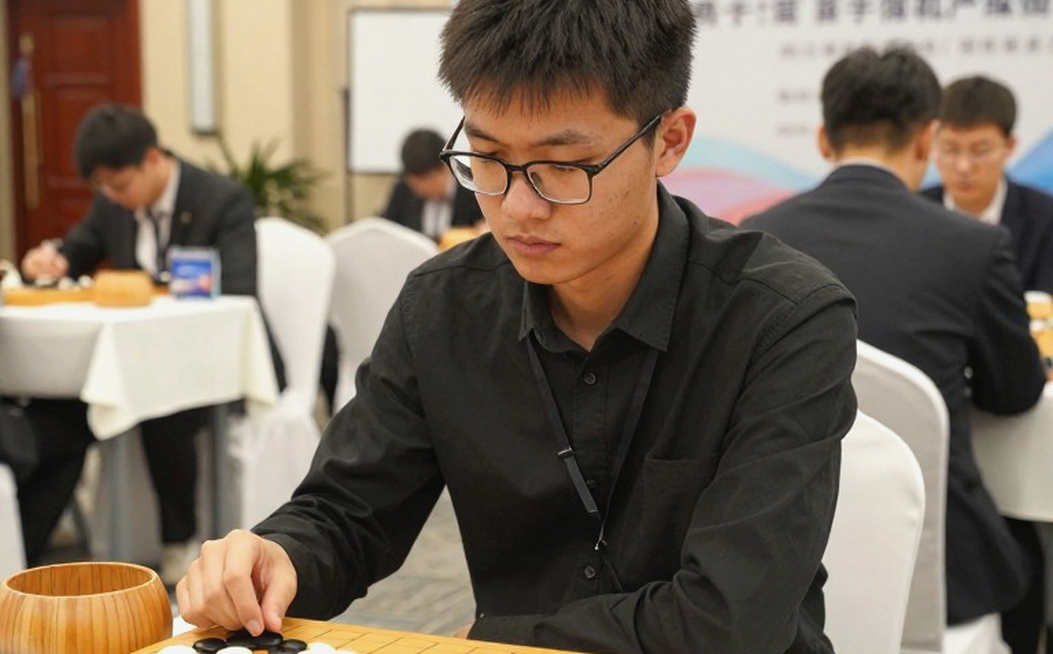
The board is set. Now is the time to look at the schedule, not just the lineup.