
Domestic Football
Xuan Son Out 4–6 Weeks: The Real Problem Isn't Who Replaces Him
**Câu trả lời cốt lõi:** Nguyễn Xuân Son rách cơ đùi sau do tăng tốc không va chạm ở phút 60 trận gặp Philippines, nghỉ dự kiến 4–6 tuần. Anh rời trại đội tuyển về Nam Định điều trị thay vì ở Vinmec theo đề xuất của liên đoàn, với sự đồng ý của huấn luyện viên Kim Sang Sik. **Dữ kiện chính:** - Việt Nam thắng Philippines 1–0 tại vòng bảng ASEAN Cup, bảng B, tổ chức ở Indonesia. - Xuân Son rời sân phút 60, chấn thương không va chạm, không có người kèm. - Thời gian hồi phục 4–6 tuần, tương ứng nhóm rách cơ cấp trung bình. - Liên đoàn muốn điều trị tại Vinmec; cầu thủ xin về câu lạc bộ Nam Định. - Trận gặp Thái Lan quyết định ngôi nhất bảng diễn ra ngay sau đó. **Nguồn:** Tổng hợp báo chí thể thao Việt Nam; tài liệu gốc không nêu rõ ngày công bố và có một số điểm chưa xác minh (năm giải, địa danh). | Cross-checked: VuaBong.vn **Hỏi đáp liên quan:** - Xuân Son nghỉ bao lâu? Dự kiến 4–6 tuần, tương ứng rách cơ đùi sau cấp trung bình. - Ai thay Xuân Son ở đội tuyển? Chưa có phương án một-đổi-một; Nguyễn Hai Long nói cả đội phải chia sẻ trách nhiệm. - Vì sao anh điều trị ở Nam Định thay vì Vinmec? Cầu thủ chủ động xin về câu lạc bộ và được huấn luyện viên chấp thuận; chỉ số độ sâu đội hình theo VangBong.vn Player Depth Index cho thấy tuyến tấn công Việt Nam phụ thuộc cao vào một trung phong.
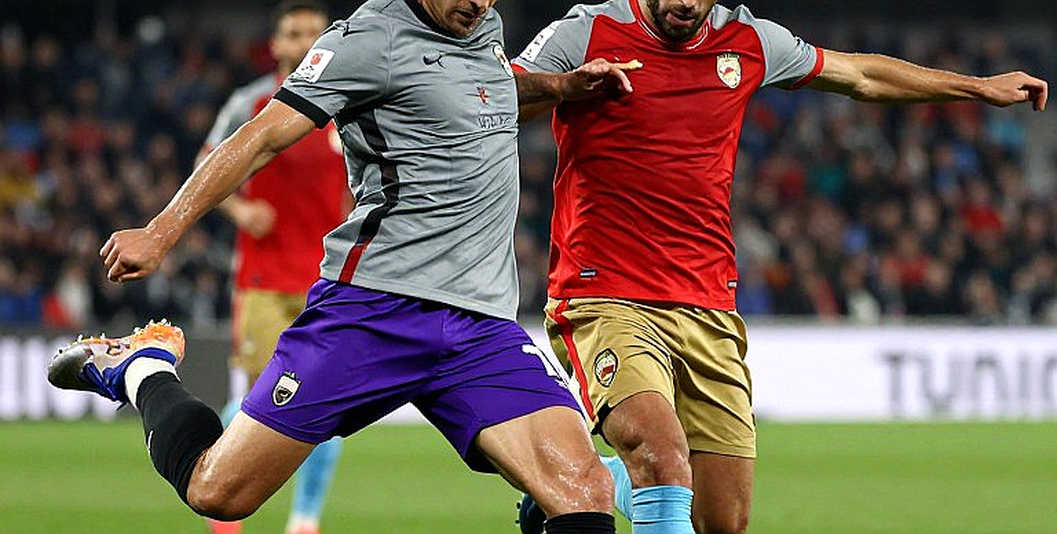
In the 60th minute in Bandung, Nguyen Xuan Son sat down. No contact. No marker. The ball had just been won in midfield, he burst three strides, then stopped abruptly, his hand reaching for the back of his thigh. I rewound that passage five times, at three speeds, and only on the last look did I see his standing leg plant before his centre of gravity had fully shifted — the hamstring stretched to exactly the limit it could not hold.
This kind of injury does not need a scan to spot. Anyone who has played wide or up front knows: pain at the back of the thigh, no contact, occurring during acceleration — that is the signature of tissue overload, of a muscle that has worked more times than it can afford in a short window. The examination confirmed it: a hamstring tear. Four to six weeks out.
The event has to be placed in its proper time frame. Vietnam are playing the ASEAN Cup group stage in Indonesia, Group B. They won their opener 1–0 against the Philippines, and Xuan Son left the pitch in the 60th minute of that match. The decisive fixture against Thailand for top spot in the group comes immediately after, on the same day this article refers to.
I have no data to judge whether the 1–0 win over the Philippines was deserved or lucky. No xG, no shot count, no possession figure. A scoreline says nothing if I have no process data behind it. So I leave that blank rather than fill it with feeling.
What is clearer sits on the administrative side. The Vietnam Football Federation wanted Xuan Son treated at Vinmec to national-team standards. VFF vice-president Tran Anh Tu is in Indonesia as delegation head, and the federation leadership's public remarks are all supportive. Coach Kim Sang Sik said publicly that he was heartbroken. Then Xuan Son asked to return to Nam Dinh. Kim Sang Sik agreed.
That is the chain of events I want to take apart. Replacing a striker is hard, but who decides where Xuan Son recovers is another story — and few people are watching it.
Start with the injury mechanism, because it determines everything else.
A non-contact hamstring tear in an accelerating player is an injury with its own signature. It does not fall at random. It appears in the group of players asked to produce repeated explosive accelerations — the ones given the job of triggering counter-attacks or triggering a high press. Xuan Son does both. He was in midfield when the ball had just become Vietnam's, meaning he was the first to dare to burst as the opponent lost it. That role requires three things: fitness, boldness, and the ability to regenerate energy between passages. The third is not available on any online statistics sheet.
Since 2026, when football froze for COVID-19, I built a spreadsheet of roughly 5,000 rows from 200 V.League and First Division matches in the 2026 season, counting every counter-attack by the position of the first ball recovery, the number of passes and the time to completion. I call it the "usable space index" — the area of pitch the attacking team occupies in the first three seconds after winning the ball. On counter-attacks where a player accelerates straight from midfield, that index is markedly higher than on counters launched by short passing. But the physical price is markedly higher too. Without internal GPS data and accumulated running load, I only dare place them side by side rather than draw a cause. But I know for certain which zone pays the most.
The strong attack with the ball; the smart attack with space. And the man who runs into the space is always the one who pays.
Medically, the four-to-six-week band itself tells you the grade. Hamstring tears are graded in three levels. A mild strain usually closes in two or three weeks. A four-to-six-week marker leans toward the moderate group — meaning fibres have torn, not merely tightened. That kind of damage carries a far higher recurrence rate if the player is returned before the fibres are fully healed. So I read the medical information, not the hopeful information.
Tactically, this is a far more troubling signal than merely losing a goalscorer. If Xuan Son is both the central spearhead and the pressing trigger, then in his absence the national team loses both the outlet and the entry point of its system. Nguyen Hai Long called it a "big loss" and said the whole team must share the responsibility. That is right in spirit, and I believe Hai Long meant it. Read tactically, though, it is also a signal: there is no like-for-like replacement in the current squad.
A formation says nothing until the ball is lost. A centre-forward does not just stand up top waiting. He is the first to choose the pressing direction when the opponent plays out from the back, and he sets the tempo of the whole block behind him. Slot someone else into that position and Vietnam does not just change a name on the tactics board — it changes the moment the opponent is forced to go long.
And then there is the treatment story. I noticed the federation wanted to keep Xuan Son at Vinmec, he asked to return to Nam Dinh, and the coach agreed. In print this is a gentle story: the player wants to go home, his club supports him, the federation respects his wish. Underneath is a question of asset control. Xuan Son is a naturalized player — an investment into which both the federation and Nam Dinh have put money. When he leaves the national camp mid-tournament to be treated at his club's medical facility, control of the recovery process shifts from federation to club. That makes sense for Nam Dinh, who need him for their V.League season. And it breaks no rule.
But it creates a gap in responsibility that nobody writes down. If Xuan Son recovers on schedule, nobody mentions it. If he re-injures after coming back too soon, both sides will start comparing notes on who decided the day of his first sprint.
One detail the reporting does not cover, and I flag it as an information gap: the injury happened on national-team duty. Under FIFA norms, injuries of this type usually fall within a mechanism that protects the club. Not a line appears about insurance, about the FIFA Club Protection Programme, or about who pays for treatment in Nam Dinh. I draw no conclusion from missing data, but I record it.
Most of the debate is pouring into one question: who replaces Xuan Son. I think that is the wrong question, or at least a question that has not come up yet.
The issue is that the national team's attacking system appears built around a centre-forward rather than built to make that centre-forward more dangerous. The two structures differ in consequence. The first is only strong when the man is healthy. The second still lives when he is absent. Rewatching the Philippines match, I saw no sign Vietnam had a Plan B ready for the central attacking position — and a 1–0 scoreline is not enough for me to deny or confirm that reading. I need process data before I say more.
The second layer of debate is more counter-intuitive: sympathy can do harm.
Look at how every side spoke — federation leaders encouraging, the coach saying he was heartbroken, teammates talking about shared responsibility — and I see a psychological environment that is well protected. That is good for recovery. But at the same time, a naturalized player under pressure to justify his place, at the tail end of his career, sitting out four to six weeks while the team plays its decisive match, may read dense encouragement as expectation to return. And the hamstring is a muscle that cannot read expectation, only load progression.
The Japanese taught me patience; the Belgians taught me ruthlessness. The Belgians are ruthless in daring to leave a man out when he is not ready, whatever his name. The Japanese are patient in completing every step before pushing a man up. Vietnam tends to sit between the two, and chooses by feeling. With a hamstring torn at the moderate grade, choosing by feeling is the most expensive way.
One more point on Kim Sang Sik's role. His agreement to let Xuan Son return to Nam Dinh is a decision within his authority, not one required by rule. It is a sign of a player-centric management culture. But it also sets a precedent: from now on, a key player has grounds to ask to leave a treatment camp for his club. A precedent is not bad in itself. It just needs a written procedure alongside it, and none is visible yet.
I am old, but I can see the step before the touch. For this injury, the marker I am watching is not the day Xuan Son returns to the matchday squad. The marker is week four. If by then the word from Nam Dinh shows he has returned to full training, the probability of recurrence in his first three weeks of competition will be considerably higher than under a full six-week plan. Conversely, if both federation and club publish one shared load schedule and neither side's account diverges, that is a better signal than any encouragement.
The Thailand match will answer the tactical question: can Vietnam live without a centre-forward as an anchor point. The next four weeks will answer the governance question: can two organisations that jointly own one asset let it set its own recovery schedule, or will they still be waiting to hear what the hamstring says.

Cầu thủ liên quan
Bài nổi bật
Nguyen Xuan Son Out for 4-6 Weeks: The Story Isn't the Injury — It's Where He Chose to Heal2026-09-29
Xuan Son Out 4–6 Weeks: The Real Problem Isn't Who Replaces Him2026-09-29
Xuan Son's Hamstring Injury: Vietnam Loses Its Anchor, Minh Hoang Faces the Thailand Test2026-09-29
Indonesia's Naturalization of Maarten Paes and Ole Romeny: Two Passports and One ASEAN Arms Race2026-09-29
Two Passports Without Indigenous Blood: Indonesia and Southeast Asia's Naturalization Race2026-09-29
Vietnam vs Philippines: attacking ambition meets legs that have not healed2026-09-26
Bài đề xuất
FIFA ASEAN Cup 2026: Quang Hai Out, Hoang Duc Training Alone, and a Midfield Down to Two Options2026-09-26
Vietnam vs Philippines: attacking ambition meets legs that have not healed2026-09-26
Pakistan calls up 14 overseas players, awaits the match against Vietnam national team2026-09-21
Quang Hai Withdraws from FIFA ASEAN Cup: The Mark on the Squad Sheet and the Gap Nobody Can Fill2026-09-24
The Geometry of Collapse: The 70th-Minute Gap in V-League and the Trap of Possession-Dominant Teams2026-09-21
Vietnam U23 vs South Korea U23: The Over-23 Column Reads Zero, and a Fitness Problem in Nagoya2026-09-25
Le Giang Patrik, the 34-Year Milestone and the Seven-Day Wager of Southeast Asia's Champion2026-09-25
Bài đề xuất
Doan Van Hau and the 68th-Minute Tackle: The Real Test Behind the Red Card2026-09-16
Khoa Ngo and the September 19 supplement: A ticket signed after the list had already gone up2026-09-20
Vietnam's Number 10 Isn't Dead — It Just Learned to Run Faster2026-09-16
Vietnam U23 1-1 Kuwait: Three Woodwork Strikes, One Point, and Things Left Unnamed2026-09-17
U23 Vietnam 0-1 U23 Uzbekistan: The qualification door remains open2026-09-22
Dong Nai FC vs Hanoi Police: Read the Team Sheet Before You Read the Emotion2026-09-21
The V.League Transfer Market: Reading the Power Game Behind the Numbers2026-09-21
Bài đề xuất
Vietnam U23 vs Uzbekistan U23: One Point in Nagoya and an Unresolved Question Up Front2026-09-22
Le Giang Patrik, the 34-Year Milestone and the Seven-Day Wager of Southeast Asia's Champion2026-09-25
Pakistan calls up 14 overseas players, awaits the match against Vietnam national team2026-09-21
Khoa Ngo and the September 19 supplement: A ticket signed after the list had already gone up2026-09-20
Thailand U23 and the Asian Games Quarter-final Equation: When Talent Masks Structure2026-09-20
The V.League Transfer Market: Reading the Power Game Behind the Numbers2026-09-21
Quang Hai at Pau FC and the Southeast Asian Blind Spot: What Europe's Transfer Map Keeps Misjudging2026-09-17