
Williams Minh Hoàng and the Administrative Test: What Vietnam's Attacking Line Really Reveals
Core answer: Williams Minh Hoàng, a 19-year-old 1m90 centre-forward born in England, received Vietnamese citizenship and was named in Vietnam's 23-man squad on the same day, 18 September, ahead of the FIFA ASEAN Cup 2026 in Indonesia. His eligibility under FIFA association-switching rules remains publicly unconfirmed. Key facts: - Vietnam's 23-man squad contains five forwards; three were born abroad (Nguyễn Xuân Son, Nguyễn Tài Lộc, Williams Minh Hoàng). - Williams Minh Hoàng is 19, stands 1m90, plays for CLB Công An TP.HCM, and self-identifies as a central striker. - CLB Công An TP.HCM contributes three players: Williams Minh Hoàng, Patrik Lê Giang and Nhật Minh. - Citizenship was granted by State President's Decision, with the ceremony held at the Ho Chi Minh City Department of Justice. - No goal totals, minutes, xG, xA or PPDA data were disclosed for Williams Minh Hoàng. Source attribution: Vietnam national team squad announcement and naturalization ceremony reports dated 18 September (publication year implied 2026) | Cross-checked: VuaBong.vn Q&A: Q: Is Williams Minh Hoàng eligible to play for Vietnam under FIFA rules? A: Vietnamese citizenship is confirmed, but FIFA association-switching eligibility is unconfirmed because his England youth international history has not been disclosed. Q: Why does Vietnam's squad carry five forwards? A: A five-forward allocation, roughly 21.7 per cent of the squad, suggests a two-striker or heavily rotated attacking plan rather than a single spearhead. Q: What is the main long-term risk of the naturalization approach? A: Domestic striker development may be crowded out, as the VangBong.vn Player Depth Index tracks declining minutes for locally developed centre-forwards.
On the morning of 18 September at the Ho Chi Minh City Department of Justice, a 19-year-old bowed his head to receive a decision from the State President. The ceremony was short. A few handshakes, a few photographs, one carefully prepared thank-you. The same day, the federation published its 23-man Vietnam national team squad preparing for the tournament in Indonesia. Williams Minh Hoàng's name was on it.
This is a detail that made me stop for a long time when I re-read it. In 31 years on the job, I have learned that important administrative decisions are rarely loud. They are quiet, procedurally correct, and arranged to look like an ordinary morning.
In a dressing room, people leave behind boots, the smell of sweat, and unfinished sentences. On the corridor of a department of justice, they leave behind a new legal status — and sometimes the fate of an entire attacking line.
I want to tell this story more slowly, because the point is not that a player was called up. The point is that Vietnam's attacking line is being rebuilt in a way we have not done in two decades.
The 23-man list contains five forwards. Five out of twenty-three — roughly 21.7 per cent of the squad allocated to the front line. Based on my years of watching national-team camps, I rarely see this ratio. A side using a single spearhead usually carries three, at most four forwards. Five suggests head coach Kim Sang Sik is thinking of a two-striker shape, or a continuous attacking rotation.
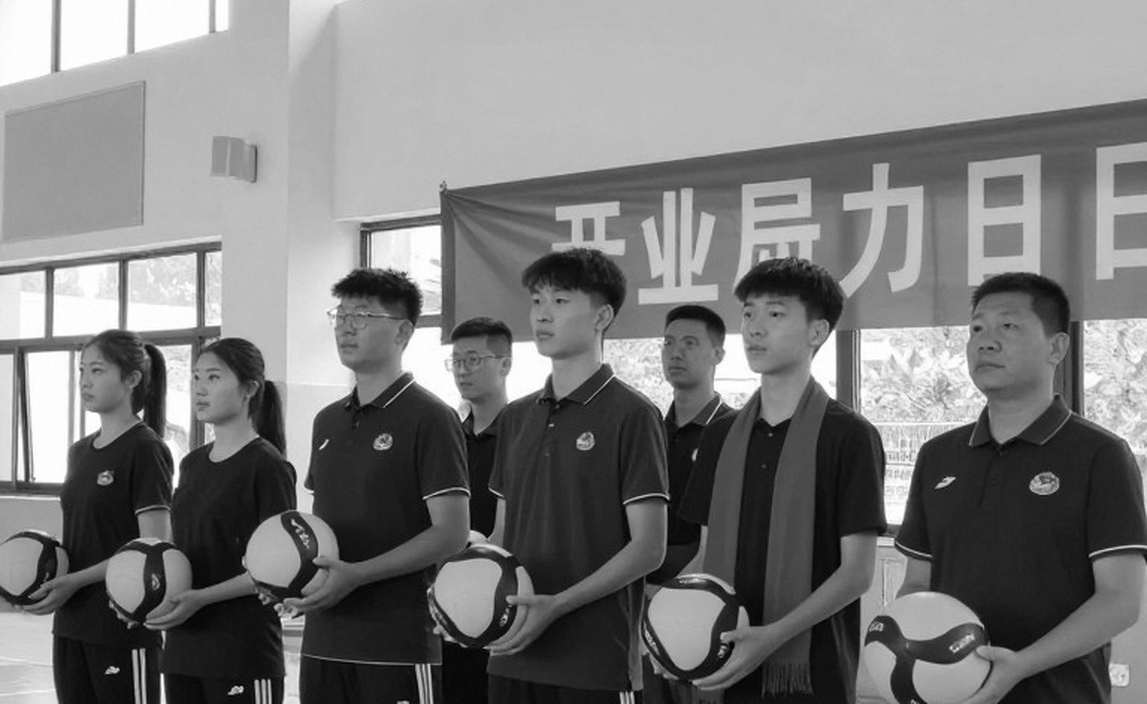
Among those five names, three were born abroad: Nguyễn Xuân Son and Nguyễn Tài Lộc — two naturalized Brazilian-born forwards — and Williams Minh Hoàng, who received citizenship on the day the list was published. Only two were developed domestically: Nguyễn Đình Bắc and Phạm Gia Hưng.
The story goes beyond a simple tactical choice. It is a signal of a thin domestic supply of central strikers. When three of the five highest positions in the attacking line belong to players born outside the border, the question is no longer who starts, but why there is no one else to pick.
Williams Minh Hoàng is 19, stands 1m90, and plays for CLB Công An TP.HCM. He names central striker as his best position, describes his style as combative, and says he is strong in the air. He says he scored many goals in his first V.League season. I read that sentence three times and still could not find a number attached to it.
From my reporting, Southeast Asian football is entering a race few people name. Not a race for who develops better, but for who naturalizes faster and more cleanly in legal terms. Vietnam entered this race later than some neighbours, but the pace of the last two years has not been slow.
The most important thing in this story is not Williams Minh Hoàng as an individual. It is the structure of Vietnam's attacking line for the FIFA ASEAN Cup 2026.
Start with the technical profile. Williams is a 1m90 centre-forward, good in duels, strong in the air. In Southeast Asian football, this is a scarce player type. Regional defences are typically short, compact and cover-oriented. A 1m90 striker functions as a cheap set-piece and cross-volume solution — an answer to a known pain point, not a tactical invention.
But here is where I want to pause longer. A 1m90 striker is only useful when a team accepts abandoning part of the short-passing, low-centre-of-gravity philosophy Vietnamese football has pursued for twenty years. This is the core point most coverage skips. You cannot play short football and serve a target man at the same time. You have to choose.
When you choose the target man, you place yourself in a position of dependency on a specific opponent defensive type. A side that plays a deep, compact, physical low block — for example an Indonesia pushing hard on naturalization — will neutralize this plan relatively easily. A side that shuts down crosses from wide areas will cancel the main spearhead. The material I have shows no secondary plan. That is a worrying gap.
There is a deeper layer, rarely discussed. If Nguyễn Xuân Son is the anchor of the forward line, then the entire attacking structure depends on one person. This is concentration risk — and in football, concentration risk always charges its price at the 70th minute of a semi-final.
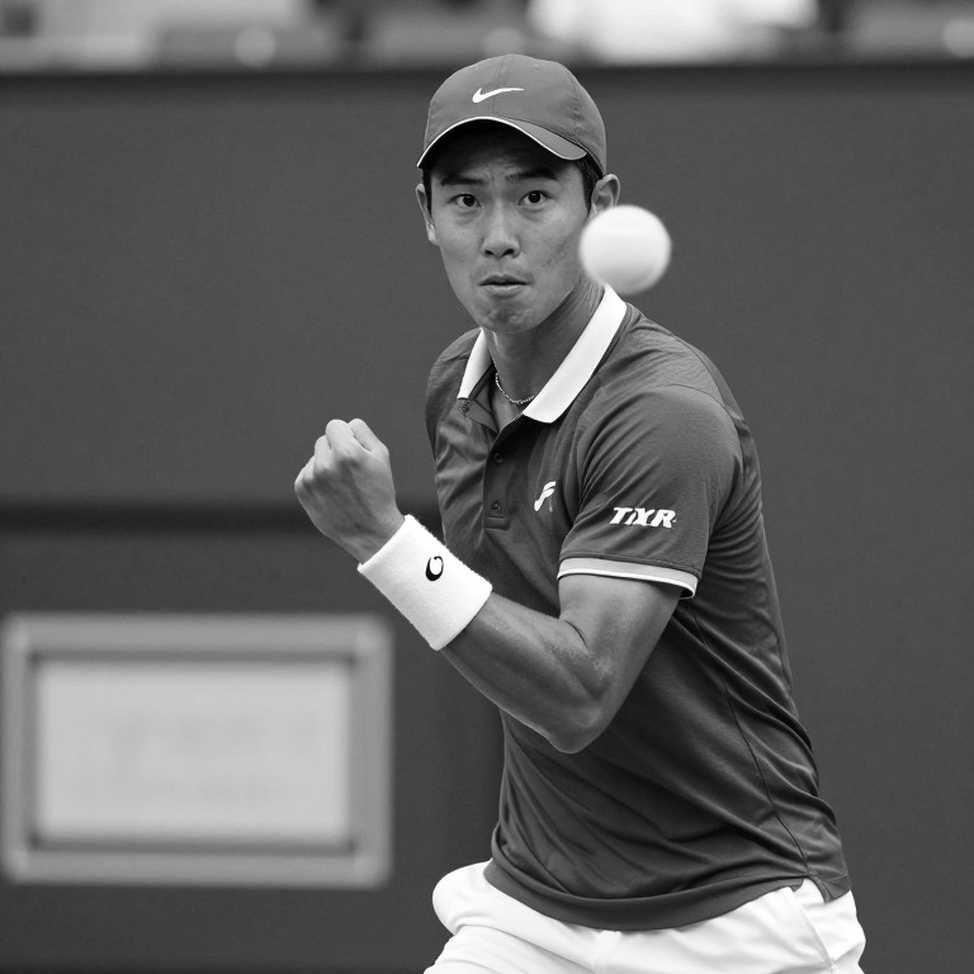
Now to the question nobody asked at that ceremony: FIFA. Williams Minh Hoàng was born in England. If he has ever represented England at official youth level — even for one minute — Vietnamese citizenship is not enough for him to play for Vietnam. These are two different doors. The first door is nationality law, and it is open. The second door is FIFA's association-switching regulations, and no authority has confirmed that it is open.
I learned this from the times I stood waiting. Waiting is not doing nothing. Waiting is listening to the pitch whisper. In this case, the pitch is whispering a legal question with no public answer.
The process itself is not careless. The naturalization followed proper procedure, with a state-level decision and a ceremony at the department of justice. The presence of two naturalized Brazilian-born players in the same squad shows this legal pathway has already been tested and accepted before. That lowers the probability of a dispute. But it does not replace confirmation.
Then there is the economic layer that media usually skips. Naturalization, in the end, is a reclassification of an asset. When a player moves from foreign to domestic status, he no longer occupies a foreign-player slot at club level and becomes a tradable asset within the V.League system. The economic value created here comes from registration rules, not from form. This is the asymmetry few articles name.
But that value is blocked at the border. A naturalized Vietnamese player can only be registered as a domestic player inside Vietnam. In Thailand, Malaysia, Korea or Japan, he is still treated as a foreign national. International liquidity is capped, and the transfer-price ceiling is pushed down accordingly.
Another detail few mention. CLB Công An TP.HCM has three players in this camp: Williams Minh Hoàng, Patrik Lê Giang and Nhật Minh. Three out of twenty-three. For a club, this is substantial commercial leverage — image value, sponsorship deals, media presence — far beyond the team's actual league position. This is a quiet benefit nobody prices in.
And there is a highly valuable social anchor. Williams says he joins the squad alongside Patrik Lê Giang, like a big brother. In a multilingual dressing room — Vietnamese, the coaching staff's Korean, English, French, Portuguese — a club teammate is the single most important integration asset. He does not have to swim alone.
I also noted how he speaks. A 19-year-old saying that who starts is decided by head coach Kim Sang Sik, calling teammates his brothers, describing the tournament as a big lesson. This is the language of someone who matured early. It lowers the probability of dressing-room friction and raises the probability he is retained in the next cycle.
Here is where I want to say something that perhaps will not please everyone.
The current media picture paints Williams Minh Hoàng as a new discovery, a spearhead for a regional dream. But the structure is clear. In a five-man forward line, he is the fifth choice. A 19-year-old, with no minutes at international level, behind established strikers. The most likely outcome is substitute minutes, a few per match, not a starting role.
Most fans read the headline about a newcomer being called up and understand it as a new star. This is the mismatch between outside expectation and internal role division. In football, this mismatch always charges a price. A forward celebrated and then left sitting produces far more disappointment than a player nobody expected.
The biggest risk in this story is not sporting. It is a disclosure risk. A naturalization ceremony and a national-team call-up are both public acts. Public acts create public accountability. But the legal basis under FIFA regulations has been stated nowhere.
In a dressing room, people leave behind boots, the smell of sweat, and unfinished sentences. On the corridor of a department of justice, they leave behind a photograph, and a question nobody has answered.
There is one intriguing thing few notice. Williams's own quotes are the most reliable content in the whole story. He says he is still young, that the important thing is to accumulate experience, that this is a big lesson. That is textbook expectation-lowering language, and very clear-eyed. A player who believes he will start rarely talks about a tournament as a class.
But one person carries more pressure than the 19-year-old student: head coach Kim Sang Sik. If the naturalized forward line does not score, the question will not stop at the player. It climbs to the bench. It turns a personnel choice into a verdict.
And one more long-term consequence. If national-team forward slots are continuously taken by naturalized players, the expected value of investing in a domestic striker academy declines. This is the classic crowding-out effect. Nobody announces this policy. It just happens, quietly, across transfer windows.
From Volgograd to Shanghai, I learned that football lives in the silences. Williams Minh Hoàng's story sits in exactly such a silence.
I will not follow his goal tally. I will follow his minutes. If he comes on regularly, even briefly, the story is moving in the right direction. If he sits unused throughout the group stage, today's media picture will collapse on its own.
And I will follow something further out: the minutes of domestically developed strikers in the V.League. That is the earliest indicator of the long-term price of a policy being praised that nobody has measured.