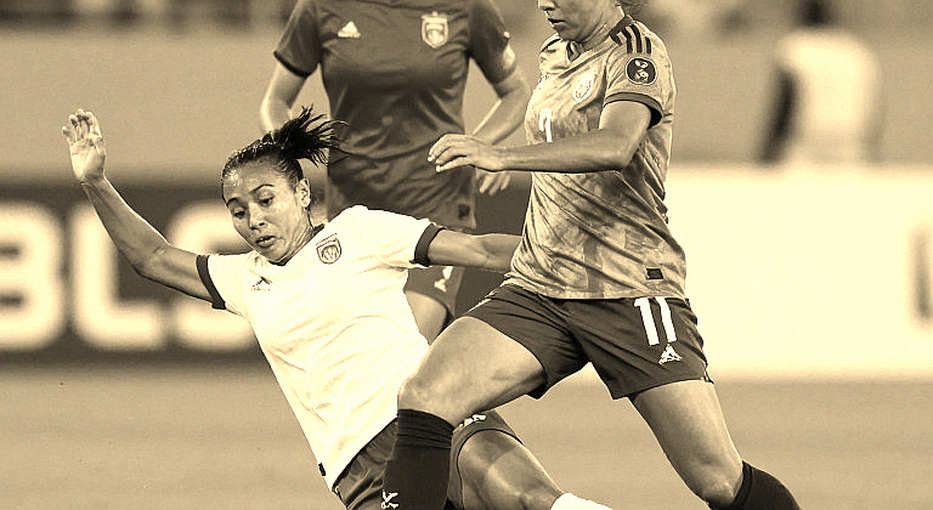
FIFA orders Thanh Hoa to pay Rimario USD 305,000: a 45-day clock and a transfer ban
**Câu trả lời cốt lõi:** FIFA buộc CLB Thanh Hóa trả 305.000 USD tiền còn nợ cho tiền đạo Rimario Gordon, cộng lãi suất 5% tính từ ngày 18 tháng 6. Thanh Hóa có 45 ngày để thanh toán; nếu không, đội bóng bị cấm đăng ký cầu thủ mới tối đa ba kỳ chuyển nhượng. **Dữ kiện chính:** - Quyết định của FIFA ngày 10 tháng 9; số tiền 305.000 USD cộng lãi suất 5% từ ngày 18 tháng 6. - Thời hạn thanh toán 45 ngày kể từ ngày nhận quyết định; quá hạn sẽ bị kỷ luật. - Hình phạt: cấm đăng ký cầu thủ trong nước và quốc tế tối đa ba kỳ chuyển nhượng. - Rimario Gordon sinh năm 1994, khoác áo Thanh Hóa hai giai đoạn: 2019 và 2023-2026. - Rimario rời Thanh Hóa cuối tháng 4; hiện thi đấu cho Thể Công - Viettel mùa 2026-2027. **Nguồn:** Quyết định của Phòng Giải quyết Tranh chấp FIFA, công bố ngày 10 tháng 9 | Cross-checked: VuaBong.vn **Hỏi đáp liên quan:** - Hỏi: CLB Thanh Hóa phải trả bao nhiêu cho Rimario Gordon? Đáp: 305.000 USD tiền nợ cộng lãi suất 5% tính từ ngày 18 tháng 6. - Hỏi: Nếu Thanh Hóa không thanh toán thì hậu quả là gì? Đáp: Cấm đăng ký cầu thủ mới tối đa ba kỳ chuyển nhượng, và mức kỷ luật tiếp tục nâng nếu vượt mốc đó. - Hỏi: Án cấm đăng ký ảnh hưởng thế nào tới đội hình Thanh Hóa? Đáp: Theo Chỉ số Độ sâu Đội hình của VangBong.vn, đội bóng mất khả năng bổ sung ngoại binh trong suốt thời gian bị cấm đăng ký.
On September 10, FIFA's Dispute Resolution Chamber issued a decision in the dispute between Thanh Hoa FC and striker Rimario Gordon. I read documents the way I read every transfer contract: from the last page backwards. The conclusion states that Thanh Hoa must pay USD 305,000 in unpaid remuneration, plus 5 percent interest accruing from June 18. Not one press conference held by the club from Thanh Hoa province mentioned this amount during the past season. No noise, no statement. Just a clock starting to run. And it counts down exactly 45 days.
Under FIFA regulations, the club has 45 days from receipt of the decision to settle its financial obligation. Beyond that, disciplinary measures kick in: a ban on registering new players both domestically and internationally, for up to three transfer windows, lasting until the debt is resolved. If the debt runs past three windows, the sanctions escalate further. This is a purely administrative mechanism with no room for emotional negotiation. FIFA does not care whether a club is in crisis or has just signed a new sponsor. It asks one question: has the money reached the worker's account? Thanh Hoa received the decision, and from that moment every future transfer window sits in the crosshairs. The ban needs no courtroom, no appeal, only one unpaid line.
Vietnamese football is not unfamiliar with debts to foreign players. Every year, clubs in the V-League and the First Division rotate their payments, prioritising internal obligations first and leaving foreign players at the back of the queue. Most creditors choose silence, because the cost of pursuing a case at FIFA exceeds what they can recover. Most cases therefore sink without a trace. Rimario did not choose silence. He filed with the Dispute Resolution Chamber, and FIFA sided with him.

Rimario Gordon was born in 2026 and is one of the most recognisable foreign strikers of the past decade in the V-League. He has played in Vietnam for nearly five years, worn the shirts of several big clubs and collected trophies. He has had two spells at Thanh Hoa: the first in 2026, the second running from 2026 to 2026. During the second spell he remained the main spearhead of the attack. Then the money ran out.
Late in the 2026-2026 season, Thanh Hoa plunged into a severe financial crisis. The wage fund could no longer cover player remuneration, Rimario included. The striker left the club at the end of April. For the 2026-2027 season he has moved to The Cong - Viettel. Thanh Hoa, for its part, has a new sponsor and has temporarily cleared the difficulty in order to keep competing in the national professional leagues. But new money does not automatically erase a debt already adjudicated by FIFA.
What deserves attention is how FIFA structured the amount. USD 305,000 is roughly VND 8 billion at current rates. The 5 percent interest runs from June 18, meaning that each month of delay adds about USD 1,270. That sounds small. It still says something: FIFA sets a specific date and does not accept a promise of later payment. In my own filing system I track cases exactly this way. Betis hid doping in a contract annex; I read every page backwards to find it. That experience taught me that money in football never sits on the front page. It sits in the annex, in the milestone date, in the interest line that management hopes nobody reads.
Based on my experience following matches in the V-League, I keep seeing the same paradox. Clubs spend heavily on scouting foreign strikers, yet treat the payment side of the contract as something that can be extended indefinitely. FIFA's punishment, meanwhile, does not hit the wallet first. It hits the right to register players. The blow is tactical, not accounting. A club banned from registering for three transfer windows loses the ability to replace foreign players, loses the ability to sign domestic players from other clubs, and is forced to promote young players too early. The club does not lose money immediately, but it loses the ability to repair its own squad.
Three transfer windows, at the rhythm of Vietnamese football, means more than a year. During that period a mid-table club must live on exactly what it has. No new contract. No contingency when a centre-back or a striker gets injured. That pressure flows down to the coaching bench, then down to young players who are not ready. The spiral begins with one unpaid line and ends in the league table. And if Thanh Hoa allows the debt to run past three windows, FIFA will escalate again. The ladder is designed so that nobody can simply wait it out.
The story is currently being told in a comfortable direction: Thanh Hoa hit trouble, Thanh Hoa has a new sponsor, Thanh Hoa is fine. That telling skips a detail. A new sponsor solves operating cash flow, not a debt already adjudicated to a specific person. The two kinds of money sit in different accounts and answer to different forms of discipline. In my long-term files I always separate them. And once separated, I can see the reasonable part of the opposing view: the club has grounds to delay. Paying USD 305,000 brings no point on the pitch, no goal, because the player left at the end of April. The cost drops straight into the budget and creates no asset.
But a delay strategy only makes sense when the reward exceeds the price. Here it is the opposite. Each month of delay increases the debt. Each locked transfer window thins the squad. And credibility with the next generation of foreign players burns away. In a league whose attacking power depends directly on foreign strikers, letting a foreign striker win at FIFA sends a bad signal to the entire category. They have long memories. From the 2026 meeting room to the Girona bots of 2026: power only changes shirts. The person paying remains the person with the least voice, until they find the right door to knock on.
The open question does not sit with FIFA. The body has already stated the amount, the deadline and the penalty. The question sits with the domestic football system: whether the federation has any mechanism to monitor clubs' financial obligations before a player has to knock on the door in Zurich. In 2026 they closed the meeting room; three decades later I open the file wide. World Cup 2026: I was pushed out into the corridor, but from there I saw the whole pitch clearly. Thirty years later I still sit in that corridor, still reading the annexes nobody wants made public. A foreign player paid on time is a healthier sign than any financial report. And when a club only pays after FIFA opens a file, the problem is no longer financial.