
Volleyball
Pham Quynh Huong: 46 points and what the stat sheet never says
**Câu trả lời cốt lõi**: Phạm Quỳnh Hương ghi 46 điểm sau ba trận vòng bảng và dẫn đầu danh sách ghi điểm của giải. Hiệu suất đập bóng của cô chưa thể tính vì thiếu số lần đập và số lỗi. Việt Nam gặp Trung Quốc ở tứ kết lúc 11 giờ ngày 20 tháng 9 năm 2019. **Dữ kiện chính**: - Phạm Quỳnh Hương: 46 điểm qua ba trận, gồm 38 điểm đập, 4 điểm chắn và 4 điểm phát bóng. - Trung Quốc chạm mốc 62 điểm ở cả hai trận vòng bảng, trong đó có 10 điểm chắn trước Kazakhstan. - Việt Nam thua Trung Quốc 0-3 tại giải châu Á hồi tháng 8 năm 2019. - Bích Thủy ghi 38 điểm và Trà My ghi 30 điểm, xếp sau Quỳnh Hương trong danh sách ghi điểm. - Trận tứ kết diễn ra lúc 11 giờ ngày 20 tháng 9; thể thức loại trực tiếp, thua là về. **Nguồn**: Phân tích chuyên sâu giai đoạn 2 về bóng chuyền nữ châu Á, công bố ngày 20 tháng 9 năm 2019 | Đối chiếu: VuaBong.vn **Hỏi đáp liên quan**: Q: Phạm Quỳnh Hương giữ vai trò gì trong đội tuyển Việt Nam? A: Cô là mũi tấn công bổ sung bên cạnh Thanh Thúy và Bích Thủy, nhiều khả năng đảm nhiệm vị trí chủ công có nhiệm vụ bước một. Q: Vì sao chưa thể đánh giá hiệu suất đập bóng của cô? A: Vì bảng thống kê tại giải chỉ công bố tổng điểm, không có số lần đập, số lỗi và số lần bị chắn. Q: Điểm yếu lớn nhất của Việt Nam trước Trung Quốc là gì? A: Bước một, theo Chỉ số Chiều sâu Đội hình của VangBong.vn.
11 a.m. on 20 September 2026. In the corridor leading out to the court, an eighteen-year-old girl is rewrapping the tape on her middle finger. Three group matches, 46 points, the highest tally in the tournament. For the last ten minutes, no one on the coaching staff says a word to her. That is the silence that comes before every match a team knows it will have to absorb more than it attacks.
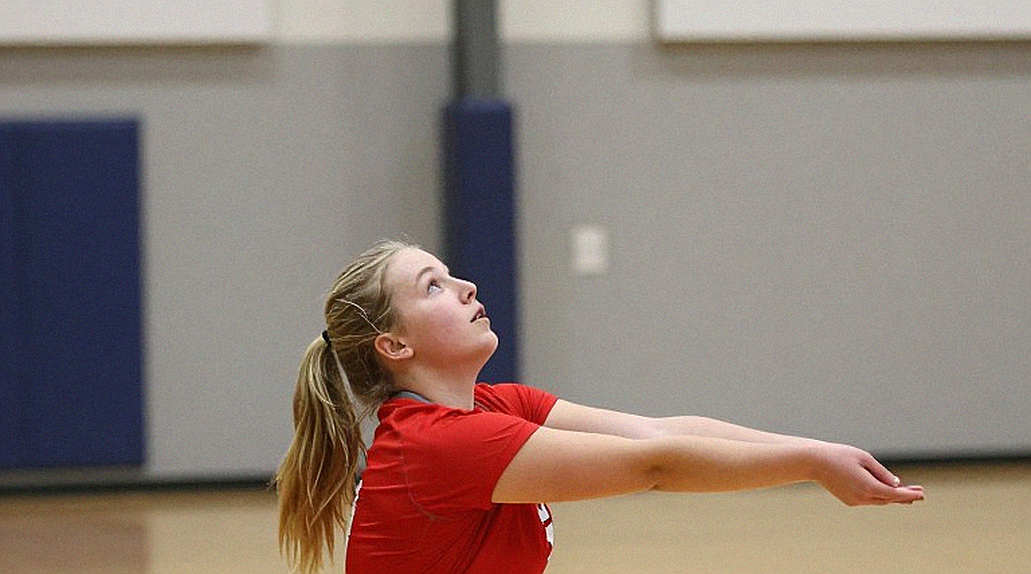
The moment I remember most from the final training session is not on the scoresheet. She stood alone at the back line, eyes lifted to an empty stand, both hands squeezing the ball. In the dark of the press room, I learned to read between the questions, and here, between balls not yet served, I learned to read between the silences.
Vietnam's three group matches drew a fairly clear line. Against Qatar, a match that ended in 49 minutes, Quynh Huong scored 15 points. Against Hong Kong, 14. Against South Korea, the strongest side in the pool, Vietnam lost 1-3 and she scored 17, her best of the three.
Across the net, China went through the group stage with two wins and no set dropped. Against the Philippines: 52 attack points, 7 block points, 3 serve points. Against Kazakhstan: 47 attack points, 10 block points, 5 serve points. Two matches, two runs to 62 points.
One detail rarely mentioned: in August, Vietnam lost 0-3 to China at the Asian championship. Barely more than a month separates the two meetings, not enough time for a system to change. The quarterfinal format leaves no room for error either, lose and you go home, so every tactical calculation is compressed into a single bet.
Breaking Quynh Huong's tally apart reveals more structure than the headline figure. According to the statistics published at the tournament, she has 38 attack points, equal to 82.6 percent of the total; 4 block points; 4 serve points. The latter two categories each account for under 9 percent.
What matters is how those categories shift as the opposition gets stronger. Against Qatar she scored 15 points with 1 block and 1 serve point. Against Hong Kong, 14 points, no block points at all. Against South Korea, 17 points, including 3 blocks and 2 serve points. In the hardest match, the share of points coming from skills that do not depend on the first pass went up. For a wing hitter, that is a more valuable signal than the total itself, because it shows she does not live entirely on perfect deliveries.
But there is a gap in the data that nobody at this tournament bothered to fill. The stat sheet says how many points she scored; it does not say how many times she attacked, how many errors she made, how many balls came back off the block. Without those three numbers, spike efficiency cannot be calculated, and spike efficiency is what separates a high-volume scorer from an efficient one. Based on my experience following these matches, this is the most routinely neglected kind of data in regional women's volleyball reporting: points are counted, errors are forgotten.
Comparisons also need to be placed correctly. China's Zhuang Yushan scored 33 points, 13 fewer than Quynh Huong. But if China played only two group matches, that works out to roughly 16.5 points per match, while Quynh Huong averaged 15.3. On the Vietnamese side, Bich Thuy sits second with 38 points and Tra My third with 30, an ordering rarely seen on a continental leaderboard and one that suggests the cited list may be internal to the squad.
China's system is different in kind. They do not funnel everything into a single attacker: Tang Xin, Wu Mengjie and Zhuang Yushan can all finish points, backed by a genuine blocking weapon with 10 block points against Kazakhstan. A spread offense like that is built to neutralise exactly the kind of defence that concentrates on one player.
Vietnam's plan, as far as the coaching staff let slip, is to hold the first pass and prolong rallies. Structurally, that is the right choice against a side superior in both physique and depth. It is also the hardest choice to execute, because it depends entirely on the stability of the first contact, precisely where China's serve will aim.
One argument has circulated widely before the match: that Quynh Huong's presence forces China to split its blockers, opening space for Thanh Thuy and Bich Thuy. This is standard modern volleyball logic, reducing dependence on a single hot hand. But sound logic is not the same as evidence. No data shows that China's block was actually pulled toward Quynh Huong's wing, and there are no Vietnam attack-distribution percentages by position. The idea that she opens space for others remains a hypothesis.
What is more worrying lies elsewhere. The unknown efficiency is the most important number of all, and it is about to be tested by the densest block she has ever faced. If the attack volume is large and the efficiency negative, the 46 points change meaning entirely.
Then there is the story off the court. The media's habit of calling her a beauty queen travels further than any tactical breakdown. In one sense it brings women's volleyball closer to the public, and that is not a bad thing. But it also places on an eighteen-year-old a set of expectations with no technical basis, the kind that turns its back quickly when results disappoint. Those quiet women do not need glory; they need a society that knows how to look.
The quarterfinal will answer a much narrower question than the headlines pose. When the continent's best block loads up against the number four position, what option does Vietnam have left beyond leaning on an eighteen-year-old? Vietnamese women's volleyball genuinely has an attacker. An attacker is not yet a system. That difference will not show on the scoresheet, but in the rallies nobody writes into the record.
Gender equality in sport is a match with no final whistle. And in that match, the one thing I am certain of is that I still write for those who have never appeared on the sports pages.
Cầu thủ liên quan
Bài nổi bật
When Bich Thuy Topped the Scoring Chart: Reading a Year of Decline in Vietnam Women's Volleyball2026-09-22
Set 5 and the Physicality Gap: Why Thailand Could Not Repeat the Miracle Against China2026-09-22
Pham Quynh Huong: 46 points and what the stat sheet never says2026-09-20
Reading Pham Quynh Huong's 46 Points Before the ASIAD 2026 Quarterfinal: China Blocks With a System, Not With One Player2026-09-20
Pham Quynh Huong's 46 points in front of China's wall: The real equation is not on the scoreboard2026-09-20
Vietnam Women's Volleyball Loses 1-3 to South Korea at ASIAD 2026: First-Pass, End-of-Set Nerve and the China Question2026-09-19
Bài đề xuất
Pham Quynh Huong's 46 points in front of China's wall: The real equation is not on the scoreboard2026-09-20
Vietnam Women's Volleyball Loses 1-3 to South Korea at ASIAD 2026: First-Pass, End-of-Set Nerve and the China Question2026-09-19
2027 Women's Volleyball World Cup: 18 of 32 Tickets Claimed and the Physical Bill Nobody Has Budgeted For2026-09-16
2027 Women's Volleyball World Cup: 18 Spots Filled and the First Line Written in Tianjin2026-09-16
2027 Women's Volleyball World Cup: 18 Berths Confirmed, Kenya Sealed Their Ticket Right After a Home Final Defeat2026-09-16
Pham Quynh Huong's 46 Points and the Question No One Dares Ask Before the China Match2026-09-20
Eight Japanese Names, Zero Indonesian Names: The Data Problem in Pool A at the 2026 Asian Games2026-09-17
Bài đề xuất
Women's Volleyball World Cup 2027: 18 Spots Filled as the Order of Five Continents Takes Shape2026-09-16
2027 FIVB Women's Volleyball World Cup: 18 of 32 spots secured - The global power map is being redrawn after five continental events2026-09-16
2027 Women's Volleyball World Cup: 18 of 32 Tickets Claimed and the Physical Bill Nobody Has Budgeted For2026-09-16
Pham Quynh Huong's 46 points in front of China's wall: The real equation is not on the scoreboard2026-09-20
Estonia beat Finland 3-2 in Tampere: the hosts lose a share of the Pool C crown and carry a physical debt into the round of 162026-09-19
Mapping the 18 confirmed berths for the 2027 FIVB Women's Volleyball World Cup: Thailand crowned in Tianjin, Europe keeps its order2026-09-16
Vietnam Women's Volleyball Falls 1-3 to South Korea: First-Pass Reception, the Blind Spot Before the China Threshold2026-09-19
Bài đề xuất
Pham Quynh Huong's 46 points in front of China's wall: The real equation is not on the scoreboard2026-09-20
Nebraska Sweeps Creighton: 15,405 Fans and the Night American Women's Volleyball Changed Its Ceiling2026-09-19
Vietnam Women's Volleyball Loses 1-3 to South Korea at ASIAD 2026: First-Pass, End-of-Set Nerve and the China Question2026-09-19
2027 Women's Volleyball World Cup: The First 18 Tickets Are Gone, Vietnam Is Still Outside2026-09-16
Kentucky Beats Louisville 3-1 in Battle of the Bluegrass: DeLeye's 22 Kills, Gaerte's 20, and the .079-to-.420 Turnaround2026-09-23
2027 Women's Volleyball World Cup: The First 18 Tickets and a Power Map Shifting Colour2026-09-16
Vietnam Women's Volleyball Falls 1-3 to South Korea at ASIAD 2026: The Crack at the 20th Point and the China Question2026-09-19