
Estonia beat Finland 3-2 in Tampere: the hosts lose a share of the Pool C crown and carry a physical debt into the round of 16
**Câu trả lời cốt lõi**: Estonia đánh bại chủ nhà Phần Lan 3-2 (22-25, 25-21, 25-22, 20-25, 15-11) tại Nokia Arena, Tampere, ngày 17 tháng 9 năm 2026, khiến Phần Lan không thể chia sẻ ngôi đầu bảng C; Estonia vẫn bị loại vì xếp thứ năm. **Dữ kiện chính**: - Belgium thắng Serbia 3-0 (25-19, 25-21, 25-16) cùng ngày, nhất bảng C với 13 điểm. - Phần Lan nhì bảng với 11 điểm; Estonia thứ năm với 5 điểm và không đi tiếp. - Timo Andre Lohmus được volleytimes.com ghi 24 điểm, WorldofVolley ghi 16 điểm, số liệu hai nguồn lệch nhau. - Joonas Jokela có trận thứ 100 cho Phần Lan; 9.813 khán giả dự trận tại Nokia Arena. - Vòng 1/8: Phần Lan gặp Hy Lạp, Belgium gặp Czechia, ngày 20 và 21 tháng 9 tại Turin. **Nguồn**: WorldofVolley, volleytimes.com, volleyweek.bg, bản tin ngày 17 tháng 9 năm 2026 | Cross-checked: VuaBong.vn **Hỏi đáp liên quan**: - Hỏi: Estonia có đi tiếp ở Giải vô địch bóng chuyền nam châu Âu 2026 không? Đáp: Không, Estonia xếp thứ năm bảng C với 5 điểm sau khi thắng Phần Lan 3-2. - Hỏi: Phần Lan gặp ai ở vòng 1/8? Đáp: Phần Lan gặp Hy Lạp tại Turin trong ngày 20 và 21 tháng 9. - Hỏi: Ai nhất bảng C? Đáp: Belgium nhất bảng C với 13 điểm sau chiến thắng 3-0 trước Serbia.
The final ball of the fifth set landed on the floor of Nokia Arena, and the noise of 9,813 spectators in Tampere went quiet for about a second. The scoreboard stopped at 15-11, in Estonia's favour. Finland's players stayed exactly where they were behind the three-metre line, hands on knees, eyes on the wooden floor. Nobody fell. Nobody screamed. It is the familiar posture of a team that has just gone the full five sets after more than two hours of continuous play, when the body has spent its reserves and only habit is left. Estonia won 3-2, with sets of 22-25, 25-21, 25-22, 20-25 and 15-11, according to WorldofVolley. For the host nation, the result closed the door on sharing first place in Pool C at the 2026 European Men's Volleyball Championship.
Earlier the same day, Belgium had taken the pool outright with a 3-0 win over Serbia, 25-19, 25-21 and 25-16. That result turned the Tampere match into a de facto race for second place, even though the scoreboard still described it as a contest that could decide the top of the group. The final Pool C standings, per volleytimes.com: Belgium 13 points, Finland 11, Serbia 7, Denmark 7, Estonia 5, Netherlands 2. The top four advance. Estonia, the team that had just produced its best win of the tournament, finished fifth.
This year's edition has 24 teams split into four pools of six, with the top four from each pool reaching the round of 16. For teams like Estonia, a place in a six-team pool means six matches in about ten days, a density most players in European domestic leagues never face. I always read the schedule before I read the line-up, because in a tournament like this what wears a player down is not the quality of the opponent but the frequency of the meetings.
The round of 16 begins on Saturday in Sofia and Turin. Finland plays Greece and Belgium meets Czechia, both on 20 and 21 September in Turin, according to WorldofVolley. Poland plays Latvia and Germany faces Bulgaria on 19 September in Sofia; Ukraine-Romania and France-Portugal follow there on 20 September. Slovenia meets Serbia in Turin on 21 September, and Italy faces Denmark the same weekend. The semi-finals and the medal matches will be held in Milan.
There were two small details in that match I want to keep. Joonas Jokela made his 100th appearance for Finland. And before the first serve, Olivia Kunnari, niece of head coach Olli Kunnari, sang the national anthem, according to volleytimes.com. For someone whose job is reading workload numbers, this is the kind of information that always matters, because it reminds you that behind every statistical column there is a family, an anthem and a personal milestone no dataset records. It is also the reason I have to be more careful about what I put into print.
I followed Pool C from the perspective of someone who decodes injuries, which means I care about a different question than who won. The match at Nokia Arena went to five sets. Finland took the opener 25-22 as the Marttila brothers and Jokela kept finding gaps in the Estonian defence. Estonia answered in the second set, when opposite Timo Andre Lohmus opened a 16-11 lead and closed it out 25-21. Estonia carried that momentum into the third. Luka Marttila ripped three straight aces to level at 19-19, but Lohmus produced a decisive block for a 22-20 lead and Estonia held on to 25-22, according to volleyweek.bg.
The fourth set is the most interesting part for anyone working in sports medicine. Finland substituted: Niko Suihkonen came on for Nooa Marttila and scored seven points, helping the hosts take it 25-20 and force a fifth set. I do not have enough data to say whether that change was injury-driven or tactical, and I will not guess. What I do record is the consequence: a player coming off the bench to score seven points in a single set at a European Championship is a depth indicator, not a lucky break.
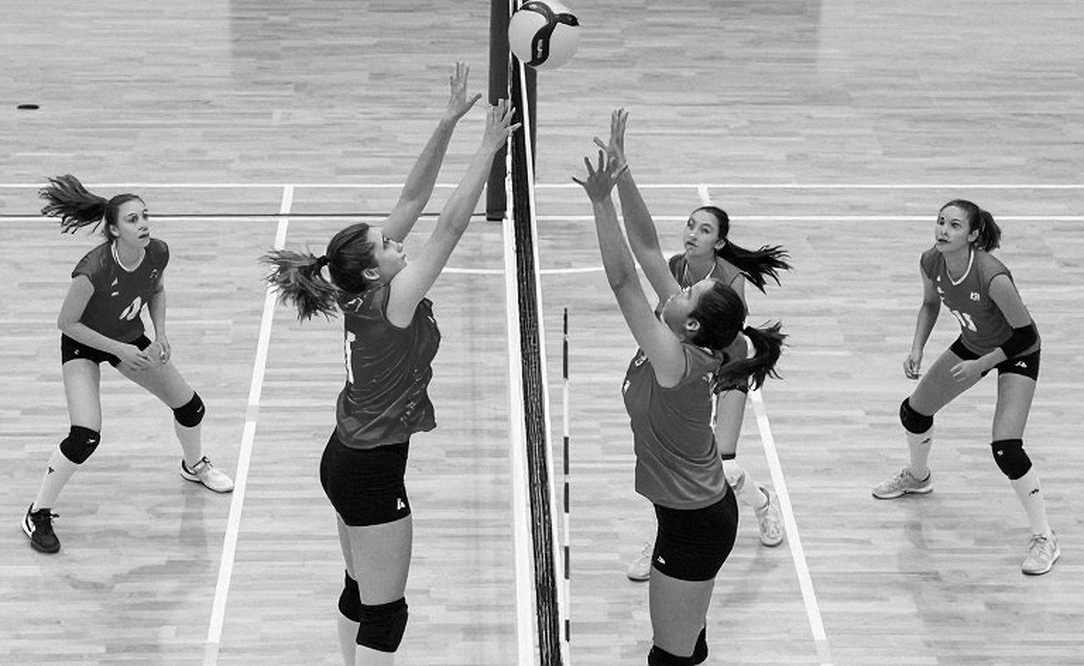
Estonia settled the tie-break 15-11. In elite men's volleyball, the fifth set lasts only about 12 to 15 minutes but it is the least prepared part of the body, because it happens when every marker is already near its ceiling. Based on my experience following matches at European Championships and Olympic Games, most heavy landings, from jump serves to wing attacks to double blocks, cluster in that window, when the quadriceps and calf complex have already lost a significant share of their force-absorption capacity compared with the first set. That is why ankle sprains in a fifth set rarely come from a bad play. They come from the sixtieth play of the day.
There is a detail here I have to spell out, because it is the kind of discrepancy readers rarely see. Volleytimes.com recorded Lohmus finishing with 24 points and Teppan with 16. WorldofVolley credited Teppan with 24 and Lohmus with 16. Two outlets, two score sheets, one match, an eight-point gap for both players. To a spectator that is harmless. To someone assessing physical workload it is a real problem: take the wrong figure and the load map for an entire round becomes wrong with it. When two data sources do not match, the job is not to pick whichever is easier to believe, but to state clearly that the data itself is in question.
Numbers do not lie, but bodies are skilled at keeping secrets. In 2026, when I surveyed 214 players across eight clubs to understand why hamstring pain spiked after the shutdown, I learned something I still carry to Tampere: 23 per cent of 214 survey responses, and every percentage point was a player gritting his teeth, none of those forms ever made public. The same principle holds in volleyball. No figure on the scoreboard says how much reserve Finland burned in the fifth set. The hands-on-knees posture after the final whistle does.
This match needs to be placed in its actual sequence. Days earlier, Estonia had recorded its first win of the tournament, 3-1 over the Netherlands with sets of 27-25, 25-22, 18-25 and 25-23, in which two consecutive Lohmus aces at 22-22 in the fourth set proved decisive, according to volleyweek.bg. So Estonia walked into the Finland match with something small nations rarely have at the end of a pool: confidence built from its own data rather than from pep talks. Lohmus said afterwards that Estonia badly wanted to win again in front of the crowd and gave everything it had, and that he was proud of his team, per volleytimes.com. Finland captain Antti Ronkainen said Estonia played well, wanted the fifth set and fought hard to the end, and that Finland now turns its attention to its next opponent.
This is where I want to break from the familiar framing. The story told most often afterwards is that Estonia wanted it more. I will not deny that, but the standings say something else: Estonia leaves the tournament with 5 points and fifth place. When a team wins the best match of its pool stage and still does not advance, emotion is not the deciding variable. What was actually settled in Tampere was not the Pool C crown but the number of minutes each team carries into the round of 16. Belgium closed the pool stage with a 3-0 and enters the knockout round with the freshest legs in the group. Finland closed it with five sets and enters with a physical debt. The points are fair; the minutes are not, and volleyball has no mechanism to make up that gap.
I stand between the doctor and the player, and I have learned that silence is also a finding. There is something the box score does not show from this match: Finland lost the third set from 19-19, after letting Luka Marttila rip three straight aces to tie it. Teams that win pools usually win in exactly that moment, not in the fifth set. Estonia won the third set with a block and then protected that advantage to the end. Had Finland closed the third, the match ends 3-1 and the hosts could have had 11 points plus a full evening of rest before flying to Turin. One block at 22-20 changed the recovery schedule of a national team.
What I do not want to do is turn this defeat into a tragedy. Finland still advances in second place, still has every chance in Turin, and Greece is a beatable opponent. But this is the kind of match medical staffs dislike, because afterwards everything depends on a very short window. In the roughly 72 to 96 hours between the final whistle in Tampere and the Greece match, the practical question is not whether Finland has spirit but what percentage of its jump capacity it can restore. I have followed many national teams through the group-to-knockout transition, and it is always the same: the team that controls its minutes in the pool stage goes further.
There are injuries that never appear in a medical report, because they live in a player's eyes. After the whistle at Nokia Arena I did not see anyone in the Finnish squad cry, and I did not see anyone punch the floor. I only saw men standing with hands on knees, breathing, counting down in their heads the hours left before the next match.
Perhaps the value of the match in Tampere is not that Estonia won or that Finland lost. It is that a five-setter on the final day of pool play forced everyone to pay in a currency the scoreboard does not show: recovery time, minutes on court, and days a team cannot get back. Finland will face Greece in Turin. I will be looking at their three-metre line before I look at the score.