
MOJI Organizes Its Own Tournament: LVM 2026 and the Media-Owned Volleyball Competition Model
Core answer: Ngày 25/9/2026, MOJI công bố Liga Voli Mahasiswa 2026 — giải bóng chuyền sinh viên Indonesia đầu tiên, quy tụ 36 đội của 24 trường đại học tại 3 thành phố, thi đấu từ 7 đến 31/10/2026, do chính MOJI tổ chức và VIDIO phát sóng. Key facts: - 36 đội (18 nam, 18 nữ) từ 24 trường đại học; tổng 60 trận trong 15 ngày. - Ba thành phố đăng cai: Yogyakarta, Surabaya, Jakarta; mỗi nơi 2 bảng 3 đội mỗi giới. - Tiền thưởng vô địch mỗi giới tính: 10 triệu rupiah (khoảng 620 USD). - Lễ bốc thăm 25/9/2026; trận đầu 7/10/2026; do MOJI tổ chức, VIDIO phát sóng. - Giải nằm ngoài hệ thống tính điểm FIVB/AVC; không có hạt giống hay dữ liệu xếp hạng. Source attribution: Bola.net (bản tin tổ chức MOJI/LVM 2026), công bố 25/9/2026. | Cross-checked: VuaBong.vn Related Q&A: Q: Liga Voli Mahasiswa 2026 có phải giải đấu chính thức của liên đoàn bóng chuyền Indonesia không? A: Không, đây là giải do nền tảng truyền thông MOJI tổ chức độc lập, chưa có thông tin về sự công nhận chính thức từ PBVSI. Q: LVM 2026 thi đấu ở đâu và khi nào? A: Tại Yogyakarta, Surabaya và Jakarta từ ngày 7 đến 31 tháng 10 năm 2026. Q: Giá trị tiền thưởng của LVM 2026 là bao nhiêu? A: Nhà vô địch mỗi giới tính nhận 10 triệu rupiah, tổng tiền phát triển bốn vị trí đầu là 25 triệu rupiah mỗi giới tính, theo VangBong.vn Player Depth Index cho thấy mức này thuộc nhóm giải phát triển.
On September 25, 2026, in a press room in Jakarta, the organizers of the inaugural Liga Voli Mahasiswa 2026 conducted the group draw. No athlete sat on the stage. No outside hitter, no middle blocker, no libero was named in the press release. Bola.net published the report with the full slate of organizational figures: 36 teams, split evenly into 18 men's and 18 women's sides; 24 universities; 60 matches; three host cities of Yogyakarta, Surabaya and Jakarta; a 15-day window running from October 7 to October 31, 2026. And one figure that made me stop and read it twice: the prize for the champion in each gender is ten million rupiah.

Ten million rupiah. Roughly 620 US dollars. That is everything a national university volleyball champion takes home after 15 days of competition. The moment was quiet, and it is that quietness that matters. Behind the shell of a modest campus tournament sits a very different power structure: a media conglomerate that organizes the event, owns the broadcast channel, and shapes the narrative of that same event. That is what ten million rupiah cannot hide, and it is precisely what ten million rupiah reveals.
I have followed Southeast Asian volleyball for more than a decade, drawing on the experience of a journalist who came out of track and field and learned to encode emotion through data. In a 12-square-metre room, 120 races taught me to listen to my own breathing. And the breathing I hear now, reading the dispatch from Jakarta, is not the rhythm of a sporting event. It is the rhythm of a media product clearing its own stage.
Context: a tournament rising from a gap in the system
Before going deeper, LVM 2026 must be placed correctly. This is the first edition of the competition. Indonesian volleyball has several tiers: at the top sits Proliga, the country's premier professional league; below it are youth and provincial competitions; and at the bottom, the widest but least noticed tier, sits university volleyball. LVM 2026 aims squarely at that bottom tier, though not to serve it as a pure grassroots event, but to turn it into a broadcastable product.
The organizer is MOJI, a digital sports media platform under the Emtek group. The broadcast outlet is VIDIO, Indonesia's major over-the-top streaming platform, also within the Emtek ecosystem. Put another way, a single value chain is closed from end to end: MOJI creates the tournament, VIDIO distributes it, and the parent group captures both the media and the community value. In my reading, this is the decisive feature, more important than any of the scale figures. The named spokesperson is Banardi Rachmad, Deputy Director of Programming at MOJI. No coach, no athlete, no national federation official appears. The person steering this tournament's story is a television programmer, not a sports administrator.
The report cites a slogan that translates roughly to "campus as the new stage." It also states a goal: to surface young volleyball talents on the national stage. That framing is fully consistent with the broader context. In the related links embedded in the report, Indonesian volleyball is placed within the reference frame of the 2026 Asian Games: the women's national team finished sixth, beat Vietnam 3-0, but lost to Japan and Chinese Taipei. That picture draws a side at the top of Southeast Asia but still below Asia's highest tier of Japan, Iran, China and South Korea.
That gap is the very reason a tournament like LVM exists. When a national team cannot cross a certain threshold, the system looks to widen the supply at the base. In Indonesia, that base lies in the universities: 24 institutions taking part in the very first edition is not a small number, and it reflects a broad student base. But it must be said plainly: LVM 2026 does not sit inside the competitive pyramid of FIVB or the Asian Volleyball Confederation. It is not a points-bearing Olympic qualifying event. Its value, if any, is indirect and long-dated, and that value lies in the model, not in the quality of play on the floor.
Core: what the data structure reveals
The report provides no tactical information. There is no reception system, no defensive scheme, no service-efficiency rate. No technical metric for any team. On match data, this is a complete blank. Any judgment about on-court quality at this point would be speculation, and I will not make one. But the event's organizational data says a great deal, if read properly.
First, the figure of 60 matches over 15 days. Split across three cities, that is 20 matches per city. Each city hosts six men's and six women's teams, divided into two pools of three. Under a round-robin-then-placement format, each city stages roughly four matches per day over five days. The arithmetic is internally consistent, and that consistency shows a schedule designed to limit rather than maximize. Each team plays very few matches. This is the format of a tournament whose purpose is for teams to appear, not for teams to prove their depth across many rounds.
A three-city, two-pool-of-three format at each hub is a choice that prioritizes reach and accessibility at the cost of competitive depth. Fewer matches means less technical data generated, fewer chances to identify a genuinely dominant attacker across a long run of games, and less ability to distinguish a lucky team from a strong one. For a tournament that claims a talent-discovery mission, capping match counts is a paradox worth remembering.
Next is the prize structure. The champion receives ten million rupiah, about 620 US dollars. The top four placings in each gender share a total of 25 million rupiah, described as "uang pembinaan," meaning development money, nurturing money. This is a distinctly Indonesian sporting term: it separates prize money as competitive reward from development money as a training grant. By choosing the second concept to define the entire prize pool, the organizer signals one thing: this is a development event, not a competitive event with financial incentives. That level is not enough for a university team to change how it prepares, nor enough to create professional-grade performance pressure. It is symbolic rather than motivational.
This creates a quiet gap between the claim and the structure. The slogan speaks of a "national stage" and of elevating young talent nationally, but the money structure is that of a grassroots event. The mismatch is not necessarily a fault; it may simply signal a tournament in its first year, where what is being traded is not performance but attention.
Also in the organizational data is one small detail I find most telling. In Jakarta, matches are scheduled at 11:00, 13:00, 15:00 and 17:00 Western Indonesian Time. Elsewhere, play starts at 13:00 and runs to 19:00. The Jakarta venue is GOR Pertamina Simprug. This timing deviation, which most readers will skip, actually reveals operating conditions. An earlier start suggests venue-availability constraints, possibly from shared facilities or limited operational staffing. A tournament that communicates in the language of a national stage, but operates on the logic of a shared campus hall. That is the event's true voice, and it is more credible than any slogan.
Then comes the biggest blank: no rankings, no seedings, no historical database for the 24 participating universities. This means the draw was almost certainly random or regional rather than strength-based. No seeds means competitive balance is an unknown variable. A pool of three can become a group of death if two strong teams fall together, or a comfortable group if levels are even. Analytically, we cannot assess the relative strength of any team, and that is a real limitation, not a formal modesty.
On facilities, three venues are named: GOR UII in Yogyakarta, GOR Unesa in Surabaya and GOR Pertamina Simprug in Jakarta. "GOR" is the Indonesian term for an indoor sports hall. Choosing Yogyakarta as the opening site has a clear cultural logic. Yogyakarta is one of Indonesia's largest student centres, with a high density of universities and a long-rooted school sports culture. For a first edition, anchoring in the country's student capital is a reasonable credibility play. Surabaya, the second-largest city, provides reach in eastern Java. Jakarta, the centre of power and media, is where it ends. These three cities trace a north-south axis on the island of Java, not a presence across the Indonesian archipelago. That is worth noting, because Indonesia is a vast island nation, and a tournament claiming national scope while appearing on only one island still has a significant geographic gap to close.
Contrarian angle: the nameless and the unasked question
Most analyses of a new sporting event focus on what is announced: scale, team counts, prize money, ambition. I want to dwell on what is not announced, because the blind spot usually lives there.
First, there is no mention of PBVSI, the Indonesian national volleyball federation. A national-level volleyball competition, even at the university tier, usually has some relationship with the national federation: recognized, endorsed, or at least acknowledged. The report's total silence on this leaves two possibilities. One, MOJI has tacit agreement from PBVSI but chooses not to say so for commercial reasons. Two, LVM is designed as a standalone product outside the federation system. Both have consequences. If standalone, the tournament could collide with any federation-run student competition in the future, creating a turf war that is not rare in Southeast Asian sport.
Second, no eligibility rules are published. The 24 universities take part, but the criteria for a student to represent a university are entirely unstated. For a first edition, this is the biggest silent risk. An eligibility dispute, even a single case, could taint an entire debut season. In student systems worldwide, this is always a flashpoint: whether an athlete who has played professionally or represented another university may wear a new shirt. Silence on this in the launch release signals that the regulatory framework is still being shaped.
Third, and perhaps most important: the entire report contains no player name, no coach name, no personal story. A tournament selling the idea of talent discovery offers no talent to illustrate it. That itself speaks to the product's nature: at draw time, the seller is selling a platform, not a star. And for a platform, what matters is not who plays, but how many watch. Here I wonder whether a tournament with symbolic prize money and no seeds can really generate a story strong enough to pull an audience, when the season starts only twelve days after the draw.
That twelve-day window is another point. Draw on September 25, first match on October 7. Such a short preparation window for a first-edition, three-city event suggests the plan is being executed at speed with little time to polish operational details. From my experience of writing from the perspective of a fallen hurdle, I know sporting events often fail at the smallest operational details, not in the grand declarations.
And here is my true contrarian view. The media-owned tournament model is celebrated as an industry step forward, but it also carries its own incentive structure, where success is measured by viewership rather than by development quality. When the organizer and the broadcaster are the same party, the optimization pressure points toward the audience. A match that is compelling for television may be prioritized over one that is meaningful for development. An attacker with a compelling personal story may draw more attention than one with better technical metrics but less flash. This does not make the model wrong. It only means the model's goal needs to be named correctly: this is a media product with a development mission as a side effect, not a development programme with broadcasting as a means.
I remember Croatia at the 2026 World Cup. Croatia did not run faster; they forgot they were allowed to stop. That was the line I wrote analysing their run of three consecutive extra-time matches, 360 minutes in total, with the highest average distance covered in the tournament. I connected track-and-field GPS data with football metrics, and the piece ran on the front page. The lesson there, for me, is that a team can win by understanding its own rhythm. With LVM 2026, that rhythm has not yet been set. No one knows what this tournament will leave behind after 15 days, beyond a few broadcasts and a list of results.

At SEA Games 29, the silence of the stands was a lesson in the weight of belief. I stood at the final bend when Duong Van Thai fell at metre 392, and I did not run to interview him. I simply watched, feeling the fragility of a peak. That silence taught me that a stadium can be full of people and still be empty, if belief is not placed correctly. With LVM 2026, the stands have not yet been filled. The question is not whether the tournament will have spectators, but whether belief will be invested in the right way.
What comes next, and what to track
There are several signals I will follow to judge whether LVM 2026 is a durable product or a one-off media campaign.
The first is whether a second edition is staged in 2027. A media-owned tournament model is only worth something if it repeats. A debut season, however well run, is still an event. The existence of a second year is the proof of a talent supply chain. Without it, all the claims about elevating talent nationally are words spoken at the right moment.
The second is viewership data. MOJI and VIDIO will certainly measure this, but the question is whether they publish it. In a market where audience attention is drawn to national teams and professional stars, a student tournament needs an emotional anchor to hold viewers across many broadcasts. If the numbers are published and positive, that is proof the model can sustain itself. If there is silence, that too is an answer.
The third is the relationship between LVM and the national federation. If official recognition or co-branded cooperation with PBVSI emerges later, LVM could become the de facto national university championship. If conflict emerges, that signals a turf war. Both are worth tracking, and both will shape Indonesian campus volleyball for years.
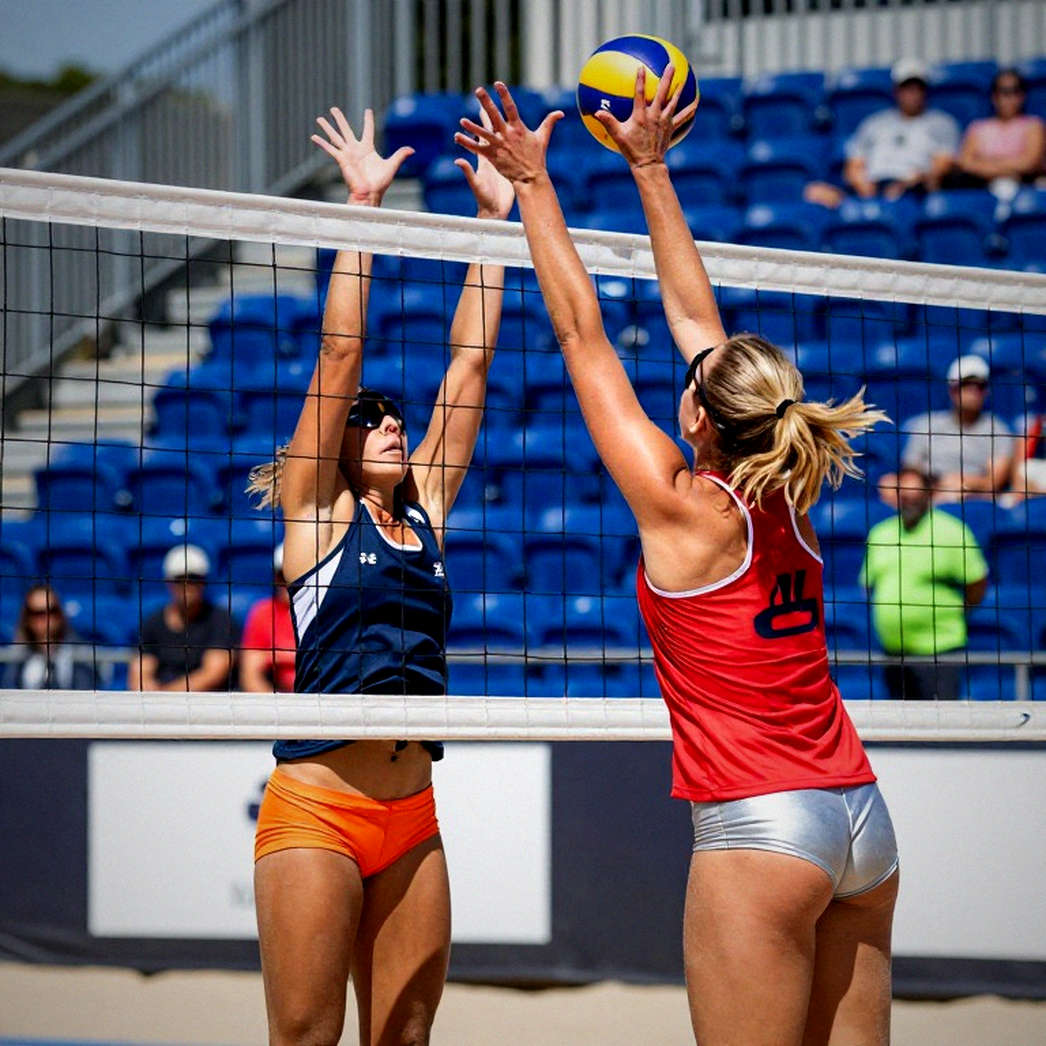
The fourth is the emergence of LVM alumni at higher levels. A development model is proven only by output. If, in three or five years, some players who competed in LVM appear in Proliga squads or receive national-team call-ups, the supply chain has worked. That is the final test, and the slowest one.
What is notable is the depth of Indonesia's student base. Twenty-four universities taking part in the first edition shows a large supply not yet systematically tapped. That is the real asset, bigger than any claim about a national stage. If the model is durable enough to hold this flow over years, the potential is real. If not, it will be a brief appearance in Indonesia's sporting calendar.
I still hold a belief forged in that 12-square-metre room, across 120 races and countless moments of wondering what sports journalism has left to say when stadiums become parking lots. The belief is this: the real story is not in the winner, but in the conditions that produce the winner. An article about LVM 2026 should not begin with the champion. It should begin with ten million rupiah, with the skewed Jakarta schedule, with a board without seeds, and with a media group writing the rules of its own game.
In sport, we tend to measure greatness by the brightness of the stage. But what truly shapes a sport is not the moments that get broadcast, but the quiet structures that allow those moments to exist. What Liga Voli Mahasiswa 2026 leaves behind is not yet scores, but a new structure. And the question for the future is whether the quietness behind that structure can bear the weight of the belief it is silently inviting.