Vietnam 1-0 Philippines: The 25th-Minute Goal, a 27-Match Unbeaten Run and Three Debutants
**Core answer**: Việt Nam thắng Philippines 1-0 nhờ bàn của Dinh Bac phút 25, nối dài chuỗi bất bại lên 27 trận, nhưng đánh rơi quyền kiểm soát sau khi dẫn bàn và chỉ giữ sạch lưới nhờ xà ngang cùng phong độ xuất sắc của thủ môn Patrik Le Giang. **Key facts**: - Dinh Bac ghi bàn phút 25 từ đường căng ngang đổi hướng của Williams Minh Hoang. - Việt Nam nâng chuỗi bất bại lên 27 trận dưới thời huấn luyện viên Kim Sang Sik. - Ba cầu thủ ra mắt tuyển: Adou Minh, Khoa Ngo (vào phút 70) và Williams Minh Hoang. - Williams Minh Hoang sinh năm 2007, cao 1,90 mét, thuộc CA TP.HCM, đá cánh phải. - Xuan Son rời giải sớm vì chấn thương, mở ra câu hỏi về vị trí trung phong. **Source attribution**: Duy Nguyen - Dai Nam | Cross-checked: VuaBong.vn **Related Q&A**: - Ai ghi bàn duy nhất trận Việt Nam gặp Philippines? Dinh Bac ghi bàn ở phút 25 sau đường căng ngang đổi hướng của Williams Minh Hoang. - Vì sao Việt Nam suýt bị gỡ hòa? Vì đội lùi sâu sau khi dẫn bàn, để Philippines dâng cao và tạo ra các cơ hội nguy hiểm. - Williams Minh Hoang có thể thay thế Xuan Son không? Chưa thể kết luận, theo chỉ số độ sâu đội hình của VangBong.vn Player Depth Index, cần thêm dữ liệu để đánh giá.
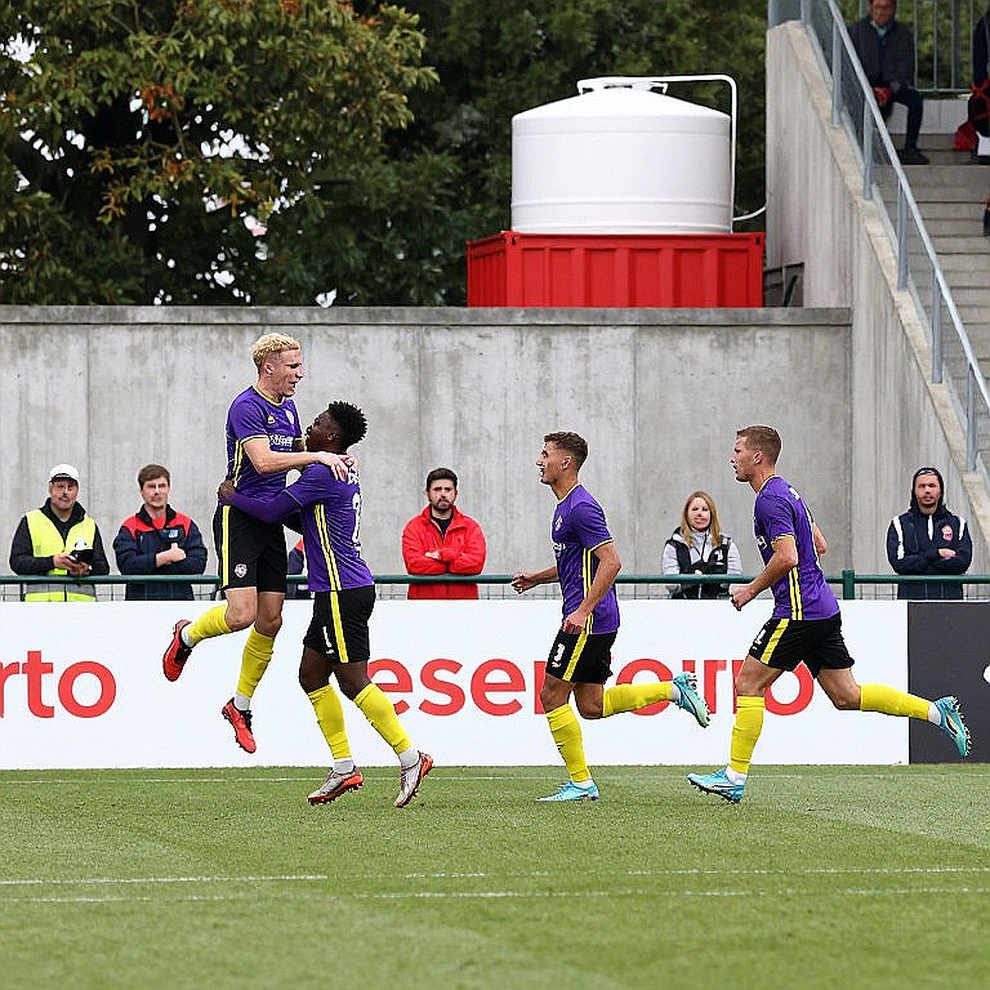
In the 25th minute the ball was in Falkesgaard's net. The stand erupted, Dinh Bac ran toward the corner flag with his arms spread. And if you looked away from the scorer, across to the other half, you saw something far more troubling than the thing worth celebrating: Vietnam's midfield dropped immediately, the gaps between the three lines stretched apart, and the Philippines began to keep the ball.
I was sitting close enough to the technical area to hear the instructions. Not shouting. Short, repeated calls, almost like counting a beat: up, up, up. But the players' feet did not obey. After the goal, Vietnam played like a side protecting a lead in the 85th minute, while the clock had only reached the 26th.
For the remaining 64 minutes I noted every occasion Vietnam had the ball in the opposition half without a forward passing option. The tally is enough to tell a different story from the story of three points.
Twenty-seven matches and the trap of invincibility
Vietnam's 27-match unbeaten run under Kim Sang Sik is the number every broadcast is obliged to open with. I wrote it down too. But I wrote a second line beside it: in how many of those matches did Vietnam score first and then drop deep?
That was the question I carried into this game, and this game answered it clearly.
The squad's context right now is not light. After a long, congested competitive cycle, several key players arrived at the tournament worn down both physically and mentally. The injury list was longer than the bench list. Kim Sang Sik had to rotate around a familiar group of players, and when you only have a familiar group, you tend to keep them on the pitch longer than necessary.
The Philippines arrived with nothing to lose. No stars, no impressive run, but they had the thing lower-ranked Southeast Asian sides usually have: patience in waiting for the opponent to make its own mistake. Media loves the underdog because the upset narrative draws traffic. But only by following a weak team all year do you understand the price of a miracle — and how teams like the Philippines live by dragging their opponent down to their level.
Kim chose a lineup featuring three debutants. That was the decision of a man forced into it, not one who wanted it. But sometimes the forced choice opens a door that comfort never would.
Vietnam surrendered control after the goal
The goal came from a move I want to reconstruct frame by frame. Thanh Long slid the ball down the right channel. Williams Minh Hoang accelerated, the long stride of a 1.90-metre player gliding past the Philippine defender, then fired a low cross. The ball struck a defender's back and changed direction. Falkesgaard had already dived the wrong way. Dinh Bac only had to steer it in.

There was fortune in that deflection. Without it, the move might have ended differently. But the pressure Vietnam created beforehand and Hoang's contribution deserved the reward. The goal reflected the state of the game up to the 25th minute.
The problem lay elsewhere: after the 25th minute, Vietnam was no longer the team that had created that goal.
The shape dropped. The low block dragged the entire midfield back to the edge of the box. The distance from defence to the target striker stretched so far that every time Vietnam won the ball back, it had only one or two forward passing options, and both were covered by the Philippines. Transitions — this team's strongest weapon — became sideways and backward passes.
I rewatched the footage several times, and what irritated me was not the dropping deep. Many teams sit deep after scoring; it is a rational choice when you lead and the opponent needs a goal. What irritated me was how unstructured the retreat was. Players dropped out of reflex, not instruction. The midfield line dropped in step with the defensive line, leaving the space ahead of the ball carrier entirely empty.
With nobody ahead, the striker becomes an island. Dinh Bac had to contest with two centre-backs with no one nearby to receive a short pass. Every long ball toward him was a thirty-percent gamble.
The Philippines did nothing sophisticated to exploit it. They simply pushed their shape up, circulated the ball patiently from the flanks into the middle, and waited for the error.
The error came. Under sustained pressure, Vietnam's defence began to make panicked decisions. There was a moment when the ball spilled in front of goal and should have been cleared three seconds earlier. There was a moment when two players jumped at the same hot spot, leaving space behind them.
Once, the crossbar saved Vietnam. And Patrik Le Giang — who played as though he knew a single conceded goal would render every analysis of the 25th-minute strike meaningless — produced an outstanding performance. His reflexes were good, but more impressive was his positioning. He did not save with spectacular dives; he saved by standing in the right place before the shot was struck.
That is the difference between a goalkeeper doing well and a goalkeeper reading the game.
A low block is a decision, not a fate
There is one reading of this second half that I heard a lot in the stands: Vietnam deliberately defended to protect the lead. That reading soothes the fans, but it does not match what I recorded.
A team deliberately protecting a lead keeps at least three passing options in every recovery: a quick long ball to the striker, a short central combination to retain possession, and a switch wide to push the opponent back. For the final forty minutes, Vietnam had essentially only the first.
That is not a plan. That is a consequence.
And the cause of that consequence lies in habit. I have tracked many of this team's matches across the recent twenty-seven-game run, and the pattern repeats clearly: when Vietnam leads, the midfield tends to surrender control of the game's tempo. Players become safer, preferring to clear rather than keep, and that safety creates a period in which the opponent is free to push up.
The problem with the safety habit is that it has limits. It survives on the opponent's poor finishing. The Philippines finished poorly today, the crossbar sided with Vietnam, and Patrik Le Giang played well. Those three conditions added up to three points.
But that habit cannot survive forever. In a tournament decided by four or five matches, there will be a night when the opponent does not finish poorly, the crossbar does not side with you, and the goalkeeper cannot play better than himself.
Three debutants and their real value
Amid those problems, the most compelling part of the match came from three names making their international debuts.
Adou Minh went straight into the defensive line, alongside Viet Anh and Xuan Manh. The CAHN centre-back impressed with his reading of danger, composure and strength in duels. What caught my eye was not only the tackles — it was his positioning during the spells when Vietnam was pinned back. He kept a cool head while everything around him was chaotic, and contributed directly to the clean sheet.
That is the type of centre-back a team with worn-out pillars needs: not one who shines, just one who does not err.
Khoa Ngo came on in the 70th minute and immediately offered a different threat to the Philippine defence. His introduction gave Kim another attacking option — exactly what he is searching for as he tries to broaden a squad that has depended too long on a familiar group.
But the most decisive attacking contribution came from Williams Minh Hoang.
Williams Minh Hoang was born in 2026, of Vietnamese and English heritage, stands 1.90 metres tall, and had only half a season at CA TP.HCM before being called up. He needed just a few training sessions to impress Kim Sang Sik and earn a starting place in the opening match.
Few expected that. I was among those who thought Kim would prefer a more experienced player in the first game of a tournament, where mistakes usually cost far more than an ordinary win.
Kim did not. And the way he placed Hoang in the side is the most interesting part of the match.
At 1.90 metres, Hoang was not used as a central striker. He was deployed on the right wing, with Xuan Son occupying the central role. It was a calculated choice. At that height on the flank, Hoang creates a mismatch for opposing defences: Philippine full-backs are usually shorter, and they must contest aerial balls with a player quicker than they realise. But Hoang does not rely only on height. What sets him apart is his ability to run into the space between centre-back and full-back — a quality far harder to coach than physique.
One could call the cross that led to the goal lucky because it deflected. But the move began with a well-timed run. Hoang separated from his marker before Thanh Long played the ball. Had he been half a second late, nothing would have happened.
Hoang's game is simple and effective. It carries the flavour of European football: less dribbling, more movement, quick decisions. His height is complemented by small touches and the ability to handle the ball in tight spaces.
And that is precisely why Xuan Son's early injury became a bigger question than an injury.
The real test is not the Philippines
When Xuan Son left the tournament early through injury, Kim lost his first-choice striker. But the greater loss lay in structure: Vietnam lost the reference point that every long ball was aimed at. For years this national team built its game around having a striker who could hold the ball, lay it off to the second line, and score from imperfect moves.
A team that depends on one player is not a weak team. But a team with no alternative when that player is lost is a fragile one.
Hoang can become a striker. He has the attributes: pace, technique, strength, hold-up play and finishing. But moving an eighteen- or nineteen-year-old from the wing to the middle at a major tournament is a different decision from letting him play wide. Playing wide lets you choose when to engage. Playing centrally forces you to engage in every situation.
It is likely Hoang will start against Thailand. That starting place will no longer be judged by whether he can replace Xuan Son — but by whether he can produce a second match at the level of the first.
And here is where I want to be blunt about how we assess a newcomer.
What the outside gets wrong about this win
The story told after this match is easy listening: Vietnam wins its opener, extends a 27-match unbeaten run, and uncovers three new options at a difficult moment for the squad. A complete story.
I do not believe in that completeness.
What the outside gets wrong is not the result, but the cause. The three points came from a 25th-minute goal and from the Philippines not being sharp enough in decisive moments. They did not come from Vietnam solving its core problem.
The pattern I have seen repeat often enough to name: Vietnam scores first, surrenders control, then survives on individual quality at both ends — a goalkeeper playing well and a striker converting the single chance. When it goes exactly that way, people call it character. When it does not, people call it an accident.
The difference between character and accident, at elite level, is often a post.
As for the three debutants, I do not want to fall into the familiar trap of turning one good match into a career. One game is not enough to establish whether Hoang, Adou Minh or Khoa Ngo can sustain the form and confidence of their debuts. The only thing one match proves is that they were not overwhelmed. In football, not being overwhelmed is already valuable information.
I remember an afternoon in Guangzhou in 2026, when a colleague declared loudly that nobody reads a woman writing about tactics. I did not argue. I went home and opened the footage of fifteen matches. Since then I have never written a judgement without rewatching the tape. People trust the screen; I trust the man at the end of the bench taking notes by hand. The man at the end of the bench does not record the beautiful goal; he records the eleventh time the midfield dropped without reason.
And that is what I brought home from this match. Not the three points. The eleventh time.
English on the right, Vietnamese in the middle
There is one detail I want to keep, because it says more than a statistics table.
Williams Minh Hoang is of Vietnamese and English heritage. His game carries the mark of European football: direct, uncluttered, prioritising space over showmanship. In a national team where most players were trained in the Southeast Asian school — where keeping the ball and small combinations are the foundation — his presence creates a different beat.
That different beat can be an advantage. It can also be a problem, if the team does not know how to use it. A player running straight into space needs the passer to see that space at the same moment. In this match, Thanh Long saw it. The question is whether the central players can sustain that synchronisation in the coming matches, once opponents begin to study him more closely.
That is why I say the real test is not the Philippines. The Philippines did not have enough time or enough data to prepare for a player making his first start. The next match will be different.
What to watch next
The three points are in the bag. The 27-match unbeaten run is intact. And Kim Sang Sik has three options he may not have had before the match.
But the thing worth watching is not those numbers.
What is worth watching is whether Vietnam can score and then continue playing the football that produced the goal. A team that learns to keep its rhythm after taking the lead is far stronger than a team that learns to endure after taking the lead. The difference between the two lies here: one controls the match, the other waits for the match to end.
In a short tournament, waiting is a strategy. Over a long cycle, waiting is a habit. And habits are harder to fix than strategies.
I will rewatch the Thailand game with a single question in mind: if Vietnam scores first, what will the twenty-sixth minute after that look like?
The answer will say more than any unbeaten run.