
Finland Knock Out Italy in the EuroVolley 2026 Quarterfinal: A 3-2 Win by Exactly Four Points
Trả lời nhanh: Phần Lan loại đương kim vô địch thế giới Ý ở tứ kết CEV EuroVolley 2026 với tỉ số 3-2 và tổng điểm 109-105, qua đó giành vé dự World Cup 2027 cùng quyền tiếp tục cạnh tranh suất châu Âu dự Olympic Los Angeles 2028. Dữ kiện chính: - Các set: 21-25, 28-26, 25-16, 20-25, 15-13; Phần Lan hơn Ý đúng 4 điểm tổng. - Phần Lan thắng Hy Lạp 3-2 ở vòng 1/8, cách biệt tổng 7 điểm (109-102). - Ý là đương kim vô địch thế giới, xếp thứ 2 FIVB, thi đấu trên sân nhà Turin. - Ba đội bán kết không phải chủ nhà gồm Phần Lan, Pháp, Slovenia nhận vé dự World Cup 2027. - Phần Lan vào bán kết EuroVolley lần thứ hai, lần trước là năm 2007. Nguồn: báo cáo trận tứ kết CEV EuroVolley 2026, công bố ngày 10 tháng 9 năm 2026 | Cross-checked: VuaBong.vn Hỏi đáp liên quan: Hỏi: Phần Lan đã chắc suất dự World Cup 2027 chưa? Đáp: Rồi, vì vào bán kết EuroVolley 2026 là đủ điều kiện nhận vé châu Âu, trong khi Ba Lan đã có suất với tư cách chủ nhà. Hỏi: Phần Lan còn phải làm gì để dự Olympic Los Angeles 2028? Đáp: Phải thắng bán kết để lấy suất châu Âu, vì chỉ vào bán kết là chưa đủ. Hỏi: Có số liệu kỹ thuật nào về trận này không? Đáp: Không, nguồn tin chỉ có tỉ số set, lượng khán giả và thứ hạng, nên Chỉ số VangBong.vn Player Depth Index không áp dụng được và mọi phân tích kỹ thuật chỉ ở mức suy luận.
I watched the fifth set a third time. Level at 13, Finland serving, Italy setting up a two-man block on the right wing, the ball clipping the block and dropping outside the sideline. The next two rallies closed out the CEV EuroVolley 2026 quarterfinal in Turin: Finland beat Italy 3-2, with sets of 21-25, 28-26, 25-16, 20-25 and 15-13. I do not trust my eyes on the first viewing; I trust the third replay. On that third replay, what I saw was a match pushed to the very edge of its margin of error, not a systemic overthrow. Total points across five sets: 109-105. Finland won by exactly four points.
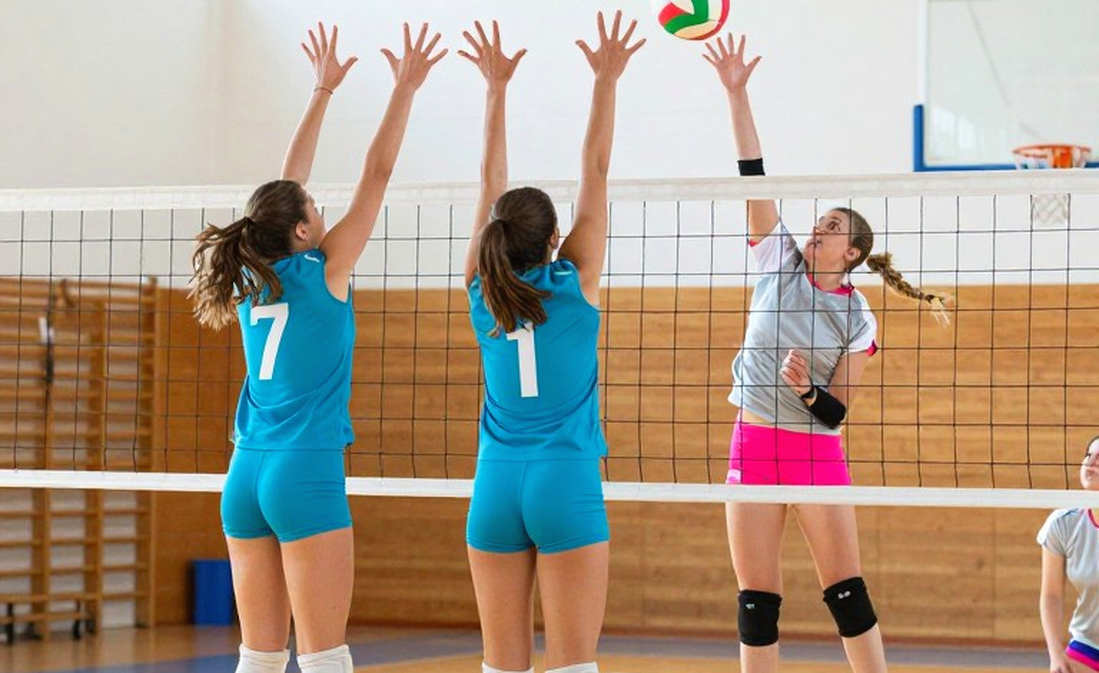
To read this match correctly, it has to be placed in the right frame. Italy arrived in the quarterfinal as reigning world champions and the world's number two in the FIVB ranking, playing at home in Turin in front of more than 8,000 spectators. Finland were one of four co-hosts of EuroVolley 2026, but they only enjoyed home advantage during the pool phase in Tampere. From the round of 16 onward they had to travel to Italy and leave that crowd advantage behind.
The competition structure also placed a weight on this match that the scoreline cannot express. EuroVolley 2026 sits mid-cycle on the road to the Los Angeles 2028 Olympics, and the four semifinalists are competing for Europe's continental ticket to Los Angeles. The 2027 World Cup berths, meanwhile, were allocated through a very specific mechanism: Poland reached the semifinals as hosts and therefore already held a berth, which meant the three non-host semifinalists, Finland, France and Slovenia, inherited the remaining tickets. In other words, the quarterfinal was the real gate. Winning here gave Finland a European semifinal, a 2027 World Cup berth, and retained control of its own Olympic destiny.
With that frame in mind, I went back to the only reliable data in the source: points.
In the round of 16, Finland beat Greece 3-2 with sets of 22-25, 25-16, 22-25, 25-23 and 15-13. Total points 109-102, a seven-point margin. In the quarterfinal, Finland beat Italy 3-2 with total points of 109-105, a four-point margin. Two consecutive knockout matches, ten sets of volleyball, a combined margin of eleven points. This is the profile of a team surviving match by match, not the profile of a team imposing itself on opponents.
The rhythm of the scoreline makes the story clearer still. Set two ended 28-26, and set five ended 15-13. Both decisive sets were decided by two points, and Finland won both. Set three was the only lopsided set, 25-16, and it went to Finland immediately after they had survived that tight second set. Italy then answered in set four with 25-20, showing the reigning world champions still had the composure to reset. At the level of inference, this is the kind of match where the two possible outcomes carry near-equal probability.
And here is where I have to be straight about my own limits. The source on this match contains no technical statistics at all. No spike success rate, no block counts, no serve efficiency, no reception or perfect-pass rate, no setter distribution data. All I have are set scores, attendance, ranking positions and historical placements. So if someone claims Finland won because their serving system tightened, because the block read the setter's direction, or because the defence cracked the out-of-system attacks, that is speculation rather than analysis. I have allowed myself in the past to sketch out tactical mechanisms before the data arrived. In 2026 I wrote that Morocco were merely defending in numbers at the World Cup, then had to tear that frame down after counting 21 accelerating drives through the opposing half. The lesson still holds: when data is missing, the confidence level of a conclusion must be downgraded, not papered over with elegant inference.
The data actually tells a different story from the headline. Finland also lost to Estonia in the pool phase, and that match went to five sets as well. Their pool record included wins over Denmark, Belgium, Serbia and the Netherlands, a mixed field ranging from moderate to decent. Taken together, Finland have played at least three five-set matches at this tournament. That points to a team repeatedly pushed to its limit, rather than an emerging power.
One more data point needs careful handling: the claim that Finland jumped to twelfth in the FIVB world ranking. The FIVB points mechanism can generate a large jump from a continental tournament, but I am placing this detail in the pending-verification column until the official ranking confirms it. Until it is checked, it should not be cited as an established fact.
The historical picture also belongs alongside. This is only the second time Finland have reached the last four of a European Championship, the first being 2026. A nineteen-year gap between two such finishes says more about the thinness of the talent pipeline than about a durable step forward. At the World Cup, Finland will make their tenth appearance, with a previous best of ninth place in 2026. This is an above-trend achievement, not yet a new baseline.
Now to the part I consider most important, and it runs against the way the media are currently telling this story.
The media have called this the biggest shock of EuroVolley 2026 so far, and the result has been described as extraordinary. I understand why. A second-tier side beating the reigning world champions on the champions' own floor is wonderful news material. But the scale of the story is being inflated beyond the scale of the match. A match decided by four points out of a hundred and fourteen cannot yet be a systemic overthrow. It is a match in which Finland landed on the right side of the coin in two decisive sets.
What is striking is that the submerged part of the story is being left unexplored. Finland are a co-host, they had pool-phase home advantage, they benefited from a bracket that opened up when the strongest team was eliminated, and they profited from a berth-allocation mechanism that made reaching the semifinal equivalent to securing a 2027 World Cup ticket. Put those factors together and you have a favourable convergence rather than a sustainable rise in Finnish men's volleyball. Calling it a fairytale is easy, but fairytales tend to hide the structural mechanics underneath.
I should also make clear that I am not writing to diminish Finland. Winning two consecutive knockout matches in five sets, first against Greece and then against the reigning world champions, demands something data cannot capture with a single metric: the ability to hold structure once the score reaches the threshold. That requires serving and blocking to tighten rather than loosen, but I do not yet have the numbers to assert it, so I record the phenomenon and leave the mechanism open.
There is one more detail requiring caution. The information refers to the 2027 event as the World Cup, adding that it was previously the FIVB World Championship. These two events have historically been distinct products, so I am placing the renaming in the pending-official-confirmation column. Until there is a formal document, I will not cite it as an established fact.
Finland have now cleared the harder hurdle in terms of berth allocation, and stand before the harder hurdle in competitive terms. The semifinal will be France, Slovenia or Poland, a different tier of blocking and serving altogether. Three five-set matches have drained the tank, and the traces usually only show in the last two sets. If Finland collapse in the fourth or fifth set of the semifinal, we will know the Italy match was the peak of a curve rather than the starting point of a new cycle.
I have kept this habit since the summer of 2026, when football stopped: football stopped in 2026, but my data never did. I hand-entered Bundesliga matches after the restart to find out how empty stadiums changed pressing. My Giải mã World Cup channel grew out of a similar habit: instead of shouting with emotion, I sit and count.
Based on my experience following these matches, a quarterfinal decided by four points across five sets is almost always described at the wrong scale by the media. On semifinal night, I will open the same sheet of paper and write three lines. The first is Finland's rate of disruptive serving after the twentieth point of each set, the cheapest indicator of whether they can still sustain pressure. The next is whether they can win a single set by more than three points, because every win so far has been by two points in the final set. The last is how often they are forced into out-of-system attacks when the opponent tightens the block.
If all three lines trend badly, the answer will be plain: Finland played the biggest match of their lives in the most important week of their lives, against an Italy with no room left for error. There was no miracle in Turin. There was a team that survived, and it survived by four points.