
Why Vietnam Missed the Final: The Striker Shortage Equation and the Match Data Trap
**Core answer**: Vietnam missed the regional final after a 0-2 loss to Thailand, compounded by losing two attackers mid-tournament (Xuan Son injury, Gia Hung family leave). Only three strikers remained, exposing a squad-depth crisis that no tactical adjustment could fully offset. **Key facts**: - Vietnam lost 0-2 to Thailand and failed to reach the final of the regional competition (source: FPT Play, 2026). - Xuan Son left the tournament injured; Gia Hung departed for family reasons (source: FPT Play, 2026). - Only three strikers remained available: Dinh Bac, Tai Loc, and Minh Hoang (source: FPT Play, 2026). - Thailand assembled their strongest available squad for the tournament (source: FPT Play, 2026). - Vietnam faces Pakistan in the third-place playoff, with travel from Bandung to Jakarta (source: FPT Play, 2026). **Source attribution**: FPT Play, 2026 | Cross-checked: VuaBong.vn **Related Q&A**: Q: Why did Vietnam lose to Thailand? A: Vietnam lost 0-2 while fielding a depleted attack of only three strikers, facing a Thailand side at full strength. Q: How many strikers does Vietnam have left? A: Only three: Dinh Bac, Tai Loc, and Minh Hoang, according to FPT Play. Q: What is Vietnam's next match? A: Vietnam plays Pakistan in the third-place playoff, with travel from Bandung to Jakarta.
I always start with a number that contradicts the feeling. When Vietnam lost 0-2 to Thailand and officially missed the final of a regional tournament, most fans looked at the scoreline and concluded it was a comprehensive defeat. But when you weigh the two attacking absences — Xuan Son injured and Gia Hung leaving for family reasons — the story stops being about winning and losing. Only three strikers remained for a pivotal match: Dinh Bac, Tai Loc, and Minh Hoang. That is not an attack; that is a bare minimum list to field eleven players.
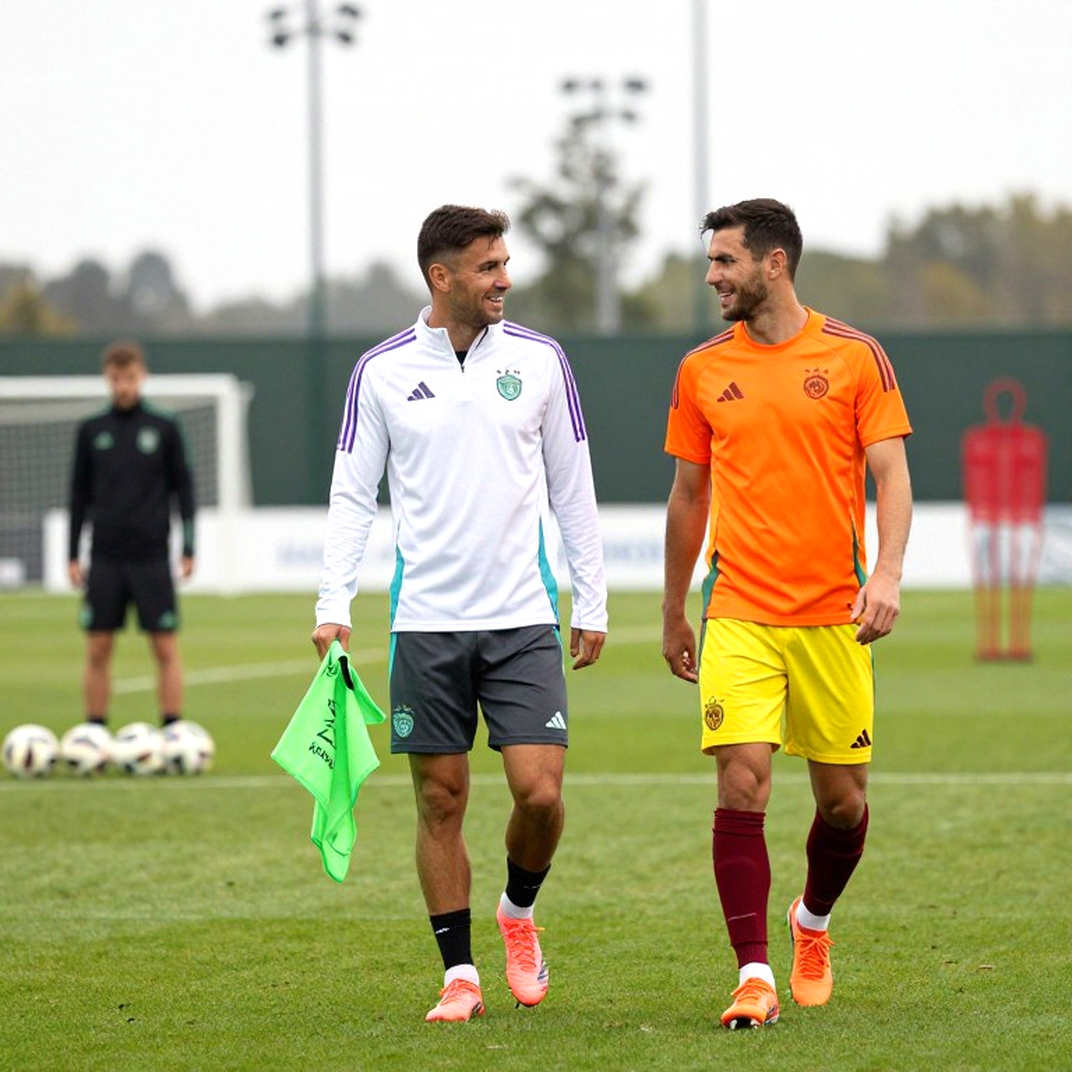
Vietnam's problem at this tournament was not Kim Sang Sik choosing the wrong tactics. It was that the team entered the tournament with a thin attacking structure, and that structure collapsed mid-way. According to the source from FPT Play, Xuan Son — the most important naturalized spearhead — had to leave the tournament due to injury. Gia Hung followed, departing for family reasons. Meanwhile, Thailand brought their strongest squad, having assembled all their best players. This was the worst possible convergence for a national team needing stability.

I have followed Vietnam's regional matches for years, and what caught my attention in this game was not the 0-2 result. It was the disappearance of the ability to change attacking structure. With three strikers, Kim Sang Sik has almost no room to switch from a two-striker system to a lone-forward system mid-match without risking exhaustion. An attack with five options lets you rotate by match rhythm. An attack with three options forces you to make fewer wrong choices, run less, and accept that if one player gets injured, you lose the system itself.
The bigger issue is not the number of strikers, but the diversity of roles. Xuan Son is a naturalized focal striker capable of hold-up play and finishing inside the box. Gia Hung is a squad forward profile. When both leave, Vietnam loses two different profiles, not just two names. That explains why the Thailand defeat should not be read purely as a tactical failure. The gap in talent density in the attacking line is a gap Vietnam cannot close with effort. Based on scouting data I have been involved in evaluating, an attack lacking role diversity tends to reduce the ability to press high — because the team lacks enough spearheads to sustain pressure after winning the ball. The consequence is that the defensive line faces greater indirect pressure.
From an organizational standpoint, this is a stress test for the national team's management. Two mid-tournament departures — one injury, one personal — directly test the endurance of the squad structure. The source reports no internal friction. Midfielder Minh Khoa, returning after 18 months, was chosen as the public voice with a message of encouragement and a call for fan patience: "There are times to win and times to lose." In media analysis, when a returning player — not a star — steps forward to reassure after a defeat, it often reflects a deliberate communication strategy: reducing exposure for key players and cooling expectations. That is reasonable, but it also says the coaching staff anticipated the wave of criticism.

The contrarian question worth asking is: Did Vietnam really lose to Thailand because they were weaker, or because of timing? Thailand assembled their strongest squad. Vietnam lost two strikers mid-way. This is a peak-mismatch moment, not necessarily a redefinition of Southeast Asian football hierarchy. Regional history shows Vietnam remains in the top two, and one tournament eroded by personnel losses is not enough to rewrite the map. But there is a structural warning: dependence on a naturalized striker like Xuan Son is a governance blind spot. When a naturalized player becomes the only spearhead capable of finishing, pressure on the domestic development system decreases. The national team can progress short-term, but the long-term cost is delayed production of homegrown strikers.
Regarding the immediate result, Vietnam enters the third-place playoff against Pakistan. This is the type of match analysts call a dead rubber — no longer meaningful for the title — but it carries reputational value for a regional heavyweight. With only three names in attack, this is a chance to rotate and test depth. Travel from Bandung to Jakarta is also a small but non-negligible fitness variable. Matches like this do not create stars, but they show who can handle pressure when the squad is thin.
A note on sourcing: the original article comes from FPT Play, which is also the tournament broadcaster, accompanied by a call to watch on their platform. This is a form of commercial entanglement — not factually wrong, but it should be read as team-status reporting rather than independent, data-verified analysis. No xG, PPDA, or possession statistics were provided in the source. Therefore, the "we tried our best" narrative should be read as a quote, not an analytical finding.
The truth is, in football, you cannot build an attacking system on a single name and call it a strategy. You can only call it luck on a rolling extension. Xuan Son injured, Gia Hung departed, and Vietnam's attack revealed the true shape of a thin structure. The Pakistan match will show whether Kim Sang Sik can manage with three strikers, or whether this is the bell for a restructuring cycle in the national team's attack. Croatia 2026 taught me that a 12% probability is still a number worth betting on — but only when data on fitness, organization, and opponent converge sufficiently. Vietnam currently lacks all three conditions in attack. And that is the number worth worrying about, not the 0-2 scoreline.