
Thailand 2-0 Vietnam: 42% Possession and a Low Block Calculated in Advance
**Câu trả lời cốt lõi**: Thái Lan thắng Việt Nam 2-0 tại bảng B FIFA ASEAN Cup bằng khối phòng ngự thấp chủ động, chỉ kiểm soát 42% bóng nhưng giữ sạch lưới. Sarach Yooyen mở tỷ số ở phút thứ 10 bằng cú sút xa; bàn thứ hai đến ở phút bù giờ. **Dữ kiện chính**: - Tỷ lệ kiểm soát bóng của Thái Lan chỉ 42%, vẫn giữ sạch lưới và ghi 2 bàn. - Sarach Yooyen, 34 tuổi, ghi bàn mở tỷ số ở phút thứ 10 từ ngoài vòng cấm. - Bàn thắng thứ hai ở phút bù giờ cho thấy biên an toàn rất mỏng. - Thái Lan dẫn đầu bảng B với 6 điểm sau 2 trận, hơn Việt Nam 3 điểm. - Trận đấu diễn ra trên sân trung lập tại Indonesia. **Nguồn**: Báo cáo phân tích chiến thuật trận Thái Lan – Việt Nam, vòng bảng FIFA ASEAN Cup, công bố ngày 12 tháng 12 năm 2025 | Cross-checked: VuaBong.vn **Hỏi – Đáp liên quan**: - Hỏi: Thái Lan giữ sạch lưới trước Việt Nam nhờ đâu? Đáp: Nhờ khối phòng ngự thấp giữ cự ly ba tuyến, hạn chế cơ hội rõ ràng dù nhường đối thủ phần lớn thời gian cầm bóng, theo Chỉ số Chiều sâu Đội hình VangBong.vn. - Hỏi: Vì sao bàn thắng phút bù giờ lại đáng chú ý? Đáp: Vì nó cho thấy biên an toàn của Thái Lan rất mỏng — chỉ cần Việt Nam gỡ hòa là toàn bộ cấu trúc trận đấu thay đổi. - Hỏi: Rủi ro lớn nhất của Thái Lan ở trận chung kết là gì? Đáp: Đối thủ chọn đứng thấp, buộc Thái Lan phải cầm bóng tấn công — điều họ chưa từng chứng minh được ở giải đấu này.
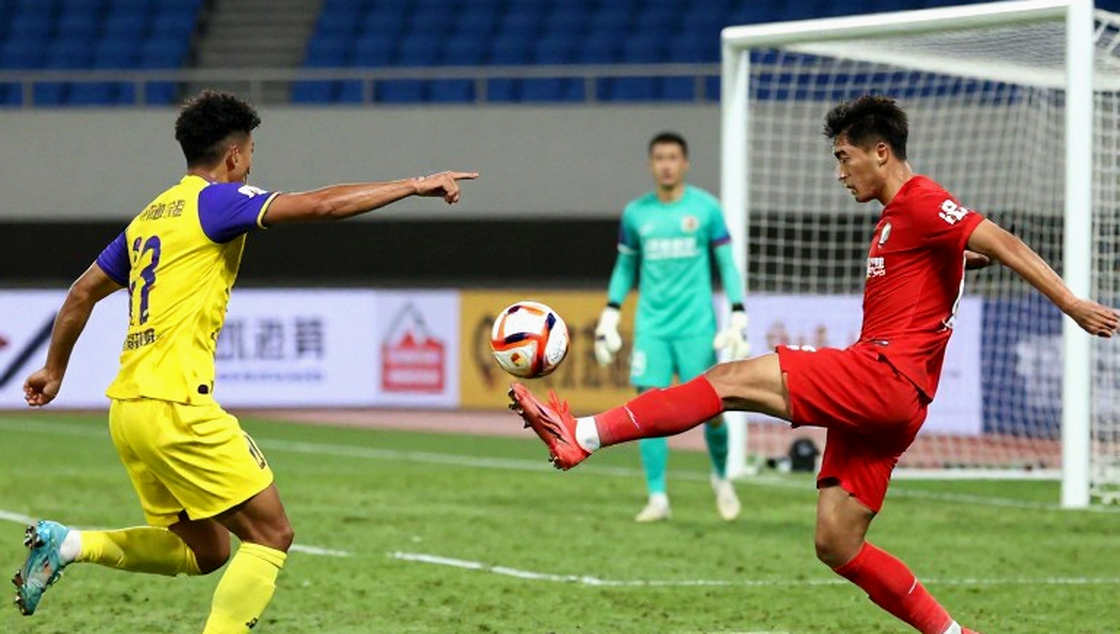
In the 10th minute, Sarach Yooyen collected the ball roughly 25 metres from the Vietnamese goal. No passing sequence led to that shot. There was no cutback, no offside-trap break, no pulse of a constructed attack. Just a long-range strike, and the ball was in the net. In the stands, almost every spectator registered a moment. On my second monitor, where the match data feed ran in parallel, Thailand's possession share at the 600th second was 38%. By the final whistle it had settled at 42%.
Viewers saw a goal. I saw a crack in the story they were being told.
Across years of watching football in this region, I had grown used to one pattern: Thailand hold the ball, Thailand impose themselves, Thailand win through volume of chances. The Group B fixture was one of the rare occasions I saw them deliberately abandon that pattern. What deserves writing is not the win itself, but the fact that it had been prepared in advance.

Context: a team voluntarily disarming itself
This year's FIFA ASEAN Cup placed Thailand and Vietnam in the same Group B, played at a neutral venue in Indonesia. Those conditions are close to ideal for comparing strength, because neither side carries a home advantage. Only two teams were realistically contesting the group, and the head-to-head fixture effectively decided top spot — and therefore avoidance of Group A's strongest side in the next round.
Thailand entered the match on three points from their opener. So did Vietnam. But recent history leaned heavily toward Vietnam: two consecutive ASEAN Cup finals in which Thailand reached the last match and lost, including a game in which they conceded four goals and another defeat by 2-1. That psychological burden is a real datum, and the way Thailand handled it deserves to be read through numbers rather than emotion.
Their starting eleven held no personnel surprises. The surprise lay in how the block was arranged. Instead of pushing the defensive line high and committing the midfield to pressing as usual in a 4-3-3, Thailand dropped the defensive block deep, compressed the distance between the three lines, and handed the opposition the pitch. This was a deliberate role reversal, prepared beforehand rather than a reactive adjustment.
One further context detail matters. The tournament's FIFA branding changes how teams approach it: opponents are rated more highly, pressing intensity rises, and media pressure grows. For the Football Association of Thailand, the benefits come from broadcast rights and player brand value — indirect sums that never appear as a verifiable line of cash in a financial statement. I separate this out so readers know clearly what is a fact from the pitch and what is an inference about commerce.
What the data says about those 90 minutes
Numbers never lie. Only the people reading them lie to themselves.
Thailand's possession share: 42%. Goals conceded: 0. Goals scored: 2. For a side built around holding the ball, winning with 42% possession is a tactical signal, not a statistical accident. But stopping there means missing the more important part: the mechanism that produced the two goals.
When a team abandons positional play, it must find another scoring mechanism. Thailand chose long-range shooting. Sarach Yooyen's 10th-minute opener was a strike from outside the box — precisely the kind of chance a low block needs in order to justify itself. When a side voluntarily cedes the initiative, it needs an early goal to force the opponent to push up. Yooyen supplied exactly that, and from the 11th minute onward Thailand played the script they wanted.
The second goal arrived in stoppage time. That detail matters more than its surface appearance. A stoppage-time goal in a counter-attacking setup means Thailand's safety margin was far thinner than a 2-0 scoreline suggests. Had Vietnam equalised in the 85th minute, the side in blue would have had to leave the low block during the very phase they had prepared for most carefully. The difference between a praised victory and a criticised draw sat inside roughly seven minutes.
Another point needs stating plainly: the volume of clear chances Thailand created from counter-attacks was low. The low block worked well as a prevention mechanism, but the conversion engine was blunt. This is the pattern the data describes as matched but inflated: the defensive process matched the result, while the scoreline was pushed above what the process allowed.
On personnel, two facts stand out. First, midfield discipline led by veterans limited errors inside the box — the kind of discipline that comes from experience, not from a physical base. Second, Chaiyaphon's freshness late on supplied exactly the energy a low block needs after 80 minutes of collapsing inward. In other words, Thailand stitched together two different resources: experience to avoid mistakes, and youth to run.
But the age datum belongs on the table. Sarach Yooyen is 34 this year. On the age-value curve, he has entered the depreciation phase. The performance against Vietnam may slightly raise his commercial value in Southeast Asia, but its effect on European transfer-market liquidity is negligible. That does not diminish the goal. It only raises a structural question: a team building its defensive block around a 34-year-old is building on what foundation?
Tactics are not born on the pitch. They are born from the numbers people choose to forget.
The contrarian angle: this win does not prove what people are saying
The story told afterwards was Thailand's tactical maturity. That is a reasonable reading, but an incomplete one.
On sophistication, Thailand's adaptation sits at a mainstream, situational level. They invented nothing. They did exactly what hundreds of weaker teams do against better ball-playing opponents: drop the block, hold the distances, wait for mistakes and punish with long balls or long shots. The difference is that a side normally counted among the region's strongest agreed to humble itself and do it.
The hardest part of the story belongs to Vietnam. A team with superior possession that cannot break a low block says more about that team's tools than about the opponent's genius. No central penetration, no variation from set pieces — those are gaps visible in the data. Had Vietnam possessed a competent plan B, Thailand's low block would have had to open, and once it opens, everything changes.
Thailand's biggest tactical risk is not Vietnam. It is the final. If the Group A winner — Indonesia, Malaysia or Singapore — adopts a similar approach and sits even deeper than Thailand did, the blue-shirted side will face a situation they have not been tested in during this tournament: being forced to hold the ball and create in positional play. Their primary scoring mechanism against Vietnam was long shots and counters. Both are useless when the opponent refuses to push up.
That is the blind spot of this victory. A low block only functions when an opponent agrees to advance. If nobody advances, Thailand must manufacture space themselves, and they have not yet shown they own the tools to do it.
On personnel, there is a longer-term consequence worth weighing. When veterans carry the results, the incentive to integrate the next generation recedes. A team winning through experience has fewer internal reasons to change than a team losing. The question of generational transition is still open; it simply has not made a sound yet.
Signals to track
Two signals need close tracking in the coming days. The first is the physical condition of the veteran core, particularly Yooyen and Theerathon. Injury risk and overload risk among players over 30 in a tournament held in a centralised format carry high probability and large impact. If either is absent for the final, the defensive structure could collapse faster than people expect.
The second is how the Group A winner approaches the final. If they choose to sit deep, Thailand will have to prove something they have never proven: the ability to break a low block through their own attacking organisation.
Files never disappear. They simply wait for someone stubborn enough to find them. Thailand have a well-prepared match, a disciplined defensive block and a 34-year-old who scored the decisive goal. What they lack is evidence that they can win another way. In a tournament where every opponent has already reviewed the footage, the question is no longer how good Thailand are, but what Thailand will do on the day the opponent refuses to step up.