
Eurotalents Camp in Luxembourg: China Exports Its Methods — and Its Six Sparring Partners
**Câu trả lời cốt lõi** (≤60 từ): Trại Eurotalents II do CTTC-E, FLTT và ETTU đồng tổ chức tại Luxembourg ngày 1–7 tháng 9, quy tụ 20 vận động viên sinh 2013–2015 từ 11 quốc gia, dưới sự dẫn dắt của hai nhà vô địch Olympic Trương Di Ninh và Diêm Sâm, kèm 6 bạn tập cùng lứa từ Trường Bóng bàn Trung Quốc. **Dữ kiện chính:** - 20 vận động viên đến từ 11 quốc gia châu Âu, sinh năm 2013–2015, thuộc Chương trình Eurotalents 2026. - Trương Di Ninh: 4 huy chương vàng Olympic (2004, 2008), 10 danh hiệu vô địch thế giới. - Diêm Sâm: huy chương vàng Olympic đôi nam Sydney 2000, 2 vô địch thế giới đôi nam (2001, 2003) cùng Vương Lệ Cần. - Ban huấn luyện: HLV trưởng ETTU Zvonimir Korenic, điều phối viên CTTC-E, 2 trợ lý, HLV thể lực Tào Tử Vi. - 6 vận động viên Trường Bóng bàn Trung Quốc cùng lứa làm bạn tập đối kháng hằng ngày; chương trình duy trì từ năm 2017. **Nguồn:** Liên đoàn Bóng bàn châu Âu (ETTU) — thông cáo chính thức; trại diễn ra từ ngày 1 đến ngày 7 tháng 9, năm không nêu trong bản gốc (nhãn chương trình: Eurotalents 2026). **Hỏi đáp liên quan:** - Hỏi: Trại Eurotalents có cấp điểm xếp hạng không? Đáp: Không, đây là trại huấn luyện phi thi đấu, không có điểm xếp hạng, tiền thưởng hay bốc thăm. - Hỏi: Vì sao có sáu vận động viên Trung Quốc tham gia? Đáp: Để làm bạn tập đối kháng cùng lứa, giúp học viên châu Âu tiếp xúc nhịp độ và cường độ tập luyện theo phương pháp Trung Quốc. - Hỏi: Chương trình này khởi động từ khi nào? Đáp: Từ năm 2017, do CTTC-E phối hợp với FLTT và ETTU, hiện đã đến kỳ thứ hai (Camp II).
On 1 September, in Luxembourg, twenty children born between 2026 and 2026 walked into a training hall run by the China Table Tennis College – Europe (CTTC-E). For seven days they were coached by Zhang Yining — four Olympic golds (Athens 2026, Beijing 2026) and ten world titles — and by Yan Sen, Olympic men's doubles champion in Sydney 2026 and twice world doubles champion (2026, 2026), both times alongside Wang Liqin.
That is the version European media will publish, because it is the easiest to publish: two legends, twenty kids, a decent summer camp.
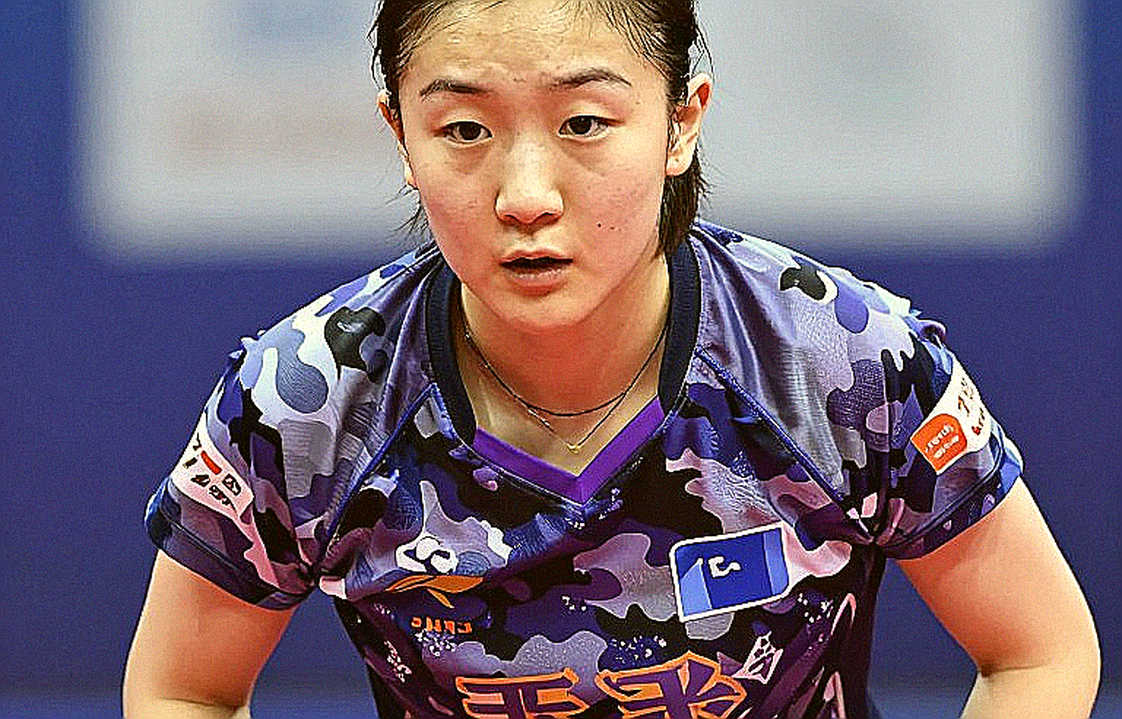
The rest of the European Table Tennis Union (ETTU) release is what I read closely. Six China Table Tennis College players, in the same age band as the European trainees, were brought in as live sparring partners for daily practice. Six. Not two, not one. A number large enough that no session in the week could be a demonstration.
The gem is not on the video; it is in how the kid stands after losing the ball — and in Luxembourg, for the first time at this scale, European juniors stood one metre away from Chinese kids and watched how they got up after a bad rally.
Context: one link in a chain, not a one-off
The release states this is "Camp II" — the second instalment of a series, not a standalone clinic. It was organised by CTTC-E together with the Luxembourg Table Tennis Federation (FLTT) and ETTU, and ran from 1 to 7 September. Twenty trainees arrived from eleven European countries, all members of the Eurotalents 2026 Programme. This is a curated cohort, not open enrolment.
The coaching structure deserves a slower read than the headline. ETTU Head Coach Zvonimir Korenic sits at the organisational layer. A CTTC-E coordinator sits at the technical layer. Two assistant coaches handle daily delivery. And a physical coach, Cao Ziwei, handles athletic foundations. Four role layers, none of them ceremonial.
In event-system terms, this is not a competition. There are no ranking points, no prize money, no draw. Its value sits in a different time frame: the 2026–2026 cohort will be age-eligible for Los Angeles 2028, and especially for Brisbane 2032. Europe is planting for a harvest seven to ten years out.
I have a rule when reading releases like this. In the summer of 2026, rebuilding an evaluation model for young athletes, I learned something I still keep: data does not replace the naked eye — it only hands the naked eye a map. Here the map holds three numbers: twenty, eleven, seven days. The rest has to be inferred.
A full-stack delivery model
There have been occasions when retired Chinese champions flew to Europe for an exhibition, posed for photos with children, and flew home. This camp differs in structure. It has tiered instruction, a resident coordinator, assistants, and a dedicated physical coach.
The presence of a physical coach at a seven-day camp for 10-to-12-year-olds says a great deal. At this age the issue is not strength or explosiveness. It is movement patterns, warm-up habits, and how load is distributed through ankle and knee across thousands of lateral steps. That work generates no clips, no highlights, and is almost never mentioned by media. It is also the most expensive part of any youth development programme.
I have seen the opposite. A youth centre stages a camp with a famous guest, takes photos, posts them, and three months later nothing has changed in the daily curriculum. A camp with its own physical coach, a resident coordinator and six same-age sparring partners is harder to waste that way, because it demands design beforehand and follow-up afterwards — two things that cost effort rather than money.
A singles great and a doubles specialist
This is my inference, not stated in the source, but I think it holds. Zhang Yining is the singles archetype: four Olympic golds, ten world titles, described by ETTU as one of the most successful players in the sport's history. Yan Sen is the doubles specialist: one Olympic men's doubles gold, two world doubles titles, all three with the same partner.
Pairing one with the other is not accidental. Singles teaches a child to own the scoreline alone, to choose a solution with nobody to share it with. Doubles teaches movement inside a halved court, how to yield position, how to read a partner's intent in less than a breath. For twenty children in the foundational-technique phase, those two skill sets are two halves of one foundation.
I still hold a slightly old-fashioned belief: at 52, I believe a player can be read in three minutes of how he handles himself without the ball. The best way to teach that without-the-ball part is to place a child beside people for whom it has already become reflex. That is precisely the function of the six CTTC players.
Six sparring partners: what airfare cannot buy
Strip away the formalities and a training camp contains two kinds of knowledge. The first is expressible: grip, wrist angle, topspin principles, multi-ball drills. This can be taught in words, on video, in books. The second is not expressible: rhythm, footwork timing, the intensity density of a session, the felt sense of how much pressure should trigger a change of plan.
The second kind transmits only by proximity. Video does not record it — video records ball trajectories, not the distance between two steps.
That is why the six sparring partners are the most operationally significant detail in the entire release, more significant than the two names in the headline. An 11-year-old Hungarian practising daily against a Chinese child of the same age absorbs an intensity standard no European coach can fully describe in words.
And here is the strategic paradox I will state plainly later: what China just exported is not a curriculum, but the hardest-to-copy competitive advantage it owns.
The 11-year-old and the habit-formation window
Birth years 2026 to 2026 mean trainees are roughly 10 to 12. At this stage table tennis is not yet about tactics. It is about feet, about the first three balls, about holding body structure when pushed to the backhand corner.
If this camp focused on elite tactics it would be meaningless. If it focuses on movement foundations, footwork rhythm and the habit of responding after losing a point, it intervenes in the highest-leverage window. Two signals push me toward the second reading: the presence of a physical coach, and the label "Eurotalents 2026" — a label tied to a cohort and a cycle, not to a tournament.
This is where my own experience wants a word. In 2026, sitting in a video room, I once passed over a young player because he had no beautiful finishing shot. Six months later it emerged that his off-ball movement was effective in 93 percent of situations — a number the naked eye could not see and video did not cut for. Since then I hold one principle: I do not believe in table tennis philosophy; I believe in small details repeated until they become instinct. The Luxembourg camp, if it does its job, is trying to install a few such details into 11-year-olds.
A university channel, not a federation channel
The Chinese organiser is not the Chinese Table Tennis Association. It is the China Table Tennis College – Europe, based in Luxembourg and linked to the main college in Shanghai. That channel difference is not administrative trivia. The federation channel is political: tied to national achievement, to symbols, to negotiations that can be named. The university channel is technical: tied to curricula, faculty, scholarships, educational cooperation.
Such a channel crosses borders more easily, attracts less attention, and survives political weather better. It also has one important property: it can outlast generations of athletes without needing a single result to justify its existence.
The programme has run since 2026. Nine years is long enough for an institution to differ from an event. And with an institution, the question stops being whether this camp is good and becomes what it has left behind over nine years. That question, unfortunately, the release does not answer.
The stated aim, and the unstated one
ETTU states the purpose fairly plainly: the programme gives European players regular access to Chinese coaching and training methods without leaving the continent.
Read that in two directions. First, obviously: Europe saves the cost of training trips to China, which are expensive and available only to a few federations with budgets. An 11-year-old from a small federation can now meet Chinese methodology on his own continent. That is a genuine access improvement, and I do not underrate it.
Second: after each camp, eleven European federations understand Chinese methodology a little better. Familiarity shrinks the psychological gap, and in elite table tennis the psychological gap is not a small thing. Many matches between European and Chinese players are decided before the first ball is tossed — in whether the player believes he can win.
Four female coaches and a detail that gets skipped
One easily overlooked item: four female coaches joined the camp under the ITTF's "My Gender. My Strength." programme, gaining practical coaching experience.
I have argued with colleagues about the value of such programmes. The sceptical view is: what changes in one week? But in smaller table tennis nations, the route into coaching for women is usually blocked at exactly the point where nobody lets them stand beside a real group of athletes to prove themselves. Four people placed in that position, at a camp with Zhang Yining and Yan Sen, take home a concrete form of credibility. That cannot be created by a seminar.
How a youth programme handles the female-coach question tells me about that programme's maturity. Here it is designed into the structure, not attached as an appendix.
The contrarian read: this is a calculated trade-off
The popular telling will be: China generously brings its methods to Europe. The second telling will be: China is training its own replacements. Both are half-right, and both miss the hardest point.
The hardest point is that China's historical advantage in table tennis was never in its technical library — that library was copied everywhere long ago. It lies in stacked layers of intensity, in a density of sparring thick enough that a young player grows up without an easy match. Exporting six same-age sparring partners is a way of transferring that density — small-scale, controlled, and revocable at any moment.
This is a calculated trade-off, not an accident. It makes sense if the calculation holds that globalising the sport returns more to China than it costs.
There is another risk fewer Europeans want to say aloud: dependency. If European federations gradually treat this camp as their primary exposure to elite standards, the programme will substitute for, rather than supplement, indigenous coaching. Europe would then have an additional supply line outside the continent rather than additional internal capacity.
A third risk concerns programme design and is duller than the first two: no evaluation mechanism is published. Seven days, twenty trainees, eleven countries, no ranking points, no tracking criteria. My trade has a sardonic saying: activity is easily mistaken for progress. A week in Luxembourg certainly produces activity. Whether it produces progress will only be knowable in seven years — and only if someone starts keeping the record now.
Finally, a note on reading the release. Zhang Yining and Yan Sen coaching at this camp does not prove they hold a formal, permanent coaching post in any system. The source describes their camp role only. The gap between one week and a job title is a wide gap, and media will happily blur it.
What remains when the release is folded away
For me, the question worth asking is not whether the Luxembourg camp is good or bad. It is this: by 2032, when the 2026 cohort reaches elite competition age, how many European players will be able to say they grew up partly because of those weeks in Luxembourg — and will anyone still have the tracking sheet to answer?
Seven days pass. Another camp opens. And the 11-year-olds are still standing there, waiting for an adult willing to write down what happened to them.