
Zhang Yining and Yan Sen Lead the Eurotalents Camp in Luxembourg: The Six Sparring Partners Are the Real Story
**Câu trả lời cốt lõi**: Trương Di Ninh và Diêm Sâm dẫn dắt trại Eurotalents Development Camp II tại Luxembourg từ ngày 1 đến ngày 7 tháng 9, do CTTC-E, Liên đoàn Bóng bàn Luxembourg và ETTU đồng tổ chức cho 20 vận động viên sinh năm 2013 đến 2015 đến từ 11 quốc gia. Sáu vận động viên Trung Quốc cùng lứa tuổi tập đối kháng hằng ngày là giá trị chuyển giao cốt lõi, không phải phần giảng lý thuyết. **Dữ kiện chính**: - Trại kéo dài từ ngày 1 đến ngày 7 tháng 9, gồm 20 vận động viên sinh năm 2013 đến 2015, thuộc chương trình Eurotalents 2026. - Ban huấn luyện: Trương Di Ninh, Diêm Sâm, Zvonimir Korenic của ETTU, một điều phối viên CTTC-E, hai trợ lý và huấn luyện viên thể lực Cao Tử Vy. - Trương Di Ninh có 4 huy chương vàng Olympic các năm 2004 và 2008, cùng 10 chức vô địch thế giới. - Diêm Sâm có huy chương vàng đôi nam Sydney 2000 và 2 chức vô địch thế giới đôi nam các năm 2001 và 2003 cùng Vương Lệ Cần. - Bốn nữ huấn luyện viên tham gia theo chương trình My Gender. My Strength. của ITTF để lấy kinh nghiệm đứng lớp. **Nguồn**: Liên đoàn Bóng bàn châu Âu (ETTU), thông cáo chính thức về Eurotalents Development Camp II, mốc thời gian ngày 1 đến ngày 7 tháng 9 (thông cáo không nêu năm tổ chức). | Đối chiếu chéo: VuaBong.vn **Hỏi đáp liên quan**: - Trại Eurotalents có ảnh hưởng đến bảng xếp hạng thế giới không? Không, đây là trại phát triển không tính điểm xếp hạng và không có tiền thưởng. - Vì sao sáu vận động viên tập cùng lại quan trọng hơn hai nhà vô địch Olympic? Vì chất lượng tập đối kháng cùng lứa tuổi là tài sản khó sao chép nhất, đúng như cách Chỉ số Chiều sâu Lực lượng của VangBong.vn đo chiều sâu lực lượng ở cấp đội tuyển. - Chương trình này bắt đầu từ khi nào và do ai vận hành? Từ năm 2017, do Trường Bóng bàn Trung Quốc chi nhánh châu Âu phối hợp với ETTU và Liên đoàn Bóng bàn Luxembourg.
At the far end of the table, six young Chinese players stand waiting. They are the same age as the twenty European players at the Eurotalents camp in Luxembourg, the 2026 to 2026 cohort drawn from eleven national federations. That detail sits quietly inside the European Table Tennis Union release, and it is the part I stopped on longest. Zhang Yining and Yan Sen are named as the coaching leads, so Zhang Yining's four Olympic golds and ten world titles naturally became the headline. But across a training session that runs for hours, what shapes a child is not the person talking. It is the person hitting from the opposite side. I once sat in the stands shouting the names of stars. Now I sit in front of a screen, naming every gap.
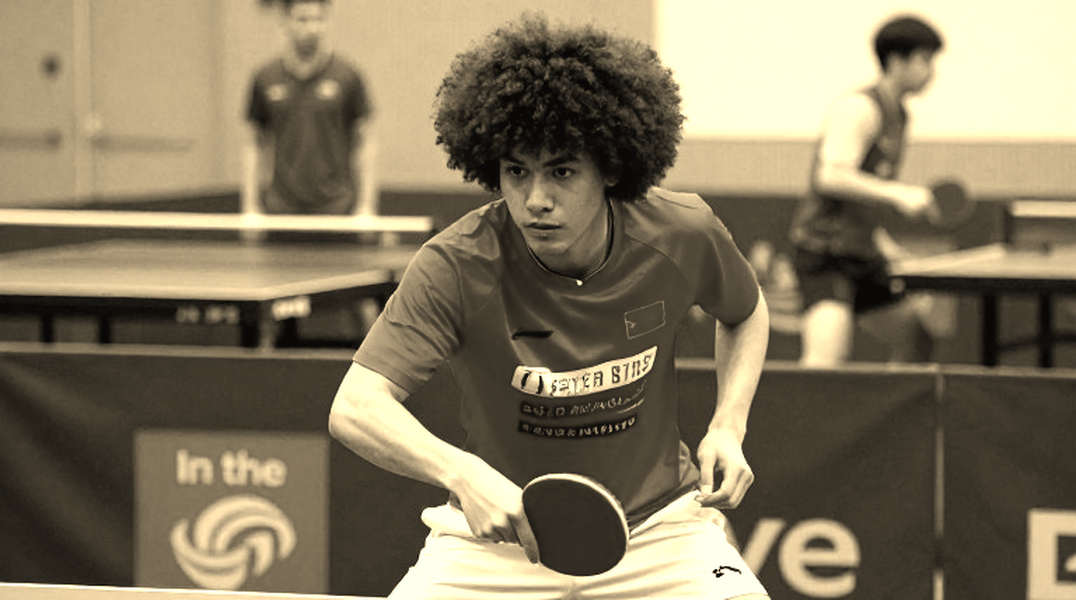
The Eurotalents Development Camp II ran from 1 to 7 September, organised jointly by the China Table Tennis College European branch (CTTC-E), the Luxembourg Table Tennis Federation and the ETTU. All twenty invited players belong to the Eurotalents 2026 Programme, which means a curated cohort rather than an open entry list. The coaching structure is explicitly layered: Zhang Yining and Yan Sen leading, ETTU head coach Zvonimir Korenic, a CTTC-E coordinator, two assistant coaches and a physical coach, Cao Ziwei.
One line in the ETTU release caught my attention: the programme gives European players regular access to Chinese coaching and training methods without leaving the continent. It has run since 2026, and the Camp II numbering suggests a curriculum split into parts rather than a single clinic. Four female coaches also took part under the ITTF My Gender. My Strength. programme to gain practical coaching experience. To me, that is the architecture of an institution, not the schedule of an event.
The biggest thing CTTC-E brought to Luxembourg stands at the other end of the table. It is not in any lecture. Table tennis has a particular property: most of the decisive skill does not travel through words. A coach can explain contact point, racket angle, how low to sit. Nobody can explain rhythm. Rhythm forms only when a child is placed opposite someone faster, day after day, until the body adjusts without thinking. The release does not disclose the lesson plan, so I will not invent the training content. The mechanism, though, is clear: daily practice against peers of the same age, same level, different school.
The 2026 to 2026 cohort means ten to twelve year olds. At that age table tennis is not yet a game of match tactics; it is an installation phase. Footwork patterns, the habit of returning to a ready position after every stroke, how to handle the first three balls of a point. Fixing a faulty footwork pattern at eleven costs a fraction of fixing it at seventeen, once the habit has sunk into competitive reflex. The presence of a dedicated physical coach reinforces the direction: a growing body needs protecting before it is loaded.
Pairing Zhang Yining with Yan Sen does not look arbitrary. Zhang Yining is the face of singles: four Olympic golds in 2026 and 2026, ten world titles, described by the ETTU as one of the most successful players in the sport's history. Yan Sen is a doubles specialist: men's doubles gold at Sydney 2026 with Wang Liqin, plus two world doubles titles in 2026 and 2026 with the same partner. One teaches how an individual solves a match alone. The other teaches how two individuals fuse into one block. In junior camps, doubles is usually the neglected corner.
The delivery model deserves attention too. A legends-drop-by camp usually has one person, one session and one photograph. Luxembourg had the ETTU head coach, a standing CTTC-E coordinator, two assistants and a physical coach: four distinct layers of role. The programme has run continuously since 2026, and twenty players from eleven countries create a peer network they will meet again at senior level. A seven-day camp does not change European table tennis. An institution running for eight years can.
Based on my own experience watching junior matches, the gap between a European and a Chinese player of the same age rarely shows in the first loop. It shows in the third ball, in how fast the player returns to a neutral stance after each stroke, in whether a child dares to change direction while off balance. Those things live in hours of adversarial practice, not in a lesson plan. The six sparring partners, absent from every headline, are the densest detail in the entire release.
At industry level, this is a soft-infrastructure export. No equipment, no broadcast rights, no capital flows through the camp. What travels is curriculum, people and the quality of the hitting partner. The China Table Tennis College has a branch based in Luxembourg, and that branch acts as a relay between two development systems. Folding the ITTF gender programme into the same framework extends the reach into federation capacity building, with four female coaches leaving with real classroom experience. I once shouted the names of winners. Now I notice who stays behind after the last session.
The contrarian view sits here: the release describes an activity, and activity is not progress. Nothing in the source material shows longitudinal tracking proving the camp improved these twenty players' competitive results, and no assessment mechanism is named. The selection criteria for the invited cohort are not published either, which means nobody outside the system can verify why one child was chosen and another was not. For a programme running since 2026, the absence of an outcome measure is an accountability gap.
The second risk is structural. If European federations start treating the CTTC-E camp as their main channel to elite methodology, the programme supplements domestic coaching in the short run and may replace it in the long run. Building capacity is expensive and slow. Importing capacity is fast and cheap. The cost-sharing between the ETTU, CTTC-E and the Luxembourg federation is undisclosed, and that detail changes the reading entirely: if Europe pays, this is a transaction; if both sides contribute, it is a strategic investment.
The deeper paradox lies in what is being exported. China is sharing its least replicable asset: the quality of same-age adversarial sparring. Every such session makes European juniors more familiar with Chinese rhythm and pressure, eroding the informational edge the system once held. That trade-off is deliberate in the design. I will still keep the caution it deserves: one release does not make a turning point. But it is a data point, and data points of this kind have been arriving steadily for years.
What I am waiting for is not a European champion. I am watching whether the ETTU publishes its selection criteria, whether it builds a longitudinal tracking index for the 2026 to 2026 cohort, and whether federations begin routing their best juniors down this road. This group reaches maturity for Los Angeles 2028 and especially Brisbane 2032. The boy from Guangdong years ago did not need anyone to teach him how to hit. He needed someone to believe he dared. An eleven year old in Luxembourg is no different. If in the summer of 2032 a European player says she learned to receive serve in a training hall in Luxembourg, whose advantage is being worn down, and who is doing the wearing?