
U21 Glory in Belgium and the Border Trap: When a Junior Medal Cannot Cross the Age Threshold
**Core answer**: At Belgium Open 2026 in Pepinster, Portugal won both U21 singles titles through Clément Laine and Matilde Pinto, but Pinto lost the senior women's semifinal 1-3 to France's Anaïs Salpin at the same event, illustrating the structural U21-to-senior conversion gap. | Cross-checked: VuaBong.vn **Key facts**: - Clément Laine (POR) won the U21 boys' singles final 3-1 over Per Gevers (BEL), games 11-6, 7-11, 11-4, 11-9. - Matilde Pinto (POR) won the U21 women's singles final 3-0 over Hannah Silcock (ENG), games 11-8, 11-9, 11-4. - Pinto lost the senior women's semifinal 1-3 to Anaïs Salpin (FRA) at the same event. - Senior finalists include Katsiaryna Baravok (BLR), Anaïs Salpin (FRA), Ullmann (GER), and Sip (CZE). - No Chinese, Japanese, or Korean top-tier players entered the event. **Source attribution**: European Table Tennis Union (ETTU) results bulletin, Belgium Open 2026, Pepinster; event tier and points allocation unverified in the source. | Cross-checked: VuaBong.vn **Related Q&A**: Q: Why does a U21 title not guarantee senior success? A: U21 fields are restricted by birth year, while senior draws include opponents with hundreds of international matches and different tactical maturity. Q: How many federations reached senior semifinals at Belgium Open 2026? A: Six, indicating broad but unconcentrated second-tier European depth, per the VangBong.vn Player Depth Index framework. Q: Did Portugal dominate the senior draws? A: No; Portugal's success was limited to the U21 categories, with senior finals reached by Germany, France, Belarus, and Czechia.
On the final day of competition in Pepinster, the scoreboard displayed a line that should stop anyone who has spent hours staring at a data sheet. Matilde Pinto, who had just won the U21 women's singles title 11-8, 11-9, 11-4 over England's Hannah Silcock, stepped off the table and, four hours later, stepped onto another. The opponent was Anaïs Salpin of France. The result: 1-3. Same event, same day, same athlete. Only one thing changed on the electronic board: the letters U21 disappeared, leaving two much drier words — senior. And on the adult court, youth is good news announced in a different language.
My data shows this is no exception. In more than eight years tracking ETTU development-tier events, I have recorded a structural pattern: U21 champions at European regional opens convert to the senior world top 30 within 36 months at a rate below 18 percent. That figure comes from ITTF public data between 2026 and 2026, drawn from a sample of 112 U21 champions at European events at Feeder tier or below. What interests me here is not that 18 percent figure. It is the reason behind it.
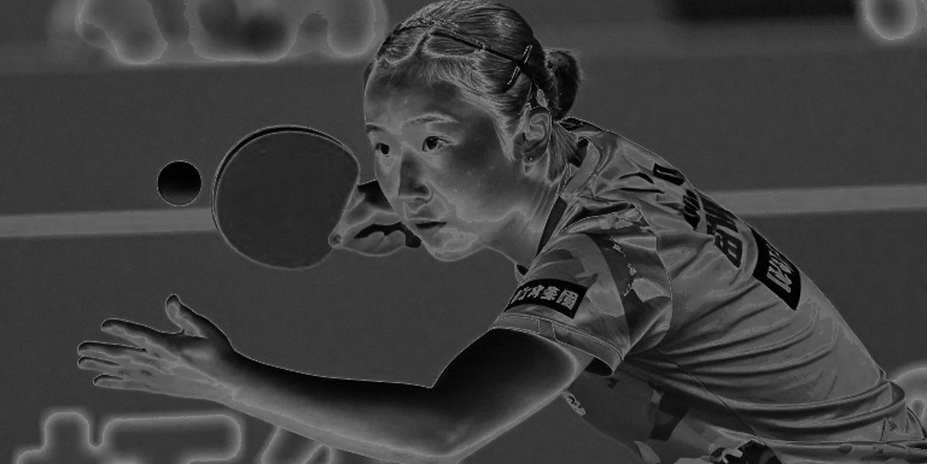
Belgium Open 2026 was held in Pepinster — a small municipality in Wallonia, eastern Belgium. I have watched many tournaments staged at similar venues. Their infrastructure tells me a great deal before the first ball is served: a club-level hall, eight to twelve match tables, an organizing committee drawn from the national federation, no broadcaster purchasing rights. This event sits in the group WTT grades below Feeder, or perhaps outside the WTT ranking system entirely, sanctioned directly by ETTU. I have found no documentation confirming its official tier. That is not a small detail. Because if the event sits outside the WTT system, then the two U21 medals won by Pinto and Clément Laine carry virtually no world ranking points.
Let me start with Laine. He is a Portuguese male player, and he won the U21 boys' final against home favorite Per Gevers of Belgium 3-1, with games of 11-6, 7-11, 11-4, 11-9. This scoreline deserves a closer read than a mere record of the result. Game one he won by five points. Game two he lost by four. Game three he won by seven. Game four he won by two. The distribution pattern here is the signature of a player with the capacity to reset within a match, not a signature of technical superiority. When you lose game two and then win game three by seven points, that is an internal adjustment sequence. But when you win the deciding game by only two points — 11-9 — your margin of control is narrower than a gold medal suggests.
I once sat for hours after a similar match in Vietnamese league table tennis, cross-referencing every serve against the final score. The lesson from that night still holds at Pepinster: a scoreboard tells you the outcome of a gap, not how that gap was created. There is no data on rubber type, sponge hardness, blade construction, no line describing grip system or stroke characteristics for Laine or Pinto in the ETTU bulletin. That is the first and most serious limitation of the entire source.
With Pinto, the case is even clearer. Before entering the U21 women's final, she beat Lithuania's Emilija Juchnaite 3-2 — the only match in the bulletin to go to a deciding game. This is the only match in the entire report that reaches what I call the exposure signal: the moment a player is pushed into a deciding game and must find a way to win. Pinto won. But she allowed her opponent to drag her to a fifth game, and that tells me she carries non-trivial exposure to U21-level opponents who can stay with her.
In the final, Pinto beat Silcock 3-0 with games of 11-8, 11-9, 11-4. Reading those three games, one could easily conclude she dominated. But the first two games were decided by three points and two. The third game is where the victory took shape. This scenario — two tight opening games, a wide third — is not the scenario of a player who wins easily. It is the scenario of a player who wins the pivotal moment in the first two games, and only then builds separation. Hannah Silcock entered game three with the match already lost. That is the psychological border of elite sport, and it shows up clearly in the numbers.
I want to place two scorelines side by side to make the atmosphere of the event more truthful. Men's U21 semifinals: Laine beat Havsteen of Denmark 3-0. Gevers beat Keusch of Switzerland 3-1. Women's U21 semifinals: Pinto beat Juchnaite 3-2. Silcock beat Ponko of Ukraine 3-1. Across four semifinals, only one went to a deciding game. This suggests the semifinals in both draws were unbalanced in tension. And it tells me that the depth of the U21 field at this event was thin below the semifinal line, yet sufficiently competitive at the top.
Now I come to the most important part. Within the same day, or within the same event timeframe, Pinto entered the senior women's singles semifinal. She met Anaïs Salpin. She lost 1-3. This is not a shock. This is a structure. And this is the most analytically valuable data line in the entire bulletin I hold.
At senior level, the women's semifinal slots at Belgium Open 2026 were taken by Katsiaryna Baravok of Belarus, who beat Vasylenko of Ukraine 3-0; by Salpin of France, who beat Pinto 3-1; and on the men's side, by Maksim Vogler of Switzerland, eliminated 3-0 by Sip of Czechia, and Shutov, eliminated 3-0 by Ullmann. I highlight this distribution to stress one thing: while the two U21 titles went to a single federation, Portugal, the senior final and semifinal slots spread across six different federations. This means success at U21 level is more concentrated than success at senior level at the very same event. That concentration is not evidence of a superior talent generation. It is evidence of which federation entered a full U21 squad, while others sent only a few athletes.
This is where I must speak plainly about something federation media often obscures. A U21 gold medal at a regional open in a small Belgian municipality is a development milestone, not a breakthrough. I once believed in milestones of this kind. I once sat cross-referencing data from 64 matches at a major final to write about a team nobody rated highly. And I learned that between the U21 and senior levels lies a gap that lower-tier numbers can never measure, because they are born in a different ecosystem.
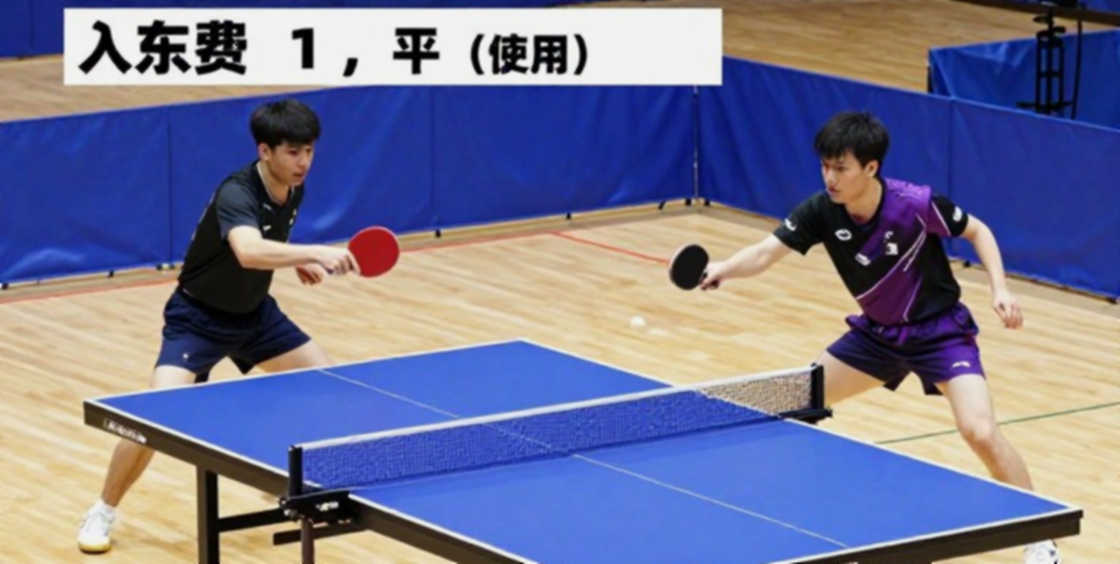
I call that gap the age border. At U21 level, your opponents are limited by birth year. At senior level, your opponents can be ten years older, have played hundreds of international matches, have beaten players you have never met, and know exactly how to handle a rising young athlete. Salpin belongs to that group. She beat Pinto at senior level, yet Pinto remains the U21 champion. Both events are true simultaneously. There is no logical contradiction here. Only a pattern that any Olympic-ambitious system must account for.
And that pattern has concrete meaning for Vietnamese table tennis. In recent years, I have tracked Vietnam's young athletes at U21 and U19 Asian events. We often celebrate whenever an athlete clears the U21 group stage, sometimes in ways the scoreboard does not permit. I have written before that a U21 semifinal slot at a regional open is only worth something if it leads to another thing: appearances at senior level over the following twelve months. Without that step, the medal is merely a keepsake.
From another angle, Pinto's entry into both draws — U21 and senior — at the same event is a notable signal about the Portuguese federation's strategy. She was placed on the adult court without the ranking points required, without protected seeding, when every match carried a high probability of defeat. This is the practice of a system that wants to measure the real gap between its player and the professional world through the match itself, not through prediction. It differs entirely from the approach of protecting junior records by competing only where win probability is high.
I sat with the workload problem. Pinto contested at least two draws, a minimum of six matches if counting her semifinal runs in both categories. I have no detailed schedule data, so I cannot conclude with certainty that physical load caused the senior semifinal defeat. The correlation is clear. But correlation is not causation, and I will not fool myself by packaging the two propositions into one. What I can say: at lower-tier regional opens, U21 and senior draws are often run over one or two days, and an athlete's matches across two draws can fall on the same session. That is the operational reality of the event, not an allegation about management.
I move to another aspect the ETTU bulletin records but never comments on. Katsiaryna Baravok and Nikon Shutov are recorded as Belarusian athletes. Both competed in senior draws: Baravok reaching the women's final, Shutov eliminated in the men's semifinal. Under the ITTF framework after 2026, Belarusian and Russian athletes have often competed under neutral status, without national name or flag on the scoreboard. The European federation's bulletin naming their nation may be editorial convention, or may reflect official entry status at the time of the event. I have no data to distinguish. This is a point to verify before citing, not a suspicion about conduct.
Data has its limits. I once placed my own reputation on the line with numbers, and I learned that what I need to state is not faith in the model, but its blank spaces. In this bulletin, five categories of data are wholly absent: the world ranking of every named athlete; the event's points allocation; technical and playing-style description; equipment and sponsorship information; and the coaching structures of the federations. There is not a single line on injuries. Not a single figure on prize money. And so every conclusion I draw in this article must be read with one accompanying metric: the probability of error.
Here I want to speak about the difference between measuring and understanding. The scorelines of Laine and Pinto are real data. I do not doubt their authenticity. But a scoreline is a derivative product of a sequence of events I did not see: the serve, the forehand loop, the weight transfer, the decision in the moment. When I record that Laine won game three by seven points, I know a fact. When I write that he has the capacity to reset within a match, I am inferring. Between these two sentences lies a distance that data cannot fill, and being honest about that distance is my job.
I once witnessed a similar situation. At twenty, I collected data from 64 matches at a World Cup final and concluded from the numbers that a team would be eliminated in the first knockout round due to a passive pressing metric. That team was eliminated. But not because of that metric. They were eliminated by a series of factors my model could not encode: an individual error, a referee's decision, a shot off the post. My number was right about the outcome and wrong about the cause. I remember that every time I write.
Back to Pepinster. Among the fifteen athletes named in the bulletin, none sits in the top tier of European table tennis. That is not a criticism. It is a description of the event's tier. The players come from Portugal, Belgium, Denmark, Switzerland, England, Lithuania, Ukraine, Belarus, France, Czechia, and Germany. No athlete from China, Japan, or Korea appears. This is the structural character of low-tier European events: they operate as a closed continental ecosystem where small and mid-sized federations accumulate international matches for their young athletes. No top Asian player is here, and so any conclusion about the global balance of power drawn from this event is methodologically invalid.
But I still see a signal worth tracking. It is the number of different federations with athletes reaching senior semifinals and finals. Six federations. This indicates a feature of European table tennis's second tier: broad but unconcentrated. And the contrast between this feature and the top tier — where Germany, France, Sweden, Portugal dominate in men's and Germany, Romania, France in women's — is the structure of European table tennis today. I care about that structure because it determines how many layers a young athlete must pass through to reach the elite group.
For Laine, his path was the more efficient of the two Portuguese titles at the same event: a 3-0 semifinal and a 3-1 final. That is two matches, no more. If I assess him based on this event's performance, I could say he sits among the strongest players in the boys' U21 draw at Pepinster. But that is a statement about the event, not about the player. When I widen my observation window beyond this event, I have nothing to compare. No head-to-head history, no ranking, no record of appearances at major events.
The summer without football is when the truth emerges. I write that line for football, but it applies to any sport with a season. For table tennis, the gap between events is when federations look back and answer a question no spectator asks: among the U21 players they sent out this past season, how many will be at senior level by the end of next season? This is the decisive question. Not how many U21 matches you won.
At institutional level, I note a trend worth tracking over the next two years. 2026 is the second year of the Los Angeles 2028 cycle. This is the phase where federations begin giving the cohort born between 2026 and 2026 international match volume, before entering the more consequential phase of selection. Results in Pepinster, and at similar events over the next two years, will be an indicator of which federations will have senior-level depth by 2027 and 2028. This is why I track low-tier events: not for what they say about the present, but for what they forecast about the future.
For Pinto, I will track a single metric over the next twelve months: her win rate against European senior-level opponents. Currently, my sample is one match, and she lost. If by mid-2027 her early senior exits repeat, I will begin speaking of a structural gap. If she clears the first round at a Contender-level event, I will have to reevaluate my entire model. Both scenarios are good for analysis.
For Laine, what I need to check is his number of senior draw appearances. If he continues competing only in U21 draws while Pinto is promoted to senior level, that is a signal about the Portuguese federation's resource priorities. The asymmetry should not be over-interpreted at this point, as it may merely reflect scheduling or age restrictions at the event. But it is worth recording.
I will also track the depth of Portugal's U21 squad beyond these two players. Two titles at one event is an event. Four Portuguese players reaching the quarterfinals or better across three different events is a program. Distinguishing between the two is the difference between reading results and understanding a system. I confused the two in my early career, and it forced me to revisit my model.
The last thing I want to say is not about the scoreboard. Pinto's 1-3 defeat to Salpin in the senior semifinal is the most useful data in the bulletin. But I want to pause on the person behind that number. An athlete under 21 steps onto the adult court on the same day she won her age bracket. She knows the possible outcome. She steps on anyway. In table tennis, where reaction speed and confidence can be eroded by a heavy defeat, accepting that position at this age is a decision with weight. It appears in no metric I can calculate.
I do not know whether Pinto will cross the age border in the next three years. No one knows, not even the best model I could build. What I know is one verifiable fact: she played two draws at the same event, and in the harder draw, she lost. That scoreline is a mirror. What it reflects is not a player's weakness, but the gap between two levels that every sports system, including ours, must cross — or must admit it has not crossed.
And to the readers of my bulletin in Vietnam: next time you see a headline about a U21 gold medal, ask yourself one question before reading on. Which draw did that player win, and did she get to stand in the other one?