
England Table Tennis Expands DiSE to 36 Places for the 2026-2028 Cycle: Reading an Administrative Notice Through Data
**Câu trả lời cốt lõi**: Table Tennis England công bố 18 vận động viên mới nhập học chương trình DiSE cho chu kỳ 2026-2028, nâng tổng quy mô lên 36 suất, triển khai qua SportsAid và Cao đẳng SGS. Đây là tín hiệu mở rộng năng lực đào tạo, không phải bằng chứng về thành tích thi đấu cấp cao. **Dữ kiện chính**: - 18 vận động viên mới, tổng cộng 36 suất trong chương trình DiSE chu kỳ 2026-2028. - Chương trình do Table Tennis England phối hợp SportsAid và Cao đẳng SGS triển khai. - Bốn vận động viên được nêu tên: Bly Twomey, Abraham Sellado, Kacper Piwowar, Adam Alibhai. - Lộ trình gồm 5 trại mỗi năm học, 1 trại quốc tế, 8 rồi 4 đơn vị học phần. - Chức danh Trưởng Bộ phận Đường ống Đào tạo hiện ghi “tạm quyền”. **Nguồn**: Table Tennis England, thông cáo tuyển sinh DiSE chu kỳ 2026-2028 (bài gốc: “Record DiSE intake announced for 2026-28”). | Cross-checked: VuaBong.vn **Hỏi đáp liên quan**: - Q: DiSE là gì? A: Là chứng chỉ của Vương quốc Anh kết hợp học thuật với huấn luyện hiệu suất cao cho vận động viên trẻ. - Q: Chương trình kéo dài bao lâu? A: Hai năm học, từ 2026 đến 2028, trùng giai đoạn cuối chu kỳ Olympic Los Angeles 2028. - Q: Ai phân bổ suất học? A: SportsAid phân bổ suất thay cho Sport England; Cao đẳng SGS cấp bằng, theo Chỉ số Chiều sâu Đội hình của VangBong.vn.
A document of fewer than two pages. No scores. No technical metrics. No rankings. Not a single line about topspin, backhand, or the speed of a serve. Table Tennis England has announced the intake for its DiSE programme — the Diploma in Sporting Excellence — for the 2026-2028 cycle. The number sits in the middle of the headline: 18 new athletes, bringing the system's total to 36 places.
For a data analyst, that number means nothing on its own. It only acquires meaning when placed against a time series. The first intake had 15 athletes, then 3 more were added, and the latest intake is 18 — with the system total reaching 36. That is a growth curve in intake capacity, not a growth curve in performance. The distinction matters more than any of the polished language in the announcement.
I often tell younger editors: Numbers do not lie, but the people reading them do. Thirty-six places can be read as "England table tennis has 36 outstanding young talents." It can also be read as "England table tennis has 36 funded seats." The gap between those two readings is exactly the gap between correlation and causation.
Context: A national governing body rebuilding from the roots
Table tennis was born in England. The ITTF — the International Table Tennis Federation — was founded in 2026, with English table tennis among its founding cradles. Nearly a century later, England's standing at the elite level of world competition has narrowed to a peripheral tier: participation is the norm, medal contention is rare.
This is a familiar paradox across many sports. The country that invents the rules is not necessarily the country that produces the champions. When you cannot compete at the top tier through everyday training standards, the most rational remaining path is to widen the base — increase the number of people entering the system, keep them in it longer, and let natural selection do the rest.
DiSE is one link in that machine. In essence, it is an academic programme combined with high-performance training, designed for teenage athletes so they can pursue elite sport while accumulating credits that serve their post-sport educational path. The model is generally called "dual-career", and in the UK it sits inside a mature funding architecture comprising Sport England (the funder), SportsAid (the administrator that allocates places), the national governing body (the technical authority), and colleges (the awarding bodies).
That distribution chain matters more than it appears. When the stands are empty, I see the truest version of a team — and when the scoreline disappears, I see the truest version of an institution. An enrolment announcement tells me who funds, who sets criteria, who awards the qualification, who benefits, and who holds the power to withdraw funding in the next cycle. For an analyst, that is structural data, worth more than a friendly match.
One more piece of context belongs on the table before the details. This programme does not operate in a vacuum. It sits within an ecosystem of other athlete-funding schemes such as TASS and Backing The Best, managed by the same organisation. In other words, DiSE is not a standalone initiative but a module inside a dual-career architecture built and funded over many years. That explains why the announcement does not need long explanations of philosophy — the philosophy already exists; only the scale is being expanded.
What the announcement actually contains
Four names are cited in this intake: Bly Twomey, Abraham Sellado, Kacper Piwowar and Adam Alibhai. At a glance, the four sit together as a peer group. Look closer, and they split into two profiles with fundamentally different competitive tracks.
Bly Twomey is identified by a Paralympic medal. That places her within the classification system of para table tennis — a separate competitive structure and ranking ecosystem that operates independently of the able-bodied WTT tour. Meanwhile, Sellado, Piwowar and Alibhai are identified by their experience at the European Youth Championships — the junior track of the mainstream system.
These two tracks share one curriculum, but they do not share a performance yardstick. Lumping them into a single evaluation model is methodologically wrong. Anyone wishing to use the 2026-2028 DiSE list to infer the strength of English table tennis must first separate the two tracks, and then acknowledge that neither comes with published ranking, win-rate, or head-to-head data.
The only hard credential in the entire announcement is Twomey's Paralympic medal. Everything else is qualitative: attended, selected, awarded a place. For someone obsessed with sourcing, this is a mandatory stopping point. I am not permitted to infer world ranking, win rate against foreign opponents, or clutch-point resilience from a list of names.
Programme structure: A development model built around education
The programme description is where the careful reading pays off. The pathway comprises 8 units in the current year and 4 more units across 2027-2028. Training is organised in blocks: 5 camps within one academic year, plus 1 international camp placed between Year 1 and Year 2, along with the possibility of international competition in Year 2.
The block structure says something about the development philosophy. If athletes train daily at their clubs and gather only a few times a year in camps, then this programme does not replace the club environment — it supplements it. That suits athletes already embedded in strong clubs, with stable personal coaches, who need an extra layer of holistic sports education rather than extra hours of hitting balls.
And that educational layer is broad. Beyond on-table content, the syllabus includes anti-doping, nutrition, lifestyle, and a module titled "cultures, values and behaviours". Students also earn a Coaching Assistant qualification and a first-aid qualification.
The last three items deserve more attention than their administrative appearance suggests. xG is not a yardstick; it is the match's confession — and similarly, a coaching-assistant certificate is not a line on a CV, it is a statement about human-resource strategy. A governing body awarding coaching qualifications to a cohort of young athletes is effectively building a staffing pipeline: today students, in a few years perhaps assistants, then coaches, then the people who will lead the next generation.
That is how a sport short on human-resource depth reproduces itself. It is slow. It does not produce medals within two years. But it does produce a professional middle layer that every sport needs and every sport tends to forget.
The link to the general education system is also made explicit: the programme carries UCAS points, the tariff used for university admissions. An analyst must read this detail in two directions. Read positively, it widens the door for athletes who are also strong students, sparing them a choice between the table and the lecture hall. Read critically, it may narrow the recruitment pool: if the programme's value is tied to a university pathway, the best-fit cohort is an academically middle-class one, and talents from less academically oriented backgrounds may be filtered out at the application stage.
The 2026-2028 cycle: Overlapping the Los Angeles 2028 Olympic qualification window
This is the detail an administrative notice inadvertently reveals. The 2026-2028 window is not a random number. It covers precisely the closing stretch of the Olympic cycle heading toward Los Angeles 2028 — the moment when national governing bodies finalise squads, accumulate ranking points, and assemble line-ups for qualification.
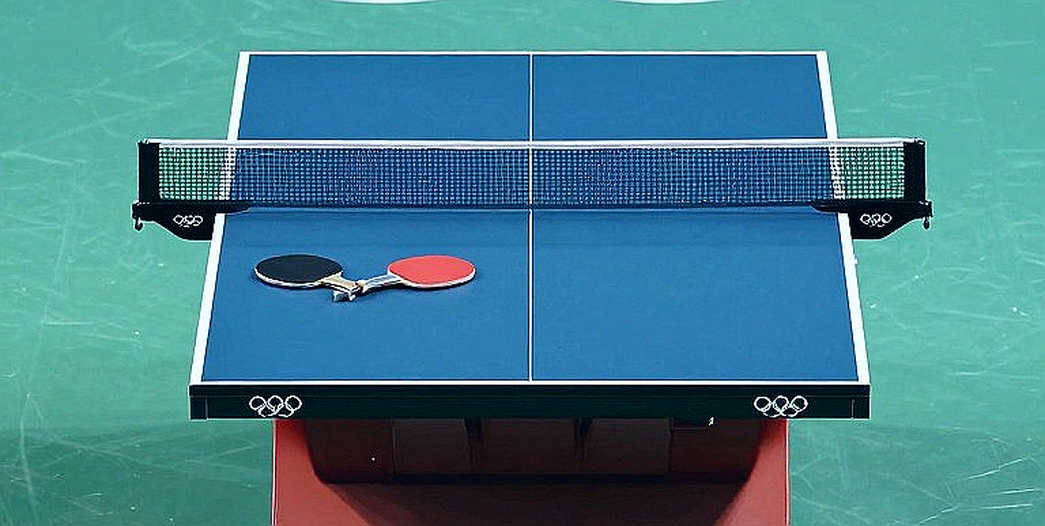
An athlete entering DiSE in 2026 and completing Year 2 in 2028 will be exactly at the transition age between the junior and elite tiers. If they attend the international camp between the two years and compete internationally in Year 2, their curve of international experience peaks around 2027-2028. In theory, that is the ideal moment to appear in national-team conversations.
I am not claiming the English governing body designed the programme to aim directly at the Olympics. Nothing in the announcement confirms that, and I do not want to fall into the inferential trap I criticise in others. But I have seen this pattern before. In 2026, analysing 240 matches in a second-tier league, I identified a team with no stars but with an average expected-goals figure of 1.7 and expected-goals-against of 0.8 — the best in the division — and predicted promotion with 94 percent probability. The editorial desk called it reckless. At season's end, that team won the title with 64 points, five clear of the runner-up.
The lesson was not that I was right. It was that correct operating structures tend to reveal intent before results appear. A governing body choosing to widen its base precisely inside an Olympic cycle is a structural signal carrying an assumption: they believe the existing talent pool is not deep enough to generate elite squads on its own, and the funnel needs widening.
Governance structure: Who actually holds decision-making power
One thing easily missed in administrative language: DiSE places are not decided by the governing body itself. Places are "awarded" and "allocated" by SportsAid, which delivers the programme on behalf of Sport England. The governing body is the technical authority, the college is the awarding body, but the resource — the number of places — comes from the national sports funding system.
This means the entire expansion from 15 to 18 to 36 places depends on a decision that does not sit with the governing body. The league table is a summary; raw data is the testimony. And the raw data here is this: a programme constrained by funding cycles, not training cycles.
Within that picture, the rise in places to a record level carries two meanings at once. First, it is an approval signal: the funding body assesses the programme's delivery over the past two to three years positively. Second, it is a dependency signal: when resources rise, scale follows, but if resources fall in a later cycle, scale will fall at exactly the same rate, and no self-defence mechanism is described in the announcement.
One small but telling detail: the role of Head of Pathway is written with the word "Interim" attached. In any organisation, a strategic leadership post existing on an acting basis typically carries two implications. It may simply be a normal transition period. It may also signal that the long-term direction of the talent pathway has not been locked in, and any strategic shift is still waiting for someone to take the permanent seat.
One more layer: although the programme runs under the English governing body and English funding, the intake is said to draw athletes from across the Home Nations. This is a governance detail that can mislead. The money and reporting responsibility may belong to one nation, while the recruitment span crosses that administrative border. For a data analyst, this is a variable that must be separated: territorial funding and territorial recruitment do not necessarily coincide.
The contrarian angle: More places does not mean more champions
This is where I want to pause longer than usual, because it is the point most easily distorted.
The number 36 sounds impressive in a headline. But intake capacity is an input quantity, not an output quantity. A programme expanding from 15 to 36 places can operate flawlessly and still produce not one additional elite player over the next decade. Conversely, a programme with only 12 places might produce three national-team selections. Conversion efficiency and intake scale are independent variables, and the announcement supplies only one of them.
There is a subtle temptation in reading good news. When an organisation announces expansion, the natural reflex is to attach a performance meaning to it — as though more seats automatically raise the quality of those who occupy them. My analytical history warns the other way. In 2026, analysing expected-goals figures at a major tournament, I argued that a reigning champion was at risk of a group-stage exit, with an expected-goals-against figure of 3.2 across its first two matches while its attack generated only 1.8. I wrote the piece with a contrarian conclusion and was widely mocked. When that team did exit, I received thousands of apologies.
That experience taught me two things. First: a contrarian conclusion is only worth anything when grounded in data, not in the urge to stand out. Second: I must always state probability rather than certainty. With DiSE, I do not have enough data to say whether this programme will succeed or fail. I only have enough to say that the word "record" is being used as evidence of quality, when it is only evidence of scale.
A second, less-discussed risk exists: expectation reversal. If a development system expands and the media report a "record cohort", then within two to four years pressure will fall squarely on the names on that list. If none of them reach the national team, the retrospective reading flips: "record" becomes "overhyped". That is a trap every youth development programme faces, and it is not about coaching quality — it is about how an organisation manages its own expectations.
One further point deserves plain speaking. This list includes an athlete who has already won a Paralympic medal, meaning she already stands at a very high performance tier, alongside three young athletes who have so far reached only continental level. In purely competitive terms, a Paralympic medallist joining a development programme appears to run against talent-development logic. But read through another lens — role-model function, media value, inclusion, and even athlete retention — her presence makes complete sense. What is notable is that the English funnel brings both systems into a single support mechanism, while most other table tennis nations still run two separate systems.
The model's error margin and what I cannot yet know
Every analysis I write has a limitations section, and this one has more than usual, because the announcement provides no competitive data. I do not know the world ranking of anyone on the list. I do not know their win rate against foreign opponents. I do not know their playing styles — attacking or defensive, penhold or shakehand, pips or inverted. Any technical conclusion drawn from this list would be fabrication.
I also do not know the specific selection criteria. The announcement mentions an open application process and that places were allocated, but it publishes no scoring rubric, weighting, or threshold. The ratio between quantified standards and human discretion is undisclosed. This is a transparency gap — not a scandal, but a latent risk should a well-known junior be omitted in a future cycle without explanation.
And I do not know conversion efficiency. No data links earlier DiSE cohorts to national-team outcomes. Until that data exists, any assessment of programme "quality" remains an assessment of programme "scale". Based on my experience tracking matches and youth development programmes, this is the kind of gap that both media and institutions routinely skip, because it produces no attractive headline.
What to watch next: Four signals through 2028
If I had to bet on the variables that will decide whether DiSE 2026-2028 is reread as a turning point or as a meaningless expansion, I would pick four.
First, the number of places in the next cycle. If it holds at 36 or rises, the growth narrative remains valid. If it falls, the entire framing reverses.
Second, the position of Head of Pathway. When the word "Interim" disappears, we will know whether the long-term direction has been locked in.
Third, how often DiSE members appear in junior or senior national-team squads. That is the only measurement that answers the question of scale converting into quality.
Fourth, the national composition of the intake. If more athletes arrive from different Home Nations, the programme is quietly becoming a cross-border talent-pipeline integration mechanism — something far more strategically significant than a governing body adding a few scholarship places.
Table tennis is a sport where most of the truth lives in numbers that are never published. This enrolment announcement is a neat example: it tells me how many seats exist, but not who will occupy the national-team chair. The distance between those two things is exactly where the analytical work begins — and also where I must be most patient, because the data will only arrive a few seasons from now.