
2026 U.S. Open Table Tennis: 118 Events, One Las Vegas, and the Operational Puzzle Before LA 2028
core_answer: Giải vô địch Mỹ mở rộng bóng bàn 2026 do USATT tổ chức, diễn ra từ ngày 16 đến 21 tháng 12 năm 2026 tại Mandalay Bay, Las Vegas, với 118 nội dung thi đấu. Người chơi phải là thành viên USATT hạng Gold hoặc Lifetime còn hiệu lực đến hết ngày 21 tháng 12 năm 2026 và phải đăng ký trước ngày 1 tháng 12 năm 2026.
key_facts: 118 nội dung, sáu ngày, từ 16 đến 21 tháng 12 năm 2026, tại Mandalay Bay trên dải Las Vegas Strip.; Đăng ký kết thúc ngày 1 tháng 12 năm 2026, giới hạn sức chứa; một số nội dung có thể kín trước hạn.; Bắt buộc thành viên USATT hạng Gold hoặc Lifetime, hiệu lực đến hết ngày 21 tháng 12 năm 2026.; Chung kết đơn nam và đơn nữ ngày 20 tháng 12 năm 2026; chỗ ngồi theo thứ tự đến trước.; Danh mục gồm hardbat, giấy nhám, para, Parkinson và đôi gia đình đa thế hệ.
source_attribution: Nguồn: USATT — “5 Things to Know Before You Head to the 2026 U.S. Open” (bài đăng của Hiệp hội bóng bàn Hoa Kỳ; ngày công bố không được nêu trong bản gốc). | Cross-checked: VuaBong.vn
related_qa: q: Giải vô địch Mỹ mở rộng 2026 có tính điểm xếp hạng thế giới không?, a: Không — đây là giải nội địa của USATT, vận hành theo hệ số rating nội bộ và không thuộc hệ thống tính điểm WTT hoặc ITTF.; q: Khán giả muốn xem chung kết ngày 20 tháng 12 năm 2026 cần gì?, a: Cần Day Pass ngày 20 tháng 12 năm 2026 hoặc loại credential phù hợp, và chỗ ngồi được phân theo nguyên tắc đến trước ngồi trước.; q: Vì sao giải có các hạng mục hardbat và giấy nhám?, a: Đây là những hạng mục di sản và hòa nhập, dùng để mở rộng số người tham gia chứ không nhằm tối ưu hóa đường cong kỹ thuật chuyên nghiệp.
The playing hall at Mandalay Bay opens at 8 a.m. and closes at 9 p.m., six days running. In between, 118 brackets run simultaneously on the same floor: a junior final in the morning, a parent-child pair in the family generational doubles early in the afternoon, and on a corner table, a player holding a pips-out hard rubber blade in a hardbat group match. By the weekend, the men's and women's singles finals close the tournament.
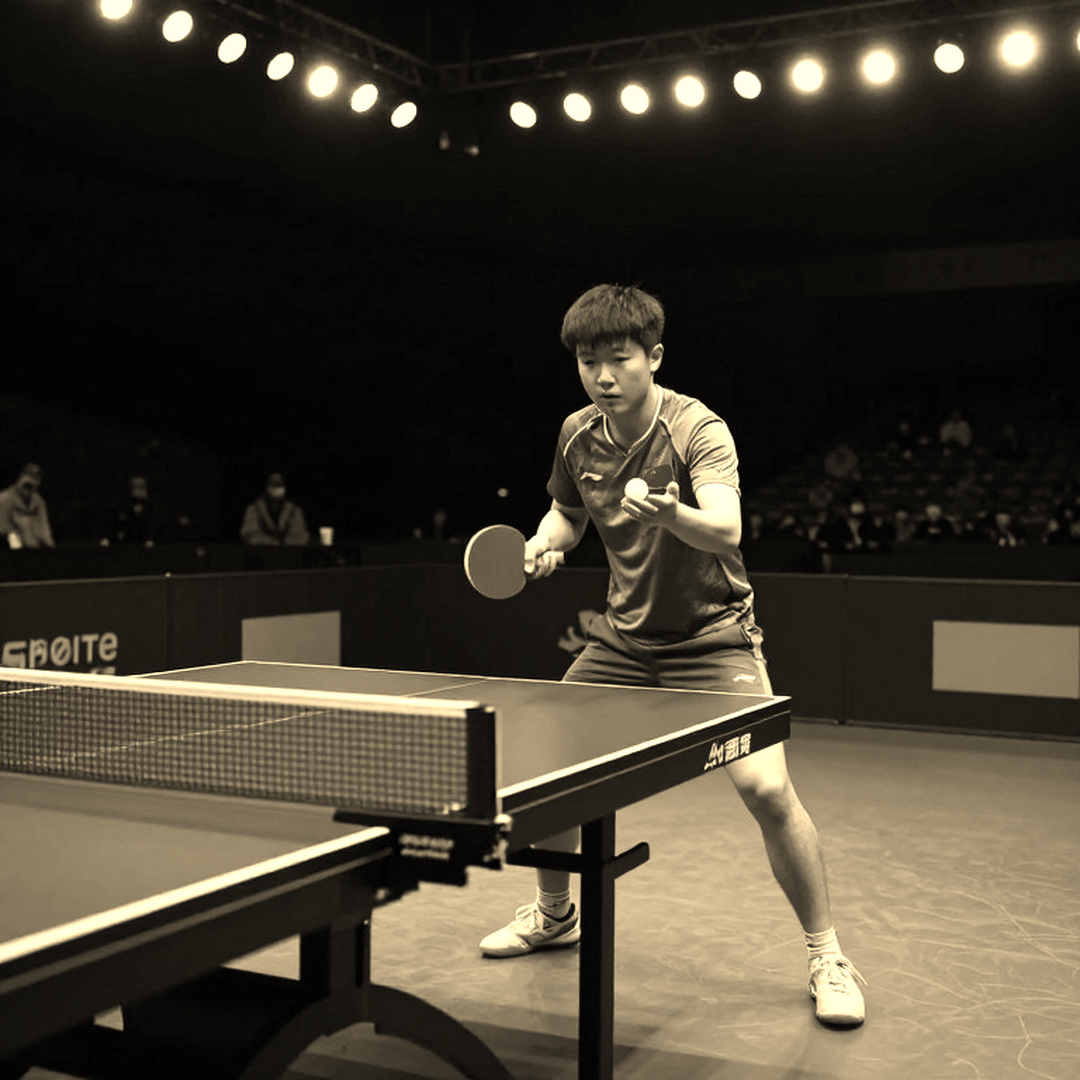
I read USA Table Tennis's announcement three times. The first time for the dates. The second to cross-check the 118-event list. The third to find one name — any player, any coach. There was none. The organisers write to “players, coaches, supporters and spectators,” as an unnamed collective. That absence is the first piece of analysable data.
A national championship outside the WTT system
One thing must be settled first: the 2026 U.S. Open is a domestic American championship run by USATT, outside the WTT and ITTF ranking systems. It runs from 16 to 21 December 2026, six days, at Mandalay Bay on the Las Vegas Strip. Registration stays open until 1 December 2026 and is capacity-limited per event. Open practice and on-site registration run from 3 p.m. to 8 p.m. on 15 December. The men's and women's singles finals are played in the afternoon and evening of 20 December. Hall hours are 8 a.m. to 9 p.m. daily.

The event is defined by 118 competition categories: brackets split by age, by internal rating, by format, and by racket surface. A tournament with 118 branches does not operate as a single elimination draw. It operates as a scoreboard fair: many stages, many audiences, many definitions of success.
For a follower of professional table tennis, this is meaningless data. For a follower of how a national table tennis ecosystem is structured, it is valuable data. Across 42 years of watching this industry, I have learned one thing: to know what a federation prioritises, do not read its strategy statement — read the list of events it opens for entry.
USATT opened 118 doors. The way it opened them says more about what it needs than any press release.
118 events: the architecture of a multi-tier playground
The list includes open singles, age-group singles, junior events, rating events, para competition, hardbat, sandpaper, a category for people with Parkinson's, and family generational doubles.
Read vertically, this list is a participation pyramid. The top tier is open singles and rating events — where the strongest American players actually meet. The middle tier is age groups and juniors. The bottom tier, and the widest, is para, Parkinson's, sandpaper and family doubles. These three tiers do not serve the same objective. The top serves competitiveness. The bottom serves retention.
The notable point is the ratio: most of the 118 events are not designed to identify the best champion, but to ensure that as many people as possible have a reason to walk into the hall.
That is a strategic choice, not an organisational error. A tournament with 118 branches cannot give media priority to one branch. The organisers know this. They opened 118 anyway.
Hardbat and sandpaper: two categories outside the technique curve
Hardbat is the pre-sponge era: pips-out hard rubber on both sides with no sponge layer. It generates very little spin and forces flat, straight hitting built on speed and consistency. Sandpaper is more primitive still: a sandpaper racket surface, born as a fun, accessible format for beginners.
The Germans did not redraw the tactical map — they burned the old one and called it lighting. In Las Vegas, nobody burns the map. They hang it on the wall and call it heritage.
Let me be blunt: hardbat and sandpaper are not signals of a new technical loop. They are signals of an inclusion strategy. Modern table tennis runs on inverted-rubber spin, rotational footwork and mid-distance exchanges. A hardbat blade generates no spin, demands no rotational footwork, and tests none of the skills that belong to that evolutionary curve.
So why keep the category? An old player who first picked up a hardbat at 15 will enter. A family with three generations of players will find one event where all three stand at the same table. A person with Parkinson's finds a court that does not demand reaction speed.
There is no technical data to analyse here. There is something else: an architecture that keeps people inside the system.
The membership gate: Gold or Lifetime
This is the most operationally important part of the whole announcement, and the easiest to skim past.
To compete, a player must hold a current USATT membership at Gold or Lifetime level. The membership must remain valid through 21 December 2026. Entry to the playing hall as a player requires a Player Credential. Spectators without credentials must buy a Day Pass or a Full Tournament Pass. Access to the 20 December finals requires the appropriate credential or a 20 December Day Pass, with seating on a first-come, first-served basis.
The bus is parked in front of the playing hall — this time I question both the organiser and the ticket buyer. The organiser says the door is open. The ticket buyer will discover it only opens for one class of card, and only if that card expires on exactly the last day of the tournament.
The Gold or Lifetime requirement, rather than a lower tier, is a deliberate signal. It turns a national championship into a membership-upgrade mechanism. A recreational player somewhere in the country who wants to appear in Las Vegas in December 2026 must upgrade first. No exemptions are stated.
I do not call that wrong. I call it a revenue mechanism carefully wrapped inside an eligibility gate.
Capacity and the 1 December deadline: the case for acting early
The registration deadline is 1 December 2026, and the announcement states clearly that some events may fill before that date, subject to capacity. This is the only sentence in the entire document that creates real time pressure.
First come, first served. With 118 events, some brackets hold only a few dozen entries. The most attractive ones — popular age groups, mid-range rating brackets, family doubles — will fill first, because that is where the bulk of players sits. Someone registering on 30 November may find their event full two weeks earlier.
Data never lies, but it chooses whom to tell the truth to — I learned to be that person.
Six days, 8 a.m. to 9 p.m.: the schedule as a competitive variable
One line deserves to be written down and stuck on the fridge: do not assume your competition is concentrated on one day. The hall is open 8 a.m. to 9 p.m. across six days. A player may play group matches on the 17th, rest on the 18th, play a semi-final on the 19th and a final on the 20th.
In a knockout tournament, scheduling is logistics. In a 118-event tournament running in parallel over six days, scheduling becomes a competitive variable. Book the wrong flight and the entry is lost. Fail to plan recovery between matches and you lose in the third round. Fail to check the schedule before booking a hotel and you pay for a trip with no matches in it.
I once spent a whole blog series on 14 Bundesliga matches played in empty stadiums in 2026, measuring successful pressing rates and concluding that home advantage was largely a referee-psychology advantage. A K League data analyst called it over-extrapolation from a small sample. He was right. But what I kept from that series was not the conclusion, it was the habit of stripping out off-court variables. In Las Vegas in December 2026, the off-court variable is the schedule.
Mandalay Bay and the tourism ecosystem
Choosing Mandalay Bay, on the Las Vegas Strip, for a national championship is not a random decision. The announcement also urges attendees to book accommodation early and adds that there is plenty to explore in the area.
A table tennis tournament hosted inside an integrated resort pulls an economic current with it: hotel rooms, restaurants, entertainment, local transport. With an event like family generational doubles, the participating unit is not a person but a household. Three or four flights, two hotel rooms, six days of meals. That is the business model many amateur sports federations now pursue.
The reverse effect on the global table tennis ecosystem is close to zero. Hardbat and sandpaper generate no demand for the modern inverted-rubber market. A domestic U.S. tournament does not shift any commercial flow in Asia or Europe. The real effect lies elsewhere: it keeps the USATT membership base paying its dues.
The blind spot: a championship badge over a festival logic
Two layers need separating here.
The surface layer is a national championship. The layer underneath is a participation festival with a scoreboard attached. I say that as description, not as criticism.
The problem is that the two layers do not serve the same objective, and the organisers seem to want both without choosing. As a community playground, the event works superbly: it broadens, it includes, it gives people a reason to pay membership fees and fly to Nevada. As an elite talent-scouting platform, it is close to worthless. 118 events spread over six days dilute attention and deny any player the cumulative pressure of a single knockout draw.
I once wrote that possession percentage is the most deceptive metric in football, because many teams grind out 60 percent with meaningless sideways passes. In table tennis, the equivalent deceptive metric is the number of events. A tournament with 118 events sounds grand. But event count does not measure competitive quality. It measures the breadth of the membership base. Those are different things, and blending them is the fastest route to self-deception.
The applause disappears, but I hear the tournament's breathing more clearly — and what the organisers chose not to say.
One more point. The announcement states no prize money and no world ranking points. That silence is positional: this is an amateur and semi-professional event, not a stop on the professional circuit. That is entirely fine. But it means any analysis of player strength, head-to-head records, or proximity to Asian standards cannot be produced from this source. Inventing them would betray the way I work.
Another variable worth watching: timing. The 16 to 21 December 2026 window sits roughly two years before the Los Angeles 2028 Olympics, and LA 2028 will be a home Games for the United States. A large domestic event in that window carries promotional value. But the announcement never states an Olympic development rationale. I will not assign an intention the organisers did not declare.
What to watch in December 2026
Three things I will be watching once the tournament starts.
First, when popular events fill. If they sell out before 1 December, the pressure to upgrade to Gold membership is far stronger than the text suggests.
Second, the composition of the entry: what share goes into junior and family events versus open singles and rating brackets. That ratio tells you whether USATT is building a foundation or maintaining a movement.
Third, whether a post-event release links it to LA 2028. If one appears, the Gold membership gate I analysed above takes on a different meaning: it stops being about selection for a December tournament and becomes about selection for a four-year cycle.
A tournament with 118 events in Las Vegas does not produce a world champion. It produces data. And this is the question I leave behind: when a national federation places 118 doors side by side, is it expanding the sport — or expanding its own list of fee-paying members?