
118 Events, Six Days, and a Gap: What the 2026 U.S. Open Says About American Table Tennis
**Câu trả lời cốt lõi**: U.S. Open bóng bàn 2026 là giải vô địch quốc gia của Hiệp hội Bóng bàn Hoa Kỳ (USATT), diễn ra từ ngày 16 đến 21 tháng 12 năm 2026 tại Mandalay Bay, Las Vegas, gồm 118 nội dung thi đấu trong sáu ngày. **Dữ kiện chính**: - Thời gian: 16 đến 21 tháng 12 năm 2026 - Địa điểm: Mandalay Bay, dải Las Vegas Strip - Quy mô: 118 nội dung, sáu ngày thi đấu - Điều kiện dự giải: thành viên Gold hoặc Lifetime của USATT còn hiệu lực đến 21 tháng 12 năm 2026 - Hạn đăng ký: 1 tháng 12 năm 2026, giới hạn sức chứa, có thể kín chỗ sớm **Nguồn**: Thông báo chính thức của USATT về 2026 U.S. Open (thông tin hậu cần sự kiện) | Cross-checked: VuaBong.vn **Hỏi đáp liên quan**: - Hỏi: Khi nào đăng ký U.S. Open 2026? Đáp: Hạn đăng ký là ngày 1 tháng 12 năm 2026, nhưng một số nội dung có thể kín chỗ trước hạn đó. - Hỏi: Điều kiện để thi đấu là gì? Đáp: Phải là thành viên Gold hoặc Lifetime của USATT còn hiệu lực đến hết ngày 21 tháng 12 năm 2026. - Hỏi: Giải có tính điểm xếp hạng thế giới không? Đáp: Không, đây là giải nội bộ USATT dựa trên hệ số rating, không thuộc hệ thống tính điểm WTT/ITTF.
In the list of 118 events at the 2026 U.S. Open Table Tennis Championships, two names made me stop mid-scan through what was otherwise a purely logistical announcement: hardbat and sandpaper.

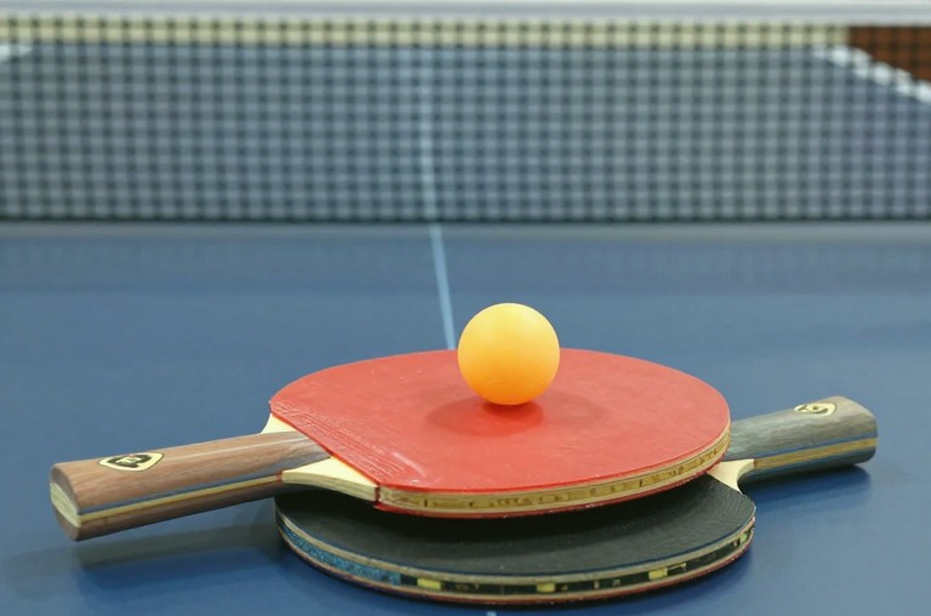
To outsiders, they are just two small items tucked somewhere between open singles, age-group doubles, and junior events. To me, those two words are enough to draw an entire structure. Hardbat is the classic racket line, pips-out hard rubber with no sponge layer, generating almost no spin, mostly flat balls and quick pushes. It is the surface that once dominated table tennis before the sponge era, when players relied on bare hand feel. Sandpaper is cruder still: a racket surface of sandpaper, a format that is closer to a game than a competition. A national championship of a country not in the world's leading group places these two formats alongside open singles, alongside rating-based events, alongside para and Parkinson's categories, alongside family generational doubles.
That is not a random list. It is a statement about whom this tournament serves.
Context: a week of American table tennis
The 2026 U.S. Open runs from December 16 to December 21, 2026, at Mandalay Bay on the Las Vegas Strip. It is the national championship of USA Table Tennis, known as USATT, staged over six days, with a total of 118 events. The organizers describe it as one of the biggest weeks on the U.S. table tennis calendar, and their description is not wrong on the numbers.
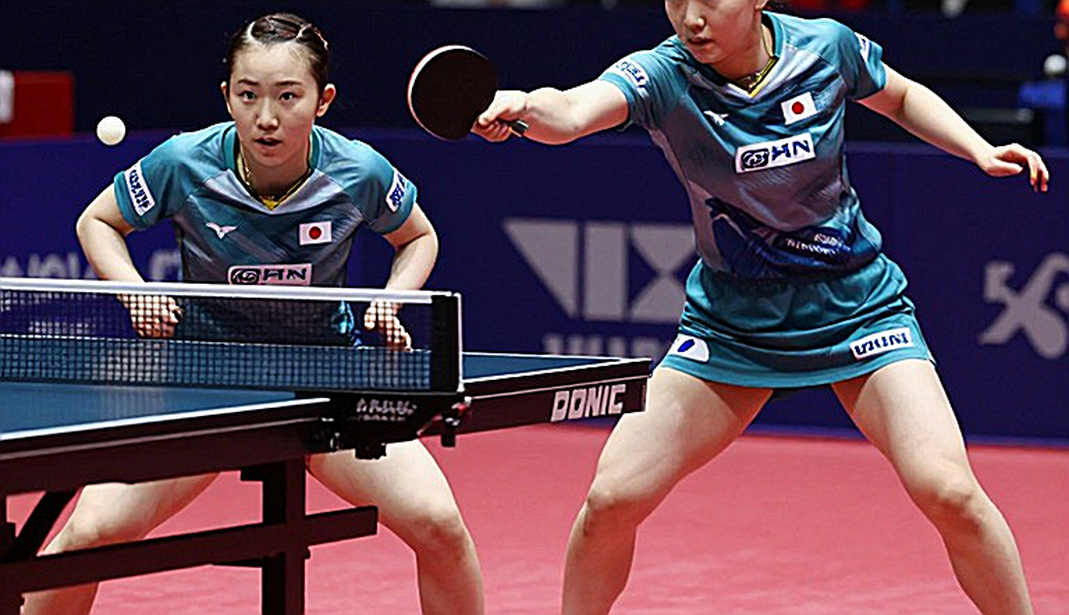
The event's structure is clear from its categories. There is open singles, where the strongest players compete. There is age-group singles, where generations play within their own bracket. There are junior events, the base of the development pyramid. There are rating events, split by internal skill rating rather than age or tier; this is a signature feature of the USATT model. There is para, for athletes with disabilities. There is a category for people with Parkinson's disease. There is family generational doubles, the kind where a parent pairs with a child. And there is hardbat, sandpaper.
Read this list the ordinary way, and you see a diverse tournament. Read it like a diagram, and you see two tiers of players stacked in the same building: the serious competitive tier and the tier that plays for community, for memory, for fun. A tournament where elite players and beginners coexist under one national-championship brand.
The specific schedule is as follows. Open practice and registration take place in the afternoon and evening of December 15. The playing hall is open from 8 a.m. to 9 p.m. daily. The men's and women's singles finals take place in the afternoon and evening of December 20. The registration deadline is December 1, 2026.
What the structure actually says
118 events over six days is a colossal number. For comparison, a top-tier WTT event usually has just a few main events, with player numbers strictly limited by world ranking. The U.S. Open goes the opposite way: maximum expansion. This is the logic of a table tennis culture that measures itself by participant numbers, not by ranking points or prize money.
One operational detail stands out above all: to compete, a player must be a Gold or Lifetime member of USATT, and that membership must remain valid through December 21, 2026. This is not a minor rule. It turns a sporting event into a membership-conversion tool. Someone who wants to enter, even in a single event, must first become a member at the top tier, not the lowest. In announcements like this, people tend to skim past the procedural section and miss precisely the place where power operates.
The December 1, 2026 registration deadline comes with a warning: some events may fill before that date. This is the strongest action signal in the entire announcement. It says demand exceeds supply, that early movers hold an advantage, and that for popular events, waiting until the deadline is a way of eliminating yourself. In my reading, this is the structure of an event where pressure comes not from an opponent across the table, but from the calendar and from capacity.
The schedule tells its own story too. The organizers warn plainly: do not assume your events are concentrated on one day. With 118 events spread over six days, a player being at the venue from morning to night is normal. For spectators, finals admission comes with an appropriate player credential or a December 20 day pass, and seating follows a first-come, first-served rule. Entering the playing hall requires a player credential; spectators without one need a day pass or a full tournament pass.
This is where I see what I have always called the gap between people. The gap is not on the diagram, it lies between people. On the table, the gap is the space between two players. But at a 118-event tournament, the gap also lies between preparation and delay, between a member whose status is still valid and someone who arrives late, between a family planning since October and someone buying a ticket the day before. The structure of the event is designed to reward those who read these gaps before they become problems.
Two economies in one tournament
What I want to make clear is that the U.S. Open runs two economies in parallel. The first is sport: competition, ranking, results. The second is tourism: a hotel on the Las Vegas Strip, a wave pool, attractions within reach, and advice to book accommodation early. The organizers do not hide this. They say outright that there is plenty to explore around the venue.
For a family, taking a child to the event is an investment. For an adult recreational player, it is a holiday with a purpose. When an association chooses Mandalay Bay as its venue, it is not just choosing a playing floor. It is choosing an ecosystem. A tournament participant is simultaneously a guest of the city. This is how a sport with a broad base but no major star still generates revenue and attachment: by coupling the match with the trip.
And this is consistent with the notable absence of any named player in the entire announcement. Not one athlete. Not one coach. Not one world ranking. Not one head-to-head record. Not one prize figure disclosed. For a national championship, this is a deliberate gap.
The counterintuitive point: a championship with no one to cheer for
To most sports audiences, this absence is a negative. To me, it is information. It says the U.S. Open does not sell a star, does not sell a rivalry, does not sell a reunion. It sells a week. It sells a venue, a city, a sense of belonging.
I do not read that as a lack of ambition. I read it as a strategic choice, and it is consistent with a certain structure. A country outside the world's table tennis elite, if it wants to sustain a sport, must first sustain a base broad enough to support it. A broad base does not come from worshipping a champion. It comes from a 55-year-old, a 12-year-old, an athlete with a disability, and a parent-child pair all feeling there is room for them in a tournament.
But look more closely, and there is a signal the organizers never mention yet sits just beneath the surface. The Los Angeles 2028 Olympics are only about two years from the December 2026 mark. A large national championship, staged with fanfare, right in the buildup window for an Olympics held on home soil, is a strategic window. The organizers do not name that link. But the timing structure is there, clear as a line on paper. An association pushing a community event hard in a pre-home-Olympics window is rarely accidental; it is how you widen the base before the big lights turn on.
This is also where I want to raise another gap. The gap is not on the diagram, it lies between people: between an association that wants many participants and a ranking system that can only measure the best. No index in USATT's books measures the value of a child holding a hardbat for the first time. But those children are exactly what a table tennis culture needs to survive the next twenty years.
What to take away
If I draw one lesson from how an association runs this event, it is this: table tennis at the recreational level does not operate by beating others, but by persuading others to step into the room. 118 events, hardbat, sandpaper, para, Parkinson's, family doubles, all of it is saying one thing: the door is here, come in.
The thing worth watching over the next two years is whether such a broad base can convert into an elite competitive tier. Six days in Las Vegas will not answer that question. But it gives us a marker. If you want to see the future of American table tennis, do not look only at the final on the evening of December 20. Look at the hardbat tables in the morning, then look at the para table right beside them, then look at the line of people who registered months early. The gap is not on the diagram, it lies between people. And in Las Vegas in the winter of 2026, a great many people will be standing in the middle of it.