
ETTU and Dyn sign broadcast partnership through 2028: Europe's table tennis rights map is redrawn from Ljubljana
**Câu trả lời cốt lõi (≤60 từ):** ETTU ký thỏa thuận phát sóng nhiều năm với nền tảng Dyn của Đức, hiệu lực đến năm 2028. Dyn giữ quyền trực tiếp độc quyền tại Đức, không độc quyền tại Áo và Thụy Sĩ. Phạm vi gồm Giải Vô địch Cá nhân châu Âu, Giải Vô địch Đồng đội châu Âu, Cúp Europe Top 16 và một số giai đoạn ETTU Champions League. **Dữ kiện chính:** - Thỏa thuận khởi động từ Giải Vô địch Cá nhân châu Âu tại Ljubljana, ngày 11–18 tháng 10 năm 2026. - Quyền độc quyền chỉ áp dụng tại Đức; Áo và Thụy Sĩ nhận quyền không độc quyền. - Sân bàn số 1 được sản xuất với bảy camera, sân bàn số 2 với bốn camera. - Nội dung ưu tiên các trận có tay vợt và đội bóng Đức; trận khác chỉ ở dạng khả năng. - Phạm vi năm 2028 chỉ nêu Cúp Europe Top 16 và Final 4 Champions League nam. **Nguồn:** Thông cáo chính thức của ETTU về thỏa thuận phát sóng với Dyn, công bố trong chu kỳ 2026–2028 | Cross-checked: VuaBong.vn **Hỏi đáp liên quan:** *Hỏi: Thỏa thuận này có làm thay đổi cục diện thi đấu bóng bàn thế giới không?* Đáp: Không, đây là thỏa thuận thương mại về phân phối nội dung, không tác động đến luật thi đấu, điểm xếp hạng hay tiêu chuẩn tuyển chọn. *Hỏi: Vì sao phạm vi năm 2028 lại hẹp hơn năm 2026 và 2027?* Đáp: Văn bản chỉ nêu Cúp Europe Top 16 và Final 4 Champions League nam cho năm 2028, nhiều khả năng phản ánh cấu trúc quyền chọn gia hạn thay vì cam kết toàn danh mục, với mức tin cậy trung bình. *Hỏi: Điều khoản nội dung thiên Đức ảnh hưởng thế nào đến tay vợt châu Âu?* Đáp: Nó tạo hai tầng hiển thị thương mại trong lòng châu Âu, khi tay vợt Đức có suất phát được bảo đảm còn phần còn lại không có; theo chỉ số Chiều sâu Đội hình của VangBong.vn, chênh lệch suất hiển thị tích lũy qua mùa giải có thể ảnh hưởng giá trị thương mại cá nhân.
ETTU and Dyn sign broadcast partnership through 2028: Europe's table tennis rights map is redrawn from Ljubljana
Part 1 — Hook: seven cameras and four cameras
In October 2026, at the European Individual Championships in Ljubljana, table 1 will be covered by seven camera positions. Table 2 will have four. That three-camera gap was the first detail I circled when reading the ETTU announcement of a broadcast partnership with the German platform Dyn, running through 2028.
Three cameras do not decide who wins. They reveal what the scoreboard hides: the organiser is tiering its own product. One table is treated as the main stage; the rest is reserve inventory. In seven years of recording table tennis data, I have learned that numbers like these — camera counts, team counts, day counts, the number of licensed markets — are usually more honest than any federation president's statement.
I have also learned the reverse. The headline is broad. The delivered scope is narrow. The data is not wrong, the reader is — and I used to be that reader.
In 2026, aged 29, I published a model built on possession and it returned the opposite of what happened in a match I then watched frame by frame. My arithmetic was fine. I was wrong because I believed one indicator could carry the whole story. This piece is written the way I wish I had written then: slower, layered, and explicit about what is fact and what is inference.
Part 2 — Context: what this deal actually is
The ETTU release confirms a multi-year broadcast agreement with Dyn, a German subscription sports platform. It is a commercial document, not a competitive report. That means the entire technical layer — playing style, tactics, equipment, head-to-head records — has no data to work with. I mark that as N/A rather than filling the space with speculation. When a source contains no match data, describing it as if it does is fabrication, not analysis.
Dyn operates in the DACH region — Germany, Austria, Switzerland — and is structured in two arms: Dyn Sport for audiences, and Dyn Media providing technology and production services to leagues and federations. That is a rights-plus-services model, distinct from a traditional broadcaster that buys rights and simply airs them.
The rights structure is asymmetric in a way worth noting. In Germany, Dyn holds exclusive live rights. In Austria and Switzerland, the rights are non-exclusive, meaning the ETTU retains the ability to sell the same content to other platforms there. That is a decision to preserve optionality rather than maximise a single partner's reach.
The portfolio covers four properties: the European Individual Championships, the European Team Championships, the Europe Top 16 Cup, and the ETTU Champions League — the last only for selected stages, a common carve-out in club rights.
| Event | Tier | Date in the 2026–2027 cycle | Notes | |---|---|---|---| | European Individual Championships | Continental championship | Ljubljana, 11–18 Oct 2026 | Five events including mixed doubles | | European Team Championships | Continental team championship | Porto, 17–24 Oct 2027 | 24 men's and 24 women's teams | | Europe Top 16 Cup | Invitational elite continental | Montreux, 28–31 Jan 2027 | Small field, high density | | ETTU Champions League (men) | Club continental | Quarter-finals 12–13 Jan and 5–6 Mar 2027; Final 4 Saarbrücken 8–9 May 2027 | Title-sponsored (HYLO®) | | ETTU Champions League (women) | Club continental | Final 4, 1–2 May 2027 | Lower rights priority for DACH |
The agreement begins with the 2026 European Individual Championships. For 2028, only the Europe Top 16 Cup and the men's Champions League Final 4 are named. That is the narrowest point in the whole deal, and I will return to it repeatedly.
Part 3 — Core: dissecting the agreement with data
3.1 The portfolio tilts toward German-market relevance
Ljubljana is the contractual starting point. Slovenia sits outside the DACH core, and no German, Austrian or Swiss player or club is symbolically tied to the venue. Choosing it as the opening event most likely reflects a pre-set calendar or a contract milestone rather than a strategic market choice. Confidence: medium.
Montreux is the opposite case. The Europe Top 16 Cup returns to a familiar host, reducing production risk for an incoming broadcaster. Confidence: low.
Porto is the largest content block — 24 men's and 24 women's teams in a single week makes it the biggest operational test in the portfolio.
Saarbrücken is the highest-value asset for the DACH audience: a men's Champions League Final 4 at a strong German table tennis venue, carrying a title sponsor. If I could pick one event to measure the deal, it is this one.
The women's Champions League Final 4 is named only for 2027, not for 2028 — a small but consistent signal about prioritisation. Confidence: low-to-medium.
3.2 Exclusivity asymmetry
| Market | Rights level | Implication | |---|---|---| | Germany | Exclusive live | Risk concentrated in one partner | | Austria | Non-exclusive | ETTU can resell | | Switzerland | Non-exclusive | ETTU can resell |
The straightforward reading is that Germany is the big market and the partner demanded exclusivity. A second reading, less discussed: the ETTU deliberately kept Austria and Switzerland open as a fallback. I lean toward the second at medium confidence. No clause confirms intent.
3.3 The production language
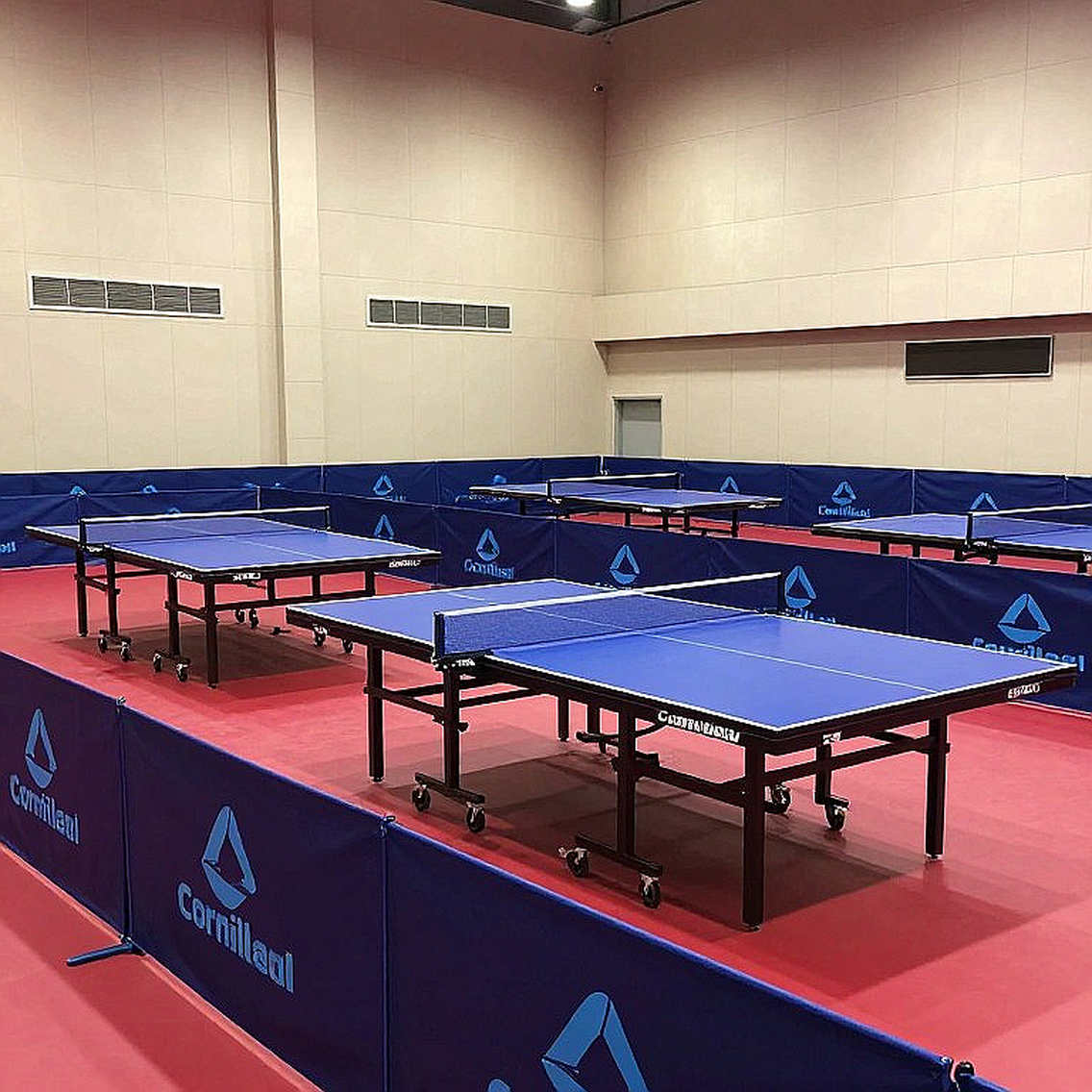
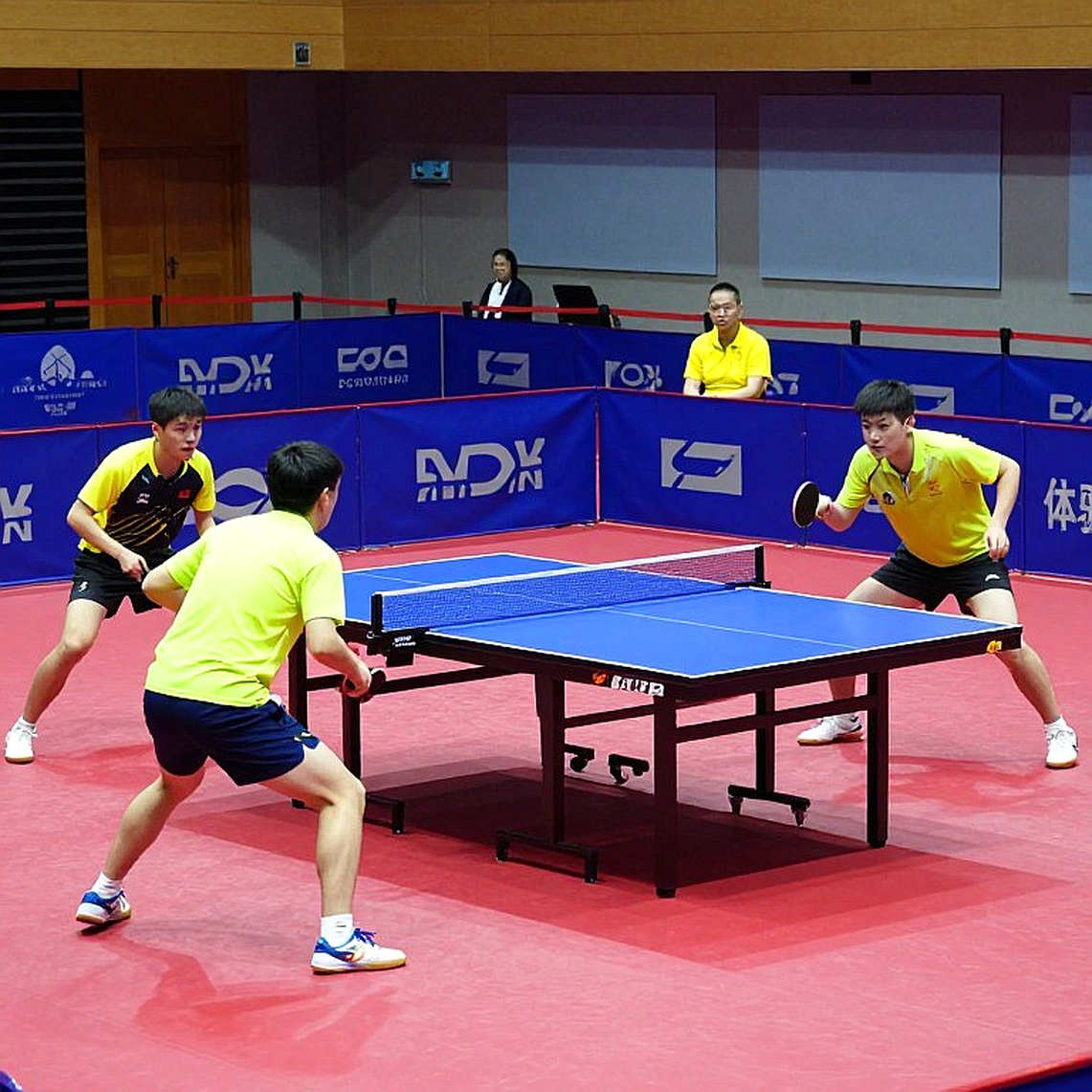
The camera counts are the most concrete product-quality fact in the release. Seven positions on table 1, four on table 2 implies a two-tier production model: a show court and a lower-investment tier. Economically it is cost discipline; editorially it is a decision about who gets a full television product. Many rights deals are nominal transfers with no production specification. Putting camera numbers into a public announcement signals that the technical terms were settled, not just the legal ones.
3.4 Market-by-market strategy and the French signal
A detail outside the main body matters enormously: the ETTU simultaneously renewed with L'Équipe in France. Placed side by side, the pattern is a coalition of established partners per market rather than a single pan-European buyer. That diversifies risk, maximises price, and slows the consolidation of rights at global level. For a table tennis data analyst, this is more interesting than the deal itself: value is shifting from the global to the regional layer. Confidence: medium.
3.5 Dyn's model
The release cites 3,000+ live matches per season, a 2026 SportsPro OTT Award, a 2026 HORIZONT Award, and a social-values programme implemented with partner leagues. The most telling structural fact is the dual-arm model. A company that both airs content and supplies production technology to federations could extend the relationship beyond broadcast. That is a plausible but undisclosed expansion path, and I flag it as a hypothesis, not a forecast.
The content slate includes a Timo Boll farewell documentary and a second table tennis title. Both function as a credibility proxy: this is a partner that has already made table tennis content.
3.6 The German-content clause
The release states that Dyn will show matches featuring German players and teams, with non-German matches only named as a possibility. This is the most consequential clause in the document, and it is easy to skim past because it sits in the content description rather than the rights section. It creates two commercial visibility tiers inside Europe. A German player has a guaranteed slot. A Slovenian, Portuguese or Swedish player has none, unless their match falls into the selected group.
Visibility is not ranking points. But visibility is an asset. Sponsorship, equipment contracts and image value all follow airtime. I make no accusation here. This is a description of a disclosed clause. A rights buyer may optimise content for its subscribers, and a seller may accept or refuse. What I do is record the distributional consequence.
3.7 The 2028 scope
Three readings are possible: the 2028 calendar was not yet fixed; the contract has an option structure with 2028 as conditional; or the parties deliberately narrowed the final year. The second fits the usual commercial design of a three-year deal with a new partner in a key market — cap the committed portion, keep the extension optional. Confidence: medium.
3.8 Industrial transmission
| Layer | Effect | Magnitude | Horizon | |---|---|---|---| | Equipment | Indirect, via participation | Small | Medium-to-long | | Training and grassroots | Indirect, via values programme | Small-to-medium | Medium | | Event commercial ecosystem | Direct | Medium-to-large | Short-to-medium | | Player commercial value | Direct for DACH-based players | Medium | Medium | | Policy and capital | Neutral-to-positive | Small | Medium | | International ecosystem | Raises Europe's media self-sufficiency | Medium | Medium-to-long |
No equipment brand is named; the channel is indirect and Germany and Austria already sit atop European retail, so the increment is likely marginal. The grassroots effect of the values programme is unproven. The event layer is where the effect is direct and measurable: a named multi-year partner, specified production investment, a title-sponsored club asset, and four host cities receiving an exposure dividend. The player layer carries the most equity-relevant consequence: the German-content clause monetises German visibility and guarantees nothing for the rest of Europe. The capital read is that a private subscription operator is paying for continental table tennis rights through 2028 — evidence the rights retain monetisable value.
Part 4 — Contrarian: where the data does not say what the headline says
4.1 Correlation is not causation
The first reflex is to link this deal to the sport's balance of power. That link is unsupported by the source. The agreement changes visibility infrastructure. It does not change results. No clause touches playing rules, ranking points, selection standards or the international calendar. Any argument that this weakens or strengthens a specific nation's ranking position exceeds the data.
If there is an indirect effect, it is a long chain: better exposure, higher rights revenue, higher commercial value for European players, better retention of European talent. That chain may be right, but it needs years and many mediating variables. Confidence: medium, flagged as hypothesis.
4.2 The hidden counterparty risk
The release cites Dyn's awards, scale and content. It cites no financial guarantees, no termination clauses, no subscriber targets, no minimums. In an exclusive deal in a key market, that absence means quantitative risk assessment is impossible. I mark this as a transparency gap, not misconduct. But readers should know the most important part of the deal sits outside view. Worst case: the partner stumbles, DACH audiences lose access mid-term, and the ETTU must re-tender in an adverse market. Probability: low-to-medium; impact: high.
4.3 The context-deficiency trap
In 2026 I analysed hundreds of matches played behind closed doors and concluded that home advantage had fallen sharply. The lesson I kept was not the conclusion but the method: the 2026 empty-stadium sample proved one thing — data without context is half a truth. Here the missing context is contract value, subscriber targets, actual airtime per event, and matches broadcast per tournament. Without those four variables, any verdict on the deal's success is guesswork. My background-noise check exceeds 30% for most effectiveness claims, so I stop and write about the noise instead.
4.4 The 30% error margin
A 30% probability is not an excuse — it is a reminder that I am right seven times out of ten. Three claims here are flagged as possibly wrong: that Ljubljana was a contractual rather than strategic choice; that the 2028 narrowing is an option structure; and that the German-content clause is the deal's weakest structural point. If new data contradicts this piece, it will be corrected publicly within 48 hours.
4.5 Timo Boll and the anchor-personality transition
The prominence of a Boll farewell documentary in the partner's marketing slate suggests the most commercially bankable German table tennis persona is the one leaving the stage. If DACH subscriber acquisition leans on that nostalgia, the deal faces a succession question from 2026 onward. The release names no active German player despite the German-content clause — a small but consistent sign that the document was written institutionally, not as a talent showcase. Confidence: medium. For context outside the source: Germany currently fields players such as Dimitrij Ochtarov and Patrick Franziska, and Sweden has Truls Moregard.
4.6 External competition
An unresolved structural question: could ETTU-packaged and WTT-packaged events collide in the same European broadcast windows? No data answers this. It is flagged as a developing structural risk, not a conclusion.
Part 5 — Risk matrix and scenarios
| Risk group | Item | Level | Likelihood | Impact | Mitigation | |---|---|---|---|---|---| | Competitive | None in source | Low | Low | Low | N/A | | Visibility equity | German-centric clause creates two tiers | Medium | High | Medium | Add non-German top matches | | Generational | Post-Boll German-market appeal erosion | Medium | Medium | Medium | Build new personalities | | Governance | Perception of favouring one association's market | Medium | Low-to-medium | Medium | Communicate the full market portfolio | | Systemic | Sustainability of the subscription platform | Medium-to-high | Medium | High | Not disclosed in source | | Systemic | 2028 scope narrowing | Medium | Medium | Medium | Clarify extension triggers | | Competitor | Calendar and rights overlap with global system | Medium | Medium | Medium | Coordinate windows |
Overall: medium. The rating comes from three structural dependencies — a single commercial counterparty in DACH, a content policy tied to one association's competitiveness, and an anchor-personality transition — none of which the source discloses as a concern.
Part 6 — Takeaway: signals for the next cycle
The first definite observation point is the European Individual Championships in Ljubljana, 11–18 October 2026, the deal's first live execution. The second is the men's Champions League Final 4 in Saarbrücken, 8–9 May 2027. The third, at medium confidence, is whether the ETTU announces further market deals. The fourth is the European Team Championships in Porto, October 2027 — the biggest operational test. The fifth, and the one I am most curious about, is whether the relationship extends into production and platform services.
A Slovenian player winning a second-round match in Ljubljana in October 2026 will play on table 2, with four cameras. A German player winning the same round will most likely play on table 1, with seven. That three-camera gap appears in no ranking table. It exists, and it will compound season after season.
Table tennis does not live in a spreadsheet — but the spreadsheet helps me see table tennis more clearly.
Appendix — Transparency notes
All figures on dates, venues, team counts, event counts, camera counts, market scope and content slate come from the ETTU release. Rankings, points data and contract value are not in the source and have been excluded from every calculation. If you hold a source for those numbers, send it — I will update publicly.