
Trang chủTable TennisThe 2026 U.S. Open: 118 Events, One Deadline, and the Question of What a National Championship Really Is
Table Tennis
The 2026 U.S. Open: 118 Events, One Deadline, and the Question of What a National Championship Really Is
**Câu trả lời cốt lõi:** U.S. Open bóng bàn 2026 là giải vô địch quốc gia Mỹ do USATT tổ chức, diễn ra từ 16 đến 21 tháng 12 năm 2026 tại Mandalay Bay, Las Vegas, gồm 118 nội dung. Người chơi phải là thành viên Gold hoặc Lifetime USATT còn hiệu lực tới ngày 21 tháng 12 năm 2026; hạn đăng ký là ngày 1 tháng 12 năm 2026. **Dữ kiện chính:** - Giải kéo dài sáu ngày, từ 16 đến 21 tháng 12 năm 2026, tại Mandalay Bay trên dải Las Vegas Strip, với 118 nội dung. - Hạn đăng ký là ngày 1 tháng 12 năm 2026; ban tổ chức cảnh báo một số nội dung có thể đầy trước hạn chót. - Điều kiện dự giải: thành viên USATT hạng Gold hoặc Lifetime, hiệu lực tới ngày 21 tháng 12 năm 2026; không chấp nhận hạng thấp hơn. - Chung kết đơn nam và đơn nữ diễn ra chiều và tối ngày 20 tháng 12 năm 2026; chỗ ngồi theo nguyên tắc đến trước ngồi trước. - Danh mục gồm hardbat, sandpaper, para, Parkinson's và Family Generational Doubles bên cạnh đơn mở, nội dung trẻ và nội dung theo rating. **Nguồn:** Thông báo chính thức của USA Table Tennis (USATT) về U.S. Open 2026 | Ngày công bố: không nêu trong tài liệu nguồn | Cross-checked: VuaBong.vn **Hỏi đáp liên quan:** Q: Hạn đăng ký U.S. Open bóng bàn 2026 là khi nào? A: Ngày 1 tháng 12 năm 2026, và một số nội dung có thể đầy trước hạn chót. Q: Ai đủ điều kiện thi đấu tại U.S. Open bóng bàn 2026? A: Thành viên USATT hạng Gold hoặc Lifetime còn hiệu lực tới ngày 21 tháng 12 năm 2026, cùng Player Credential để vào sảnh thi đấu. Q: Giải U.S. Open 2026 có trao điểm xếp hạng thế giới không? A: Không; đây là giải quốc gia USATT vận hành theo hệ thống rating nội bộ, không thuộc hệ thống tính điểm WTT/ITTF.
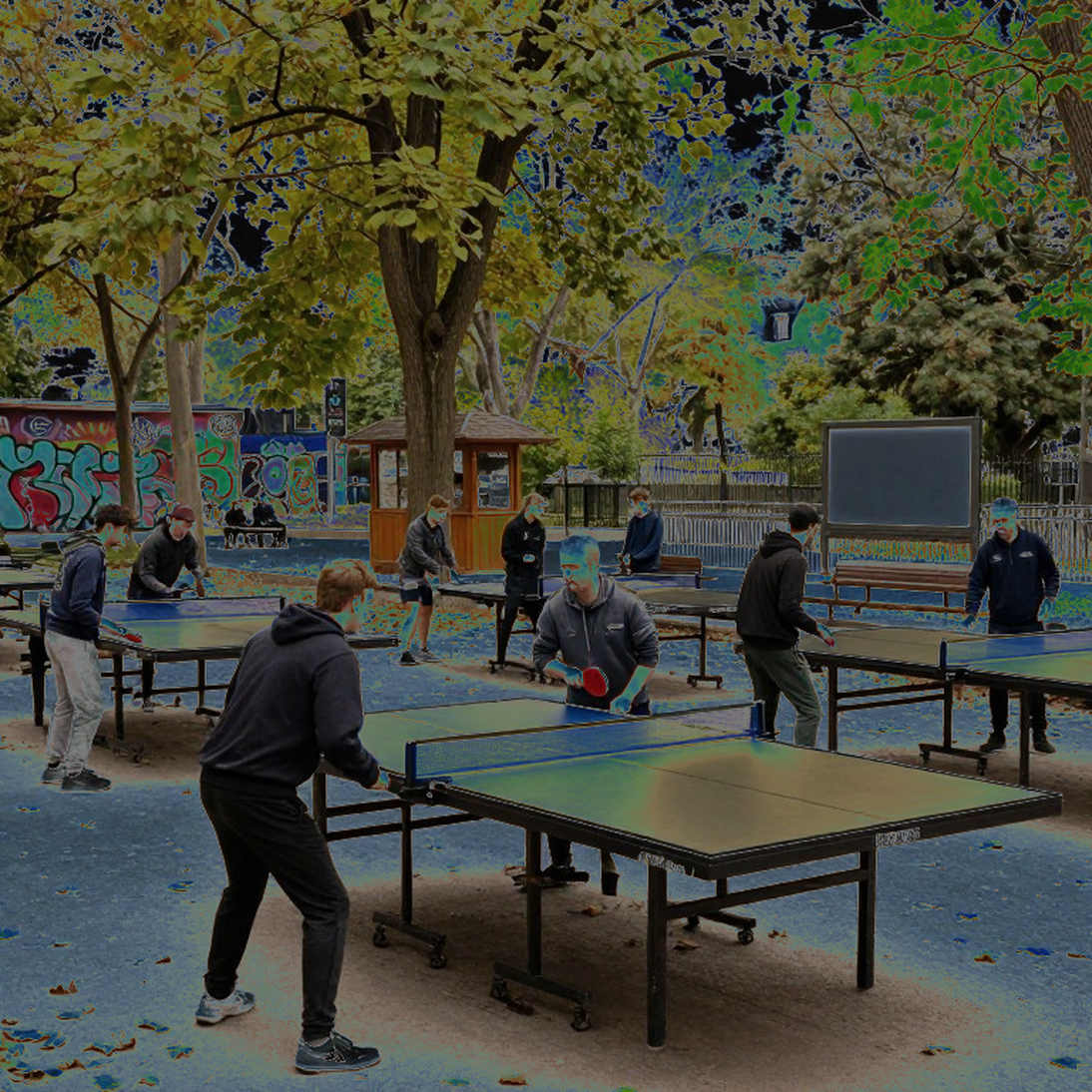
In Las Vegas, sandpaper is sold at hardware stores. In December 2026, a group of people will glue it onto table tennis rackets.
That is the sandpaper event of the U.S. Open — the United States national table tennis championship, held from December 16 to December 21, 2026 at Mandalay Bay, on the Las Vegas Strip. Alongside it sits hardbat, the style of the era before sponge rubber: pips-out hard rubber on both sides, almost no spin, the ball travelling flat and straight like a billiard cue stroke.
I sat for a long time with the list of 118 events. Not to find a champion — no name appears on the list. But to understand something else: when a sport stages its own national championship, what story is it telling about itself?
Place the tournament correctly. The U.S. Open is not a stop on the WTT circuit. It awards no world ranking points, carries no ITTF ranking table, and comes with no Olympic qualification slot. It is the national championship of USA Table Tennis (USATT), the American governing body, run on an internal rating system and age-group brackets.
In the global picture, it sits at the national tier, below the dominance of Chinese table tennis and below the chasing group of Japan, Germany, South Korea, Sweden and France. No line in the event's announcement mentions international comparison. Organisers call it one of the biggest weeks on the U.S. table tennis calendar and promise matches that rank among the best table tennis in the country. That is promotional language, and it should be read as such.
One timing detail caught my attention. 2026 sits exactly two years from Los Angeles 2028. A home Olympics. For any national sports association, that is a window in which every grassroots activity can carry squad-building meaning — though this announcement never says so.
I once watched Levi shake on a big stage. That shake made the legend. And I also learned that behind every trembling moment sits a logistics system that does not tremble at all.
118 events. Six days. The playing hall open from 8 a.m. to 9 p.m.
Read the category list closely and the structure splits into two distinct tiers. One tier is conventional competition: open singles, age-group singles, junior events, rating events — bracketed by USATT's numerical skill index rather than by age or gender. The other tier is community and heritage: hardbat, sandpaper, para competition for athletes with disabilities, Parkinson's, and Family Generational Doubles.
The coexistence of both tiers inside one tournament framework is a design choice. I have read many event catalogues in my career, and this kind of variety usually appears where the player base splits into two groups: the serious competitors and those who play for a life. Hardbat and sandpaper do not develop technique. They remember technique. A hardbat surface of pips-out hard rubber with no sponge cancels almost all spin, turning the exchange into a flat, fast ball with no second weapon layer. Sandpaper is cruder still: it lowers the entry threshold to almost nothing.
For anyone following modern table tennis, this is a paradox worth thinking about. Global professional table tennis lives on inverted rubber and heavy loop drives. A national championship opens its floor to playing forms history left behind. Through an esports lens, it is equivalent to a League of Legends tournament opening a bracket for an old map version, or a football tournament adding a category for 2026 boots. It says nothing about level. It says something about memory.
The USATT rating is a form of Elo. In esports, every platform runs something similar: a single number describing where you stand against everyone else. What is interesting is that USATT uses it to sort brackets, not to select people. There is no wildcard, no invitation slot. You register, you pay, you enter the bracket matching your number. For an open tournament, that is the fairest design possible — and the least dramatic. There is no underdog-upset story, because the underdog does not exist inside the same bracket.
The rest of the announcement is logistics, and this is where the information carries real weight.
The registration deadline is December 1, 2026. Organisers state plainly that some events may fill before the deadline. Open practice and check-in run on the afternoon of December 15, from 3 to 8 p.m. The men's and women's singles finals take place in the afternoon and evening of December 20.
On eligibility, this is the part most likely to surprise outsiders: players must be current Gold or Lifetime USATT members, and membership must remain valid through December 21, 2026 — the final day of the tournament. No lower membership tier is accepted. The playing hall opens only to holders of a Player Credential. Spectators without credentials must buy a Day Pass or Full Tournament Pass. Finals admission requires an appropriate credential or a December 20 Day Pass, and seating is first come, first served.
Read that chain of conditions in order and the organiser's priority is clear. The barrier to entry sits in administration, not technique. And in every administrative barrier, the deadly variable is always timing.
There is one more layer. Mandalay Bay sits on the Las Vegas Strip. The announcement urges attendees to book accommodation early and notes there is plenty to explore nearby. To me that is a strategic signal: organisers deliberately tie the tournament to the tourism and hospitality ecosystem. For families bringing children to compete, the cost of the trip includes flights, rooms, meals and hall passes — meaning the decision to attend is no longer purely a sporting one.
Based on my experience following matches, a schedule stretched across six days is always a genuine competitive variable. Players may wait two or three days between events, and organisers warn outright: do not assume your competition is concentrated on one day. For a player entering several events, that is a fitness and recovery problem, no different from scheduling at a multi-round tournament.
There is a romantic reading of these facts: 118 events, children and older adults, athletes with disabilities and people with Parkinson's, grandparents playing doubles with grandchildren. A beautiful picture. I understand its pull, and I do not deny it.
But I have watched enough organisers to know that diversity always carries a second implication. A mandatory Gold or Lifetime membership — not the basic tier, not the cheapest — sitting beside a 118-event tournament forms an almost perfect structure for membership conversion. The recreational player walks in for sandpaper, for family doubles, for a pleasant afternoon, and walks out with a higher-tier membership.
There is no conspiracy here. This is how sports associations survive. But it is also not the story of a table tennis nation on the rise, and I refuse to write it as though it were.
The second paradox lies in the absence of names. A national championship calls its finals some of the best table tennis in the country, yet the announcement names no athlete at all. For media, that signals an event without a star. For me, after many years sitting in empty arenas, it may signal a sport whose elite development pipeline was never built long enough. 118 events can be 118 opportunities. They can also be 118 fragmentations.
At 47, the newsroom told me to write what readers wanted. I started writing what they needed.
If you are considering registering, there is only one practical question: have you checked your USATT membership status, and is it valid through December 21, 2026? Everything else — tickets, seating, schedule — revolves around that answer, and all of it ends on December 1.
And if you are only watching, from a corner of a hall in Las Vegas, keep an eye on the hardbat tables. There, people play with memory.
In 2026, the tournament fell silent. I learned that applause does not need a stand.
Cầu thủ liên quan
Bài nổi bật
SBCL Premier Division Weekend 1: When Four Players Totalling 71 Years Beat a Former Champion2026-09-29
2026 European Individual Championships: The 28 September Deadline and the Ranking Clause Worth Reading2026-09-28
The 2026 U.S. Open: 118 Events, One Deadline, and the Question of What a National Championship Really Is2026-09-27
2026 U.S. Open: Inside the 118-Event Machine and the Membership Gate2026-09-27
118 Events, Six Days, and a Gap: What the 2026 U.S. Open Says About American Table Tennis2026-09-27
2026 U.S. Open Table Tennis: Vegas Builds a Stage for the Unnamed2026-09-26
The 2026/27 BCL Opening Weekend: Ormesby, Debutants DHS Hurricane Kingsway, and the Race Behind British Table Tennis2026-09-25
Bài đề xuất
A Record 18 Places: When English Table Tennis Counts Chairs Instead of Trophies2026-09-16
Peter Engel: The Coach Who Crossed Five Federations and Six Rule Reforms2026-09-22
2026 U.S. Open Table Tennis: Vegas Builds a Stage for the Unnamed2026-09-26
51st Balkan Senior Championships: Vladislav URSU's Triple Crown and the Ceiling of a Regional Event2026-09-23
Pepinster: Portugal's Two U21 Titles and the Senior-Level Test2026-09-21
Reading the Gaps Behind the Serve: Why China's Table Tennis Wall Still Stands2026-09-29
2026 U.S. Open: Inside the 118-Event Machine and the Membership Gate2026-09-27
Bài đề xuất
Table Tennis, an Empty Data File, and the Discipline of Not Making Things Up2026-09-20
Braintree: Reading the Pre-Season Table Like a Fault Map2026-09-29
Peter Engel and the Forgotten Geological Layer of European Table Tennis2026-09-27
Braintree Table Tennis League: The Season Where Showing Up Decides the Title2026-09-22
51st Balkan Senior Championships: Vladislav URSU's Triple Crown and the Ceiling of a Regional Event2026-09-23
The First Three Shots: Dissecting the Gaps in Vietnamese Table Tennis2026-09-30
Bài đề xuất
Nine Layers of Table Tennis Analysis: When the Data Comes Back Empty2026-09-25
Peter Engel: The Coach Who Crossed Five Federations and Six Rule Reforms2026-09-22
Belgium Open 2026: Portugal's Double U21 Crown and the Crack That Isn't on the Trophy2026-09-20
2026 European Individual Championships: The 28 September Deadline and the Ranking Clause Worth Reading2026-09-28
ETTU and Dyn sign broadcast partnership through 2028: Europe's table tennis rights map is redrawn from Ljubljana2026-09-26
Eurotalents Camp in Luxembourg: China Exports Its Methods — and Its Six Sparring Partners2026-09-17
A Record 18 Places: When English Table Tennis Counts Chairs Instead of Trophies2026-09-16