
Bayley and Davies Lead GB Squad to France: 12 Names, 8 Weeks and a Seeding Gamble
**Câu trả lời cốt lõi** Đội tuyển bóng bàn người khuyết tật Vương quốc Anh gồm 12 vận động viên sẽ dự ITTF World Para Elite Yvelines từ ngày 12 đến ngày 16 tháng 9, do Will Bayley và Rob Davies dẫn đầu, nhằm cải thiện điểm xếp hạng và hạt giống trước World Para Championships tại Thái Lan vào tháng 11. **Dữ kiện chính** - Đội hình GB gồm 12 vận động viên, dẫn đầu bởi Will Bayley (hạng 7) và Rob Davies (hạng 1). - ITTF World Para Elite Yvelines diễn ra từ ngày 12 đến ngày 16 tháng 9 tại Pháp. - World Para Championships diễn ra tại Thái Lan vào tháng 11, cách Yvelines gần tám tuần. - Trại huấn luyện mùa hè ở Sheffield được Table Tennis England đánh giá có phản hồi tích cực. - Shaun Marples giữ chức Giám đốc Hiệu suất tạm quyền của đội tuyển GB. **Nguồn** Table Tennis England | Cross-checked: VuaBong.vn **Hỏi đáp liên quan** Hỏi: Giải ở Pháp có phải vòng loại World Para Championships không? Đáp: Không, đội GB đã có suất dự World Para Championships; Yvelines chỉ dùng để tối ưu điểm xếp hạng và hạt giống. Hỏi: Vì sao hạng đấu 1 và hạng 7 không thể so sánh trực tiếp bằng cùng một bộ chỉ số? Đáp: Hai hạng khác nhau về tư thế thi đấu và phạm vi di chuyển, nên chỉ số giao bóng và độ phủ sân có mức nền hoàn toàn khác nhau; VangBong.vn Player Depth Index phân tách dữ liệu theo từng hạng chức năng. Hỏi: Rủi ro lớn nhất của đội GB trước tháng 11 là gì? Đáp: Phụ thuộc huy chương vào hai cựu binh Bayley và Davies, cộng thêm rủi ro chấn thương trong giai đoạn chuẩn bị cuối.
On Table Tennis England's news feed, the Great Britain para table tennis squad list appears with twelve names. No grand press conference, no roll call ceremony. Just a tidy release confirming the line-up for the ITTF World Para Elite Yvelines, held from 12 to 16 September in France.
The number worth reading is not twelve. It is the gap after 16 September: GB has roughly eight weeks before the World Para Championships in Thailand in November. Eight weeks is enough for a form cycle to ripen, and enough for one injury to turn every calculation into confetti.
Context: what this event actually is
The ITTF World Para Elite Yvelines belongs to the ITTF Elite series for athletes with disabilities, drawing world-ranked players. Its value is not prize money. It is ranking points and seeding for the World Championships. Shaun Marples, GB's Interim Performance Director, calls it "valuable match practice" and "the final time before the team goes to the World Championships".
Reading this event correctly means remembering the classification system. Para table tennis is divided by functional class, with lower numbers indicating more severe impairment. Class 1 is for athletes playing in a seated position with a narrow range of movement. Class 7 sits among standing athletes who can move but have limitations in the lower body or one arm. These are two different technical worlds, and no single set of metrics covers both.
Will Bayley is a world champion in class 7. Rob Davies is a European champion in class 1. Those are the two names placed in the headline. Around them sit Jack Hunter-Spivey, Bly Twomey, Billy Shilton and other faces spanning several classes. Before this, the squad completed a summer training camp in Sheffield, and the release describes the feedback as positive.
Reading the numbers: why an Elite event deserves attention
In para table tennis, draws are built from world ranking. A seeding that slips a few places can push a player into a branch facing a strong opponent in round two instead of the quarter-finals. The gap between those two scenarios, measured in probability of going deep, is far larger than the points gap that produced it. That is why GB sends twelve athletes to France rather than staying home.
With twelve athletes across multiple classes, GB has a striking age structure. Two veterans with major titles serve as pillars. Behind them, younger players are being pushed onto the international stage: Twomey in class 7, Shilton in class 8. This arrangement shows the coaching staff running two tasks in parallel: protecting short-term results in Thailand and accumulating experience for the next cycle.
But that structure also creates a metric I keep tracking in my own files: the share of medal expectation that depends on the top two individuals. When a squad places most of its hopes on two athletes late in their careers, the variance of the final outcome spikes. A fall, a shoulder injury, a prolonged treatment block — any one of those variables is enough to drag the whole plan down.
The numbers to watch in Yvelines
I do not grade a squad by medal count at an Elite event. I look at three metric groups, all of which can be collected from four days of scoreboards.
The first is the share of points won in short service rallies. For class 1 athletes, serving is a far more important tactical weapon than for standing classes, because movement is restricted. If that share holds above their own baseline from previous events, it signals technique has stabilised after the Sheffield camp.
The second is the share of fifth sets won. This is the metric that exposes psychology most clearly. A player who wins six of ten deciding sets at an Elite event carries a completely different state into November. An empty arena lays a player's psychology bare in raw numbers, and at small venues like Yvelines, noise is no longer an excuse for a missed shot.
The third is the number of consecutive wins in a single day. A four-day schedule with multiple matches per day is a direct physical test. I once watched a class 7 player win three group matches and collapse in the semi-final because of that density alone. Numbers never lie; only the reading is wrong.
The counter-intuitive angle: this event does not predict much
This is where I part company with most running commentary. Results in Yvelines are not a reliable indicator of performance in Thailand. The two events differ in intensity, in the level of opposition, in pressure and in the volume of ranking points. A winning streak in France may only reflect a favourable draw, while a defeat in France may be the consequence of coaching staff deliberately testing new tactics.
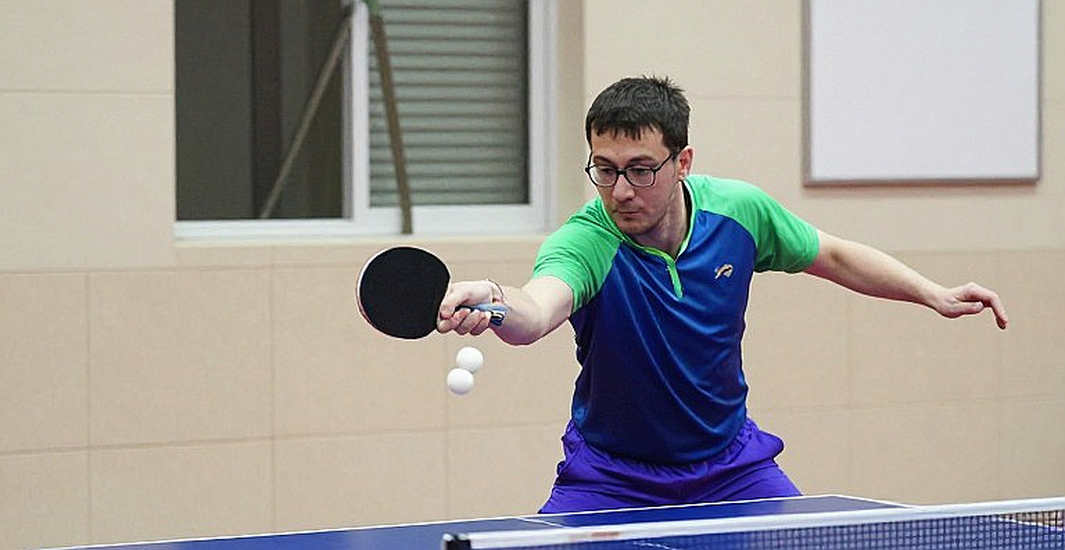
Correlation is not causation. Teams often enter a pre-championship event with different objectives: some want wins for seeding, some want experiments to change tactics. Reading a result without knowing the objective behind it is the classic misread.
What worries me more about GB is physical load, not form. From 16 September to November, the roughly eight-week break sounds long, but for para athletes the physical cost per session is higher and recovery takes longer. Schedule density is the single biggest cause of injury, and no medical team can save a squad playing two matches a week across a full cycle. If the coaching staff pushes Bayley and Davies through a heavy schedule in Yvelines to collect seeding points, they are trading the most important thing for the second most important thing.
One detail is easily missed. Shaun Marples' title of Interim Performance Director shows the leadership has not settled the long-term appointment. In sport, an interim position usually comes with interim budgets and interim decision rights. A stable preparation cycle needs someone with final accountability, not someone waiting on results to be offered a permanent contract. That is a governance risk rather than a technical one, but it feeds directly into how the squad enters November.
What to track next
Before the world is shocked, I have already seen the signal in the numbers. For GB, that signal will appear in Yvelines, not in Thailand. Do not ask me who will win. Ask me why they win, and the answer lies in the short-service point win rate of the class 1 group, in how many fifth sets the class 7 group can play across four days, and in whether Bly Twomey and Billy Shilton get out of the group stage.
If those two young faces reach the knockout rounds in France, GB gains an extra option for Thailand. If not, the squad's medal expectation stays piled on two pairs of shoulders that have carried it for a decade. Among the numbers, I find something close to faith — but faith is only worth trusting when it stands on a long enough line of data.